Recently in the newspaper “Il Foglio,” Camillo Langone in his enlightening column “Preghiera” wrote an interesting provocation about the current global difficulties facing wine.
“It does not surprise me, the Italian and global wine crisis, particularly red wine. What would surprise me greatly is the opposite, a sales boom. Because that would be inconsistent with the trends of the era,” writes Langone.
According to Langone, wine is suffering from this decline in consumption because it is a cultural product. “Who cares about culture anymore?” he asks and asks the columnist from “Il Foglio”.
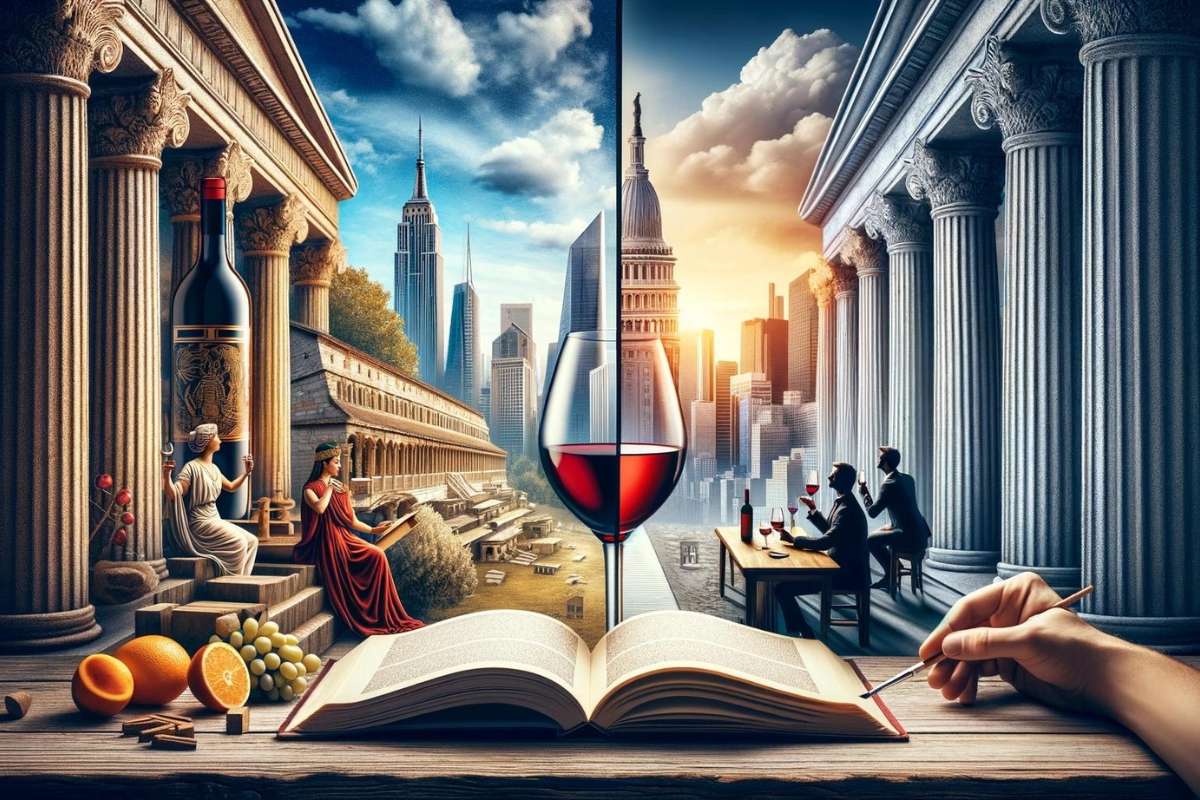
“Do you see bookstores multiplying? Do you see young people reading books on public transport, on park benches? Wine is the classical world, it is Greece, it is Ancient Rome. And where are the lovers of Greek and Latin?”
But Langone does not just ask these provocative questions and adds another interesting reflection: “Non-alcoholic options satisfy health-consciousness, the foolish cult of mortal muscle, while hard liquors, legal drugs, provide physical ecstasy without the complications of good bottles.”
Finally, Langone quotes director Pietro Castellitto: “Wine tunes the soul to millennial frequencies.”
“But if you lack a soul, and if you judge millennia as – Langone concludes – what use do you have for wine?”
Essentially, Langone highlights how wine is currently unfashionable because it represents a refined cultural product, requiring effort from those who wish to approach and love it.
Of course, it’s easy to agree with Langone, but at the same time, we must hope that the journalist from the newspaper founded by Ferrara is wrong.
From my point of view, indeed, I believe that viewing wine as a cultural product is an absolute truth, a reality that has managed to confer a higher image on wine compared to many other agricultural and non-agricultural products.
Paradoxically, however, its language seems today to relegate it to an increasingly sparse elite, and this is, inevitably, very dangerous. In fact, it could prove absolutely lethal to the wine industry if the idea were to take hold that to truly appreciate wine one must be endowed with a refined sensibility, a strong inclination for depth, a medium to high level of education, better if with a classical culture.
If all this were true, clearly it would be the countdown for wine.
I rebel against what seems to be a destiny already marked for wine.
And I dissociate myself for many reasons, the first being that while considering wine a cultural product, an extraordinary narrator of civilizations, territories, and different cultures, I also see it as an excellent means to have fun, to relax, and perhaps it represents the best facilitator of human relationships in the world.
I can already hear the voices of today’s neo-prohibitionists who oppose this “pleasurable” view of wine; but I think that precisely the “liberating” soul of wine is a fundamental component of its charm, its appeal, and therefore its longevity as a faithful companion at the tables of humanity for millennia.
For this reason, I believe it is essential to recognize the wine’s “bipolar” identity, on one hand certainly the more “politically correct” aspect of the cultural product, but at the same time the transgressive aspect of the product also loved for what it manages to liberate, what it facilitates in the most beautiful game given to us, that of human relations.
And then I think of those Greek and Latin teachers who despite everything continue to make many young people love languages that, crazily, some consider dead.