Australia stands as an example of cultural evolution thanks to wine, which has become a symbol of inclusivity and modernity. Wineries offer extraordinary wine tourism experiences, featuring impeccable hospitality and a perfect blend of wine and food. However, it is essential to preserve the democracy of wine, avoiding excessive exclusivity, to remain open to all consumers.
It had been exactly thirty-four years since I last visited Australia. An incredibly long time. Yet, I found a country fundamentally unchanged from the one I left in the early 1990s. Distant from everything, not only geographically. But while I found this remoteness unbearable as a young man in my late twenties, today I see it as reassuring, almost enviable.
I remember that during my three years in Australia, I experienced events like the Gulf War only through the letters sent to me from family and friends in Italy, as it barely made headlines in local media. At the time, I thought this detachment was absurd, but during my recent Australian trip, tuning in to radio newscasts or watching TV during long camper drives, I felt almost comforted. News reports featured crocodile attacks on fishermen in the rivers of Darwin or teenagers bullying a passersby in the streets of Queensland.
While crossing the Murray River between New South Wales and Victoria, a close friend messaged me asking how Australian media was covering the arrest of Cecilia Sala in Iran. I replied simply, “They’re not. It’s not news here, just as many international events that flood our media go unnoticed here.”
This isolation—paradoxical given the long-standing globalization-driven interactions—offers an interesting and valuable perspective on wine in a country less “contaminated” by today’s consumption dynamics, especially prevalent in Europe and North America.
The first point to highlight is that wine in Australia is still decidedly cool, with no signs of fatigue in its image. On the contrary, it is far trendier than thirty years ago, engaging multiple generations, from the older to the younger ones.
One revealing experience was a dinner show inspired by life in the Australian outback, a powerful symbol of Australian identity, where Australians (perhaps forcibly) see themselves connected to Aboriginal culture. During the evening, wine was the beverage of choice, while beer served as a mere fallback.
Statistics may show beer still dominates in Australia, but whereas beer once symbolized the nation (think of the Foster’s brand’s prominence), today wine is the cult beverage.
Wine represents Australia’s culture, reflecting who they are and aspire to be. Beer might say, “Take it easy, mate,” while wine asserts, “We’re Aussies, mate; we know how to live.”
Wine marks a significant cultural upgrade, driving the rise of numerous small businesses that are now pivotal to tourism and gastronomy across nearly all Australian states.
Years ago, Australia abandoned the vision of becoming the world’s largest wine producer (do you remember their Vision 2025 from thirty years back?). They’re less optimistic about exports, focusing instead on domestic competitiveness—being a prophet in their own land.
The results validate this strategy, ensuring economic sustainability for many small and medium wineries.
It’s well-known that wine tourism is the economic backbone of Australian viticulture. It’s also true that Australian wineries’ attractiveness surpasses what’s achievable in countries like Italy, given the myriad competing attractions there.
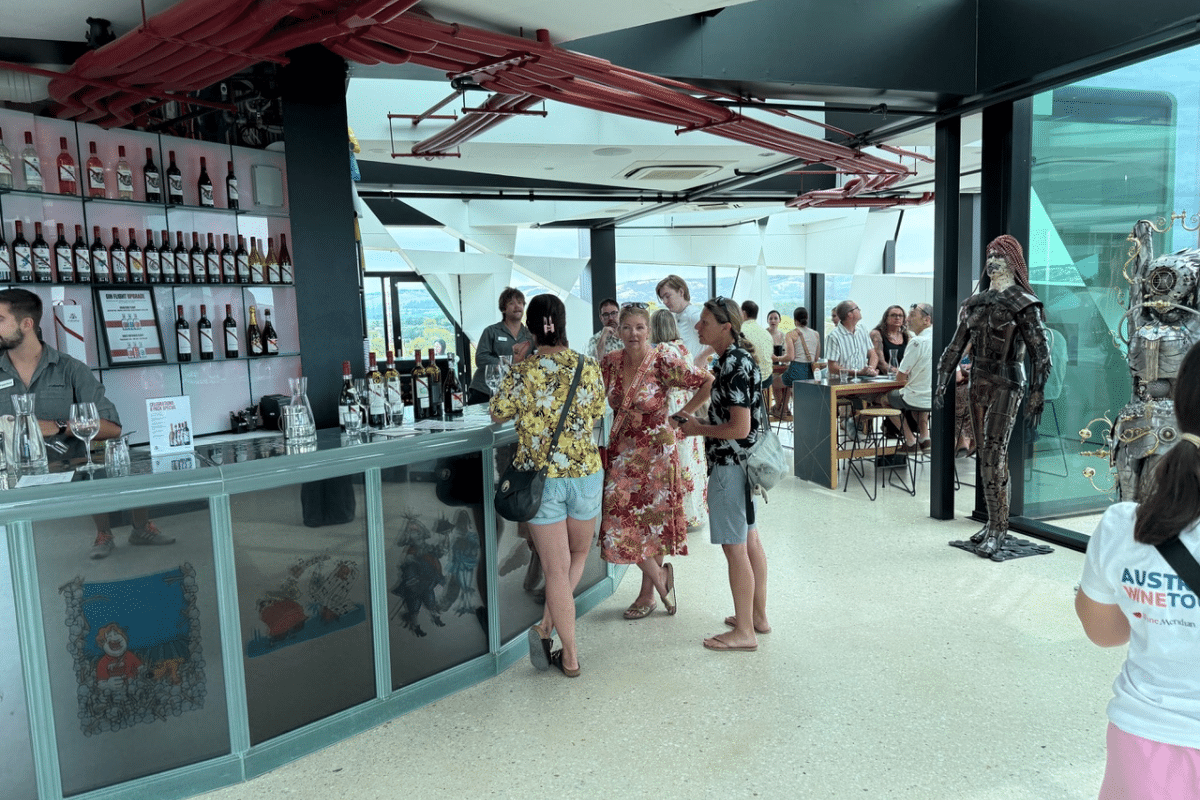
Yet, dismissing Australian wine tourism success as mere luck due to vast natural landscapes—endless eucalyptus forests—would be unfair. Many wineries excel in providing extraordinary hospitality, both in infrastructure and human resources.
Australian wineries, whether luxurious or simple, are cool places, where guests feel genuinely welcomed and free to explore diverse experiences. The ability to pair wine and food adds undeniable value.
We have much to learn from Australian wineries, and despite differences, Italy must strive to make a qualitative leap in wine tourism.
Were there no negatives on this latest Australia Wine Tour? There are signs of the snobbery virus creeping into some wineries. The pursuit of exclusivity is fine if only a few embrace it, but it becomes problematic if everyone competes in the same league.
There is an urgent need for a broad and democratic wine offering, not just in price (a lesser concern) but especially in communication, openness, and inclusivity.
Australia has always been a democratic and inclusive country, sometimes overly “easy-going” for us old European snobs.
But now, more than ever, we need wine-producing nations that speak to everyone without creating exclusive reservations—or, in this case, Aboriginal enclaves.
Key points
- Wine in Australia symbolizes inclusivity and modernity.
- Australian wineries excel in high-quality wine tourism.
- Hospitality in Australia sets a global standard.
- Wine has surpassed beer as Australia’s cultural icon.
- The democracy of wine must be preserved to ensure inclusivity.
Australia Wine Tour: read all our articles:
- Barossa Valley: the secret to boosting direct sales is changing the cultural approach to wine
- Yarra Valley: the wine tourism model that can inspire the future of Italian wineries
- Australia wine tour: five key lessons from Canberra Valley and King Valley for the future of Italian wine tourism
- Adelaide Hills and the art of direct sales: lessons from Penfolds
- Mornington Peninsula: wine tourism born from the heart and vision
- What kangaroos taught me in Australia