The wine industry is facing a shift toward premiumization, with declining volumes but increasing value. Is Italian wine prepared to meet this demand? Industry experts highlight the importance of territorial authenticity, strategic promotion, and adapting to evolving consumer expectations. This article explores key insights from market trends and expert opinions shared at Hospitality 2025.
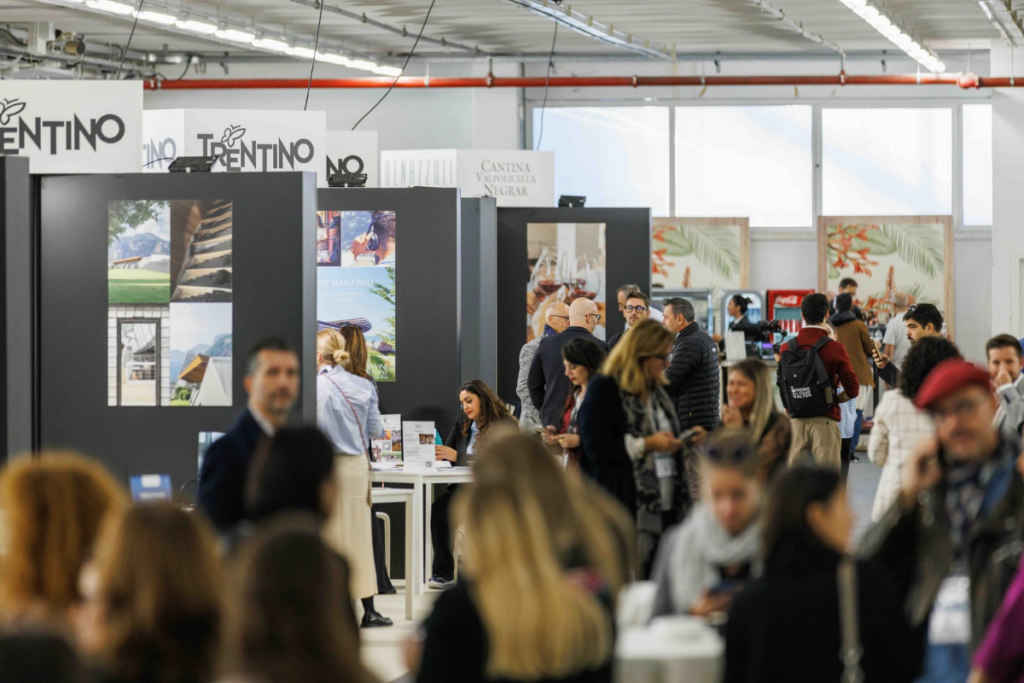
On Wednesday, February 5th, during the Hospitality Fair in Riva del Garda (Trento), an interesting meeting was held on the topic of wine tourism, and we will soon provide you with a detailed report and commentary.
During the meeting, Maurizio Rossini, CEO of Trentino Marketing, the company responsible for promoting tourism in the Trentino province, made a statement that I fully agree with and that should make our wine sector reflect deeply.
“We in marketing,” Rossini said, “have been trained and raised with the idea that our main (and often only) task was to raise awareness and stimulate consumer demand for our products and services. The current complexity of market dynamics, the great segmentation of consumers with their various trends and needs, is making us realize that today, before thinking about stimulating demand, we must reflect on whether we have an offer that is truly attractive. There is no doubt that today, even in the face of a challenging economic and social phase, the products and services that succeed are those that align with current needs, are authentic, and genuinely deliver on their promises.”
“So,” Rossini continued, referring to the Trentino region, “before imagining promotional actions for our province’s wine tourism, let’s ask ourselves whether our hospitality offer truly meets expectations.”
The same question that Rossini poses to the Trentino wine tourism system should also be asked by our wine sector as a whole.
Continuing to take for granted that everyone has products that are “up to standard” for the current market, aligned with consumer expectations, and in tune with present and future trends, is an extremely dangerous mistake.
And in this regard, another interesting insight emerged during the meeting in Riva del Garda from Lorenzo Cesconi, president of the Italian Federation of Independent Winemakers and a well-known wine producer from Trentino: “To ensure wines that are relevant and aligned with today’s markets,” Cesconi emphasized, “we must seriously respect the real vocation of our territories. Unfortunately, however, we have too often locked away in drawers the zoning studies that clearly explained which grape varieties best suited our production areas, blindly chasing any market trend, thereby compromising our true identity and, consequently, our credibility in the eyes of consumers.”
It is precisely what Cesconi highlighted that has also led many small producers in our country to expand their product portfolios to an excessive number of labels and make varietal choices that frequently betray the true vocation of their production sites.
I have written this many times, and I don’t want to sound repetitive, but I consider this aspect crucial for the current and future credibility of our wine offering. Without serious consistency in production, an authentic territorial connection, and genuine respect for vocation, we risk losing reputation, positioning, and ultimately, commercial competitiveness.
For this reason, questioning the current adequacy of our denominations and the wines of our companies is not a superficial exercise but a fundamental step in building truly effective promotion and demand stimulation projects.
And speaking of the promotion of Italian wine, I have been reading several forecasts about the development of wine markets over the next five years.
It can be said that almost everyone agrees that between now and 2030, we will see an overall decline in wine consumption in terms of volume—between 5% and 10% over five years—while value will increase by 2% to 5%.
I would not want to be in the shoes of those market analysis firms, as they find themselves in a very difficult position, making forecasts in an environment of great instability and unpredictability.
And it is precisely in situations like this that it becomes crucial to identify some fixed points in the wine market and understand how our wine companies can remain competitive in such a complex period.
So what are the factors that seem defined and predictable even in the near future? First and foremost, the process of premiumization in markets—albeit with some differences across various countries—will continue in the coming years.
And the fact that everyone agrees on the increasing value of wine in international markets in the next five years, even as volumes may decrease, confirms this trend.
But if we consider this trend as a given, what actions should companies and denominations take to align with this “drinking less but better” movement?
In my opinion, this is a key question that our wine sector has not always answered effectively in recent years, even though the value of Italian wine has undoubtedly grown over the past fifteen years.
I often have the impression that the majority of industry operators, across different categories and types, are today more focused on cutbacks and elimination rather than on revitalization, promotion, and enhancement. At the same time, I frequently perceive that everyone believes they have already done their utmost to qualify their production.
If the only solution is to have a hundred large producers and tens of thousands of hectares fewer, I believe that would not only be a failure of our system but also a dangerous shortcut that would completely negate many of the values of Italian wine.
Key points
- The wine market is shifting towards premiumization, with declining volumes but increasing value.
- Italian wine must strengthen its perception of quality to align with evolving consumer expectations.
- Territorial authenticity and strategic differentiation are crucial for maintaining competitiveness.
- Expanding product portfolios without coherence can harm brand identity and credibility.
- The industry must focus on innovation, promotion, and sustainable growth rather than downsizing.