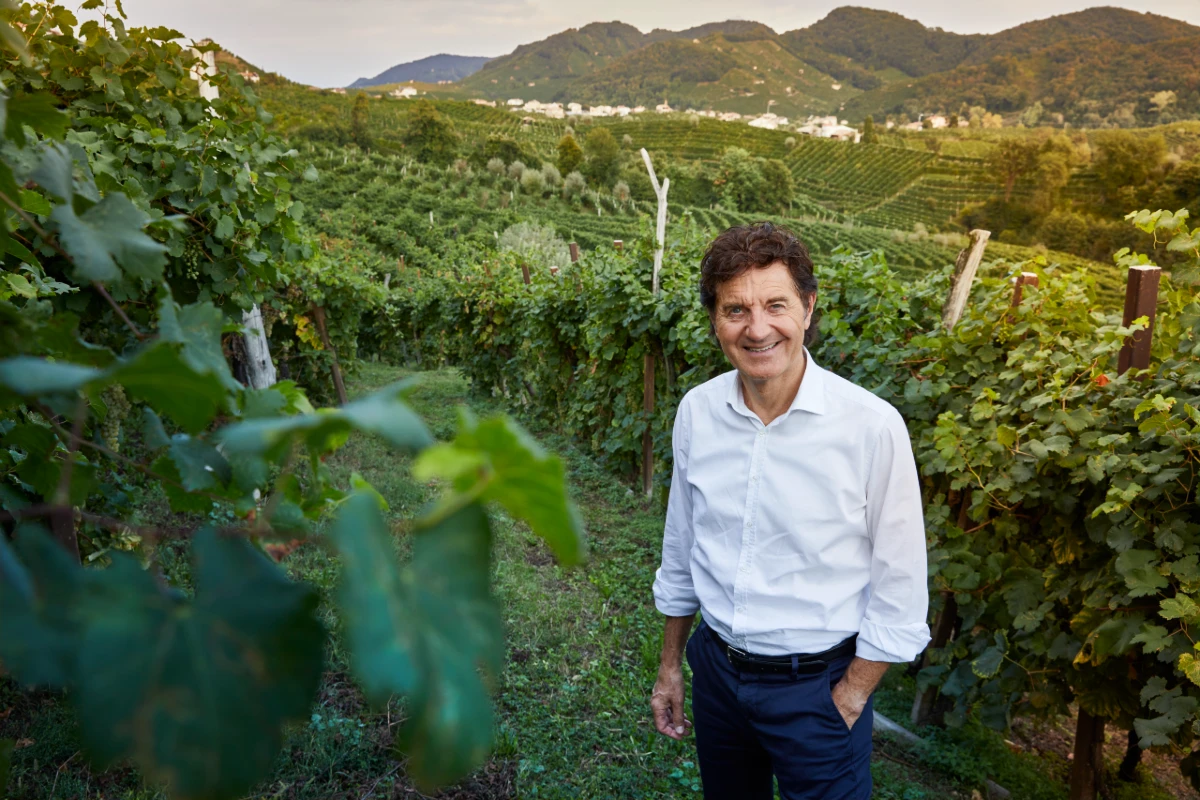
In this exclusive interview, Giancarlo Moretti Polegato of Villa Sandi shares his vision for the future of Prosecco. From wine tourism and e-commerce to global expansion and non-alcoholic options, Villa Sandi blends innovation with a strong territorial identity to remain a non-replicable symbol of Italian lifestyle and excellence.
At a time when Prosecco is experiencing unprecedented global expansion, the interview with Giancarlo Moretti Polegato, President of Villa Sandi, offers privileged insight into the dynamics reshaping the world of Italian sparkling wine. It’s not just about numbers—like the 500,000 visitors to the winery or the growing exports—but about strategic vision, awareness of identity value, and the ability to anticipate trends.
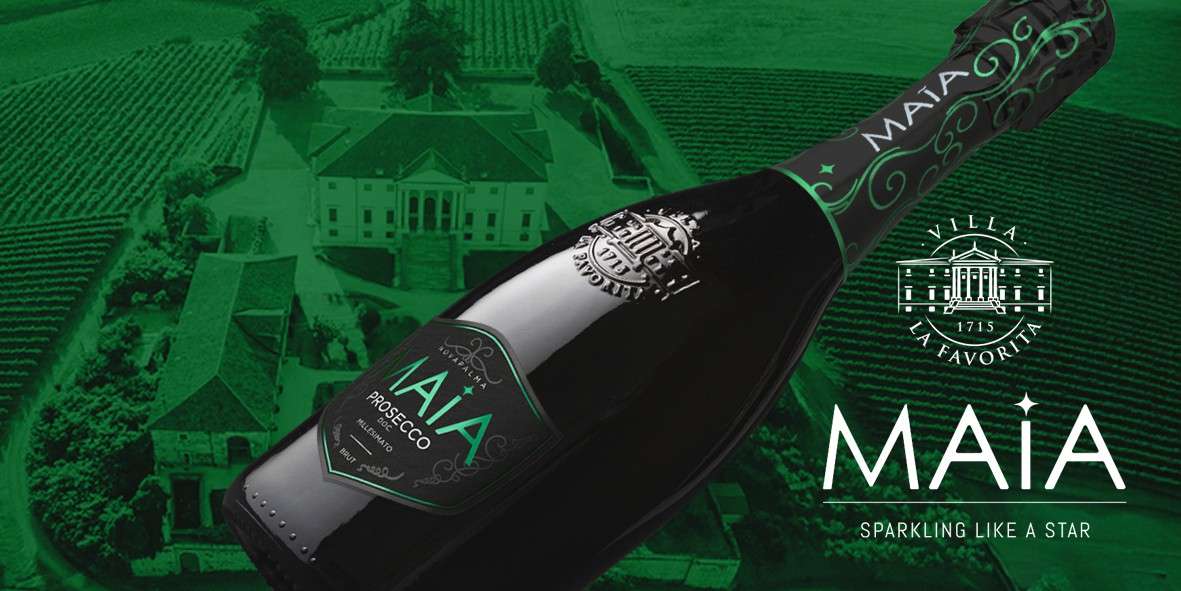
Villa Sandi, a flagship Prosecco brand worldwide, stands out for its ability to merge territorial soul with constant innovation, ranging from advanced wine tourism to international distribution, and even art, through its refined collaboration with the Peggy Guggenheim Collection. The alliance with Maison Jacquart in France, the investment in non-alcoholic wines, and a modern approach to e-commerce show that the brand is much more than a wine producer: it is an ambassador of Italian lifestyle, defined by conviviality, beauty, and cultural value. Polegato doesn’t merely answer questions—he outlines a contemporary manifesto for Prosecco, one that embraces the future through uniqueness and being “non-replicable.”
The UIV Observatory highlighted how Italy is increasingly becoming a “Sparkling Wine Country.” What does this mean for Prosecco’s future, and how is Villa Sandi positioning itself to maintain a leading role?
The current trend in the wine market is moving toward lower-alcohol wines, and Prosecco aligns well with this new demand, especially among younger consumers. Prosecco was born as a fresh and light wine with moderate alcohol content. Villa Sandi is a well-recognized brand that has invested in marketing and promotion, focusing on value rather than entry-level logic. A benchmark company in the Prosecco world, Villa Sandi has successfully blended tradition and experience with innovation and new technologies, both in the vineyard and in the cellar.
Africa represents an emerging market for Prosecco, with Villa Sandi’s exports growing by 50% in just three years. What strategies are you implementing to strengthen your presence in markets like Kenya, Ghana, and Ethiopia, and what are the main challenges?
It is certainly an emerging market, though still with limited numbers. We aim to create synergies with wine & food professionals operating in various African countries to promote and spread wine culture.
Here’s an unusual but intriguing question: if you could associate Villa Sandi with a work of art from the Peggy Guggenheim Collection, which would you choose and why?
We have launched a collaboration with the Guggenheim Collection in Venice to establish a dialogue between art and business. The goal is to support art-related projects and events. I recently visited the Foundation’s spaces and was particularly struck by a small painting by Kandinsky, with small colorful spots that immediately reminded me of joyful moments, sparkle, liveliness—just like the bubbles of our Prosecco and the convivial moments they accompany. It reflects the lively and dynamic spirit of our company, always open to new initiatives.
The recent agreement with Champagne Jacquart marks a new approach to distribution in the French market, traditionally seen as a ‘rival.’ What is the strategic value of this alliance, and how could it redefine Prosecco’s positioning in France?
We’ve had a long-standing relationship with the Jacquart group, and Villa Sandi is making a significant impact in the on-trade channel. Being proposed by an important Champagne Maison is crucial for positioning in specialized retail. In a market like France, where price is key, being represented by a major Maison increases the value and credibility of our brand. Our collaboration is a reciprocal exchange, with Champagne and Prosecco acting as allies. We also import and distribute one of their brands in Italy. What was once a rival market now sees Prosecco as an essential product, featured in wine lists and high-end cocktail bars.
No/low-alcohol wines are gaining ground in international markets. How do you view this trend, and do you believe it could represent an opportunity for Prosecco?
Currently, there are no designations for non-alcoholic Prosecco. The Consortia are experimenting with and evaluating lower alcohol content within different Prosecco denominations. We have already been producing a non-alcoholic sparkling wine made from white grapes for a few years, which is performing very well, especially abroad.
E-commerce has redefined the way consumers buy wine. What strategies are you adopting to respond to these new purchasing behaviors, and what do you see for the future of online Prosecco sales?
E-commerce boomed during the pandemic and then stabilized once consumer habits normalized. Prosecco remains one of the most popular and searched wines online—consumers feel confident purchasing it. The digital sales channel presents an opportunity, but producers must continuously monitor it to ensure that online sales don’t negatively impact offline channels.
Imagine you had to explain Prosecco to someone who’s never tried it. What three adjectives would you use to convince them?
With its fresh and light bubbles, Prosecco is the symbol of conviviality and the joy of sharing pleasant moments.It’s an irresistible sparkling wine that conveys a zest for life and creates a relaxed and light-hearted atmosphere.
In 2024, Villa Sandi will welcome around 500,000 winery visitors. What are your future plans for wine tourism and making the brand even more attractive to visitors?
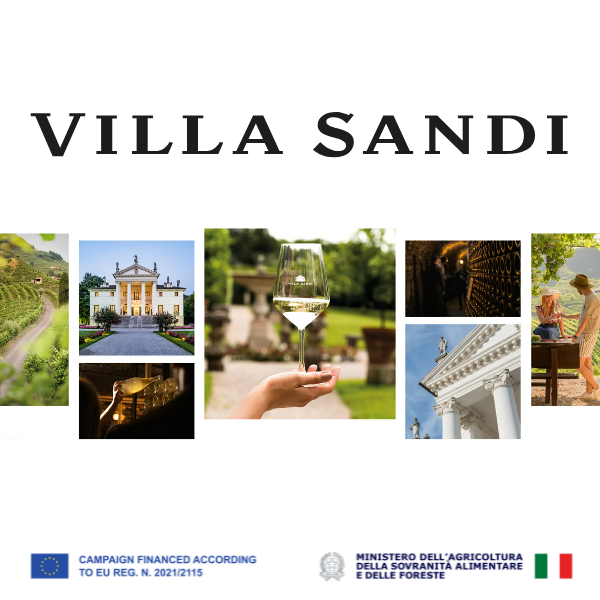
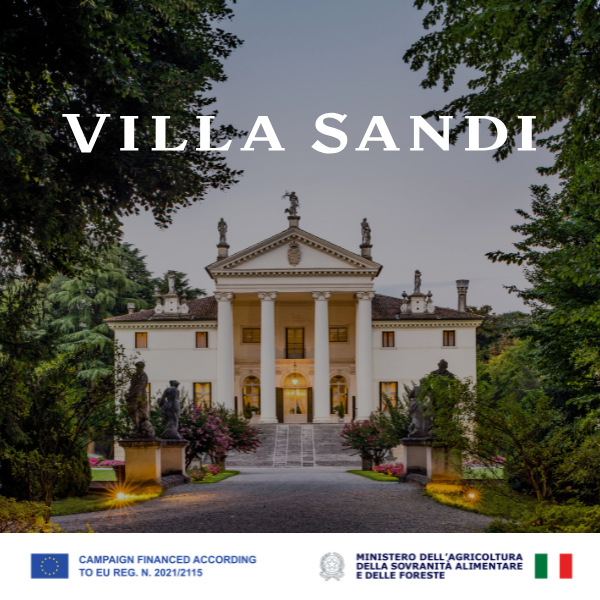
We began opening our doors to visitors nearly 40 years ago, offering insight into the world behind a bottle of Villa Sandi. Through guided tours of the underground cellars and our 17th-century Palladian-style villa—our headquarters and symbol—guests experience a blend of wine, history, art, and landscape. Over time, we’ve added Locanda Sandi, a restaurant with rooms, and another accommodation facility in Valdobbiadene. We’re now expanding our hospitality capacity to meet growing demand, particularly in the UNESCO-listed hills from Valdobbiadene to Conegliano. We also have Villa Sandi wine bars at Venice airport and in Cortina d’Ampezzo—strategic promotion points for tourists and potential visitors. Visiting Villa Sandi satisfies various interests, from wine to history, architecture, and food—a full cultural and emotional journey that makes Villa Sandi a symbol of the Italian lifestyle.
If you had to imagine what Prosecco will look like in ten years, what do you foresee? Do you think new players and challenges will emerge?
The ongoing challenge is to maintain authenticity, the connection to the territory, and to remain unique—something that cannot be replicated elsewhere. The companies represented by the Consortia and the entire supply chain have done a good job over the years, regulating production, preventing it from becoming a mere trend product, and safeguarding the identity of a wine tied to a specific history and territory.
Key points
- Villa Sandi combines tradition with innovation to lead Prosecco’s global success.
- Strategic alliances reinforce Villa Sandi’s premium positioning, even in rival markets like France.
- The winery invests in art, tourism, and sustainability as pillars of its brand identity.
- Africa and e-commerce are emerging growth opportunities for Prosecco.
- Maintaining authenticity is key to long-term competitiveness.