Signorvino, a leading Italian wine retail brand, combines wine shops, restaurants, and e-commerce for a cohesive customer experience. With 40 locations in Italy and abroad, Signorvino focuses on premium products and wine education. The O2O model and strategic promotions make wine accessible, while AI is explored to enhance efficiency in distribution and supply chain management.
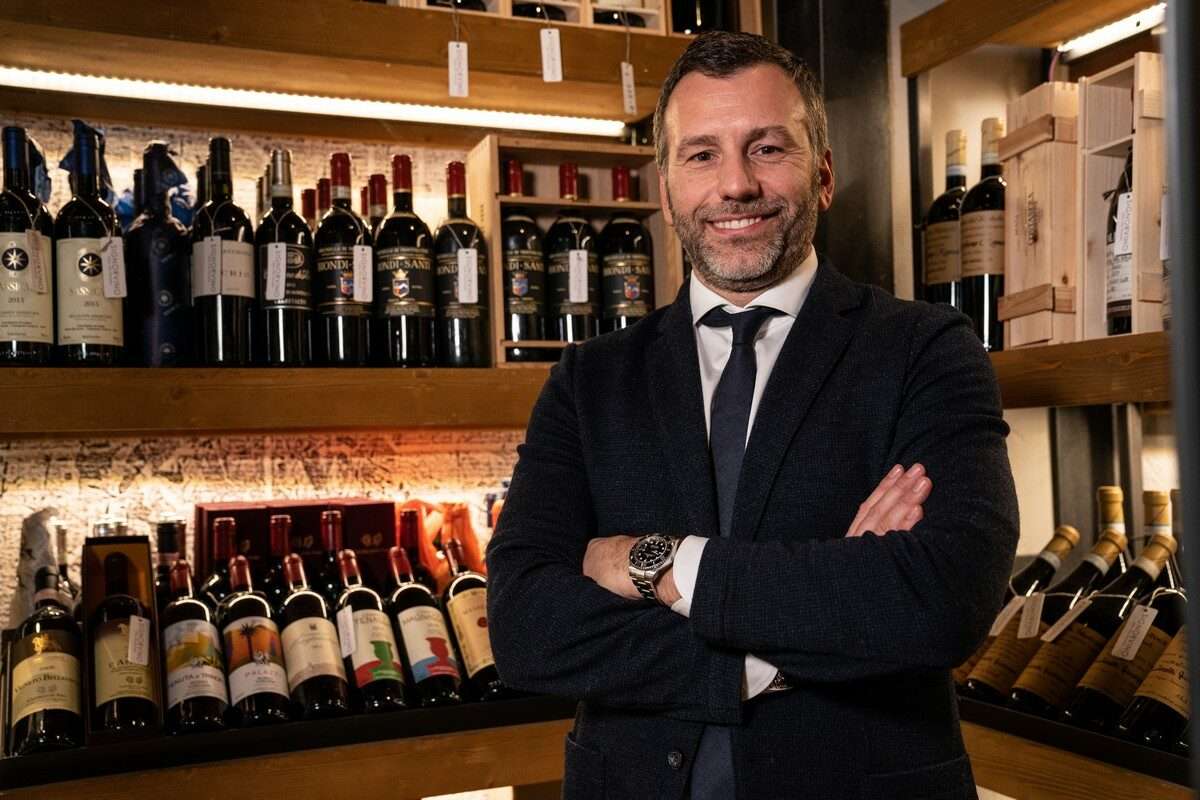
The world of wine is in constant evolution, with emerging trends, challenges, and opportunities that arise continuously. In this dynamic context, managing distribution and sales channels is crucial to stay competitive and meet the needs of an increasingly demanding, heterogeneous, and informed audience. Luca Pizzighella, General Manager of Signorvino, provides an in-depth look at how this major Italian retail brand is navigating the complex landscape today.
Pizzighella shares the strategic criteria used to differentiate the offer across various distribution channels, effectively combining retail, dining, and e-commerce, and reflects on current consumer trends and behaviors, highlighting a growing focus on quality and premium products.
As part of the Amorim Wine Vision project, Pizzighella’s testimony offers valuable insights into innovative strategies and an integrated approach that combines wine bar, restaurant, and e-commerce, ensuring a consistent customer experience while always keeping the consumer’s passion for wine at the forefront.
In 2023, Signorvino opened 8 new locations, two of which were abroad (Prague and Paris). This autumn, they plan to open their first store in the South, in Pompeii. What criteria does Signorvino use to determine the location of new stores, both in Italy and abroad?
We currently have 40 Signorvino locations. Our goal is to reach 50 soon. We look for large spaces (about 400 sqm), with outdoor areas where customers can be welcomed during the warmer months, which require significant investments and regulations, especially in the restaurant section. We aim to bring the wine shop to visible, lived-in places with added value for both tourists and local customers. For this reason, we have sought iconic locations in cities such as Milan’s Duomo, Bologna’s Piazza Maggiore, Florence’s Ponte Vecchio, and soon in Piazza Santa Novella and Piazza Erbe in Verona, and Piazza Pontida in Bergamo.
Considering potential traffic and ease of purchase, we have also ventured into some of Italy’s most important shopping malls (e.g., “Il Centro” in Arese, “Le Gru” in Turin, “Le Befane” in Rimini, and “Curno” in Bergamo), outlet villages (e.g., Vicolungo, Fidenza, and Castelromano), and locations on busy streets (e.g., Affi or Manerba on Lake Garda).
In the near future, we plan to expand further south, following the opening in Rome (Piazza Barberini) and the new store at the Valmontone Outlet. Our next target is Campania, with a new location in the Maximall shopping center in Pompeii. We also aim for the center of Naples. Abroad, after the beautiful three-story location in Place Saint-Michel, Paris (opened late 2023), we are looking for new spaces in Paris and the French Riviera. Prague remains a key target, after our opening in the Chodov shopping mall. We’re also considering other European countries and hope to expand soon to the United States.
How does Signorvino differentiate its product offering across various distribution channels (wine shops/restaurants and e-commerce)?
From the very beginning, we understood that Signorvino needed to offer consumers wine paired with good food. Unlike in the past, wine is now mostly consumed outside the home rather than at home. It is often forgotten that wine is a very cultural and local product, and one of our main missions is to showcase wines from other regions and areas in the cities where our wine shops are located. For example, introducing Lazio and Campania wines to Verona isn’t so obvious.
One of the challenges we face is managing an assortment that exceeds 2,000 labels and replicating it in every store. This requires managing significant logistics and distribution. We strongly believe in the online dimension, which is why we have developed a very functional and attractive e-commerce platform that serves our customers and keeps us current. The O2O (Online-To-Offline) model is a reality for Signorvino; we’ve created a system that allows customers to order wine online and choose either home delivery or pick-up in-store. In terms of product range, we strive to offer well-known brands as well as some exclusive wines from smaller producers. The same applies to pricing: we don’t sell wines from the large-scale distribution (GDO), but offer wines starting from €4.90 up to premium red wines and Champagne.
We offer a wide selection for tasting, usually with free tasting opportunities, monthly new additions, and winery inserts. Promotions are negotiated with our suppliers, and we prefer a direct relationship with them to set prices and promotions. Another special feature is cross-selling, where customers can taste a bottle at the table and then purchase it at the shelf price. One of our goals is to convey to wine enthusiasts and our customers that Signorvino is a wine shop with a restaurant, not the other way around.
What is your perception of current consumer behavior and attitudes toward wine purchasing?
We opened in 2012, and while 12 years is a relatively short time to define trends, we’ve observed growing consumer awareness of wine denominations and brands. There is an increasing focus on quality and premium products, clear evidence of the premiumisation trend. People are drinking less but looking for higher quality, likely due to the overall rise in product quality.
Another trend we’ve noticed is the preference for lighter, more drinkable wines that are less heavy and less alcoholic, influenced by certain grape varieties and wineries. The shift from Bordeaux to Burgundy has likely impacted other wine regions.
We also see that softness and approachability are important characteristics; a wine needs to provide immediate pleasure. Dealcoholized wines are growing, but from a very low base. Rosé wines have increased from 3% to 6%, but they still account for less than 10% of total consumption.
White wines are of great interest, with a significant focus on quality. This category has seen the greatest growth in recent years. Sparkling wines are also growing steadily, with Champagne seeing a positive response. It’s not just about a “status symbol.” Regarding natural wines, it’s clear that there’s a desire to try something innovative, especially among younger consumers. However, we notice that consumers can detect defects in some natural wines. This trend is balancing out, and I believe that in the long run, only products ensuring quality will remain. Style is one thing, but defects should not be mistaken for style.
How do you use your O2O (Online-To-Offline) channel to encourage customers to visit physical stores?
I believe Signorvino has a very distinct identity. When you visit us, you’re entering a world centered around wine, characterized by an informal yet competent, professional, and personalized approach. We communicate this through our social media, where we’ve established a strong presence on TikTok. We’ve seen that it has its own effective communication code that can attract people. One of our priorities is to reach consumers who want to learn about wine without needing prior knowledge. We engage in education and tell the story of wine in a simple way, using stories and anecdotes to connect with regular people. This is why we collaborated with Chora Media to produce the podcast “Vino vicino” and invested in TV commercials. Our goal is to make wine a daily impulse purchase, not just something for celebrations. We want to overcome the image of dusty wine cellars and refresh the approach, making wine an easy product to buy.
Do you use artificial intelligence to optimize the management of distribution and supply chain? If so, how?
Artificial intelligence is entering all of our processes, including supply chain and other company functions. AI can increase efficiency, and we’re developing projects to use this technology to meet our customers’ needs. However, we still prefer that wine enthusiasts come to the store and get help from our Wine Specialists.
How do you manage promotions and special offers across different distribution channels to maximize sales?
We activate promotions based on timing, seasonality, and trends. Additionally, each month we organize special focus events combining promotional activities with direct experiences. For instance, last month we focused on Champagne, with tastings paired with Champagne risotto and raw shrimp. Every month offers something new: Brunello, Barolo, Amarone, rosé, whites, Prosecco. One of the most wonderful and unique aspects of wine is its versatility; there’s no single “best” wine. There’s the right bottle for every moment and occasion.
Key points
- Signorvino integrates retail, dining, and e-commerce for a unified experience.
- Signorvino is expanding with 50 locations and a strong presence in Italy and abroad.
- Signorvino focuses on premium products and wine education for all customers.
- O2O model allows online orders with in-store pick-up.
- AI is explored to optimize distribution and customer service.