Carlo Cambi challenges misconceptions about wine consumption, discussing how it is evolving in Italy. He highlights the shifting dynamics of younger consumers, the importance of tradition and quality, and the need for a more honest wine culture. Cambi also addresses the role of wine tourism and the impact of “wine fashions” on consumer behavior.
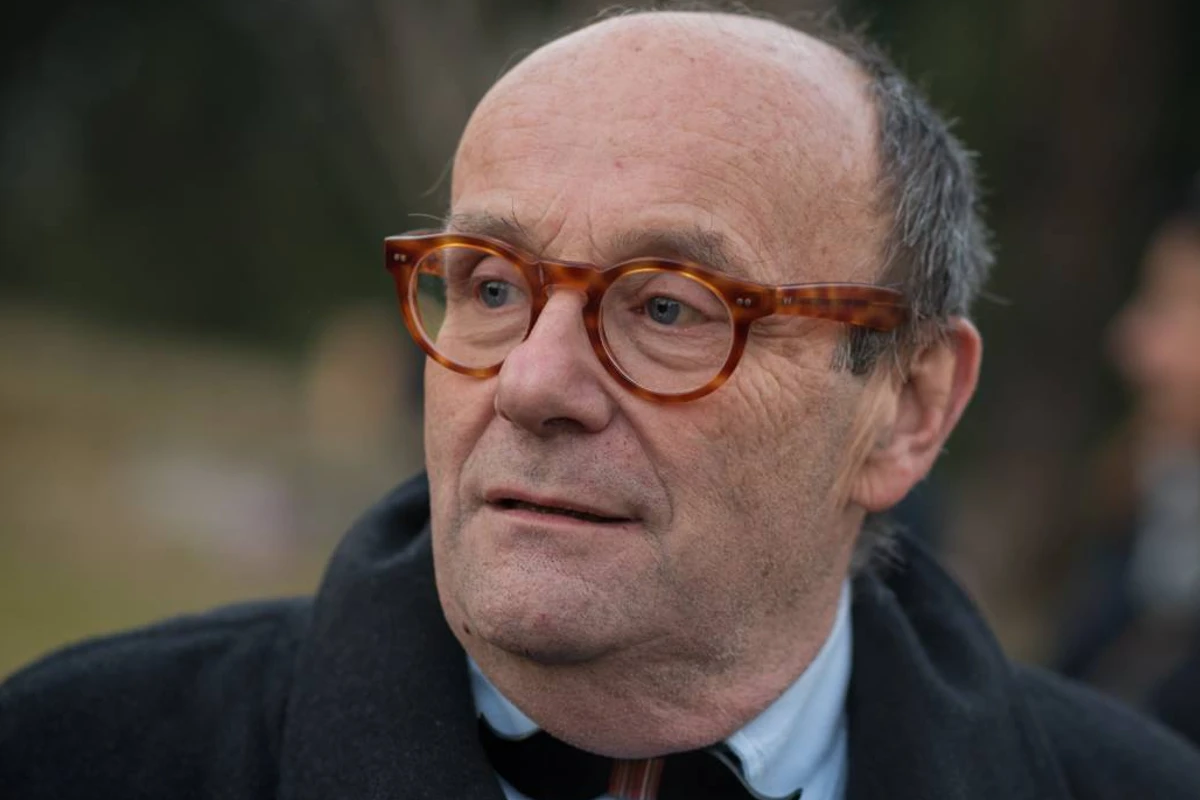
In this exclusive interview, part of the Amorim Wine Vision project, an observatory that gives a voice to entrepreneurs and professionals in the sector, Carlo Cambi, journalist, writer, scientific consultant, and profound connoisseur of the enogastronomic culture, explores with his usual frankness the changes affecting wine consumers. With direct and uncompromising reflections, Cambi analyzes the different “souls” of today’s consumer, challenging commonplaces and reminding us that “drinking a little less does not mean that consumption declines, it rather means that consumption refines,” while emphasizing the growing attention to mindful consumption. Through a direct lens, Cambi challenges misconceptions about wine, defending the authenticity of the connection with the land and the importance of rediscovering wine as a “source of happiness” and “facilitator of relationships.”
In his career, he has always researched and valued traditional and authentic enogastronomy. How does he see the evolution of wine consumption in Italy today? What are the main changes he is noticing?
Wine consumption is polarizing: on one hand, there’s still a kind of habit associated with wine, but it mainly concerns an older minority of people, while on the other hand, there’s a more thoughtful or curious approach. People want to believe that young people are far from wine; this is not true. There are boys and especially girls who have taken wine in the right direction: as a cultural product that tells stories of people and places through the language of the senses, sparking our intellectual curiosity.
These are the great wines: wines with a soul.
Finally, there are two other “factions”: the “aperitif drinkers” who enjoy drinking without too many questions – this explains part of the success of sparkling wines – and the “mainstream followers,” those who, following fashion, invented alternative wines. I would call them the “wine workers” who drink horrible bottles at tastings but great ones for the ostentation of being on the “right” side, in opposition to winelovers who drink because they love wine.
Tradition, quality, innovation, passion are some of the terms many wineries use to define their company narratives. Are these words overused and emptied of meaning, or should they be recovered and reinterpreted to regain effective expressive and communicative power?
It depends on the context: if you opened the winery 10 years ago and you’re talking to me about tradition, I feel fooled unless tradition refers to that heritage of knowledge that is passed down and from which one draws.
There is a very forgotten economist in Italy, Giacomo Becattini, who was a visionary: He spoke – regarding industrial districts – about “sense of place,” arguing that it is places that determine products because places contain and constitute communities. This process should be used to rewrite the territoriality of wines. Instead of innovation, I would use research, which is about intellect but also curiosity; instead of passion, I would use sentiment, which is synonymous with humanity; as for quality, it is now a sort of prerequisite, and a company that declares to make quality is as much, just to stay in our area, as someone who asks the innkeeper if the wine is good.
The effective narrative lies in combining action, intention, place, and human story.
In the debate about the relationship between the wine sector and consumers, a characteristic often emerges that seems to alienate a significant portion of the audience: elitism. Is this a real issue or a rhetorical excuse from operators to justify the general decline in wine consumption?
It must be stated that I do not agree with the decline of wine consumption. Drinking a little less does not mean consumption declines, it simply means consumption refines.
Wine has its own language, it is not elitist, it is simply identity.
I have always believed very little in simplifications. I want to point out one of my “cultural teachers,” John Locke, the English philosopher of the late 1600s, who argued that the senses are the way we come to knowledge. This means that wine, by stimulating it, dialogues with our sensitivity in a non-verbal communication that becomes experience. When we talk about wine, we try to translate into language what wine has already said in sensation. Simplifying means betraying the wine.
In your “Il Gambero Rozzo” guides, you often emphasized the importance of the relationship between the kitchen and the field, the connection between enogastronomy, genuine products, and rural tradition. Is the connection with the territory in the wine world well valued and respected, or is it dissolving?
Without land, there is no wine, nor anything else worthy of being called food. We often reflect too little on an anthropological fact: to satisfy the need for food, there is no need to cook, nor to quench thirst or acquire calories, there is no need to vinify. Cooking or vinifying are cultural processes that transform what another cultural process, which is cultivation, has produced.
Thus, if a wine denies the territory, it denies itself, immediately becoming a fake.
There is one of the fathers of classical economics who, in his most famous essay “The Principles of Economics,” assigns to the amount of labor stored in each product the quantification of value, and yet he argues that there are goods that escape this “axiom.” David Ricardo lists them, and among them, he designates: “Wines that come from specific territories, for which there is no way to increase their quantity. Their value is given by scarcity; by how much the demand is willing to pay for them.”
It is clear that wine cannot renounce being the child of its land without losing its value.
The house wine or bulk wine, often considered “rough,” still represents a popular choice among consumers, especially in trattorias and osterias. How do you assess its quality evolution over the years?
The answer is clear: today in Italy, it is almost impossible to drink bad wines.
Then there is a quality scale, but a well-made Sangiovese never betrays you.
As does a Verdicchio, a Nebbiolo, or the hundreds and hundreds of magnificent wines from our countryside. On one condition: that they have been vinified in clean cellars and in wine vats, well preserved, and well protected with the help of sulfur in the cellar and copper sulfate in the vineyard from oxidation and mold.
Do you think that the proliferation of wine bars and “gourmet” venues is helping to bring consumers closer to wine and educate them, or is it creating further distance and detachment from wine as a popular and everyday choice?
They are the places designated to spread the wine “word.”
There are different levels, different audiences that frequent them, but there should be many more.
If wine is the story of the land and the people who work it, wine bars are libraries where you can read these novels.
You were one of the founders of the Movimento Turismo del Vino. How do you see the evolution of wine tourism in Italy today?
It is, along with food tourism, the greatest attraction force in our country, and be careful with oil tourism, which will become very significant.
Wine tourism is the perfect expression of cultural tourism in the form of sensory experience and discovery tourism in the form of pleasure in contexts where Italian identity is most expressed: the rural landscape, which is a productive artwork that gives nature the opportunity to show itself gently.
Trends are often discussed in the wine world. Do you see any harmful aspects in “wine fashions,” or do you think they are functional and useful in providing input and positive stimuli to wine consumers?
It depends on which trends. If they are marketing tricks, they last just long enough to change the public’s mind, but if they are para-ideological trends, they already have within them a self-destructive mechanism because they are exclusionary.
However, tasting trends and, to some extent, “aesthetic” trends have a stimulating function.
The amphorae, orange wines, the so-called natural wines – which are false because wine cannot be made naturally, oxidized wines – are all “trends” that fall apart in front of Romanée Conti or Pol Roger, in front of Biondi Santi or Sassicaia, in front of Argiano or Masseto, in front of Masi or Gaja.
You have a very direct and authentic view of enogastronomy culture. What are the main changes the Italian wine sector should face to capture the frequencies and be truly in tune with consumers?
Frankly, I don’t think wine, the wine worthy of its name, is out of tune with the consumer. Rather, the economic condition of the consumer must change.
I am convinced that the real reason why people drink less is because there is less willingness to spend.
We think as if there were no two wars, as if we hadn’t come out of a pandemic just a couple of years ago, as if we didn’t live in an anxious society.
A point could be to start telling wine for what it is: a corroborant for happiness, a facilitator of relationships.
There is a beautiful quote by Aristophanes, who wrote comedies, meaning he enjoyed narrating in the form of entertainment vices, virtues, and human affairs. He says: “By drinking, men improve; they make good deals, win lawsuits, are happy, and support their friends.” It was written about 25 centuries ago, but it is still very relevant.
This is what wineries should be telling. Maybe adding a bit of prosopopoeia: wine should cost. The wine market should be the imperfect market, the one where the price is set by the offer, not by demand because the offer holds the value of the product.
This is the horizon of wine today, without forgetting the teaching of that farmer from Rosazzo who told me many years ago: “You talk well, but I tell you, wine is either good, or it’s not good!”
Key points
- Wine consumption is polarizing between older habits and a curious, intellectual approach.
- Traditions in wine must evolve, focusing on “research” and “sentiment” over clichés.
- The idea of wine as elitist is misleading; it’s about identity and personal connection.
- Wine tourism is a key driver of Italy’s appeal, with a growing connection to rural landscapes.
- Wine trends and “fashion” can be positive but may fade if they lack authenticity.