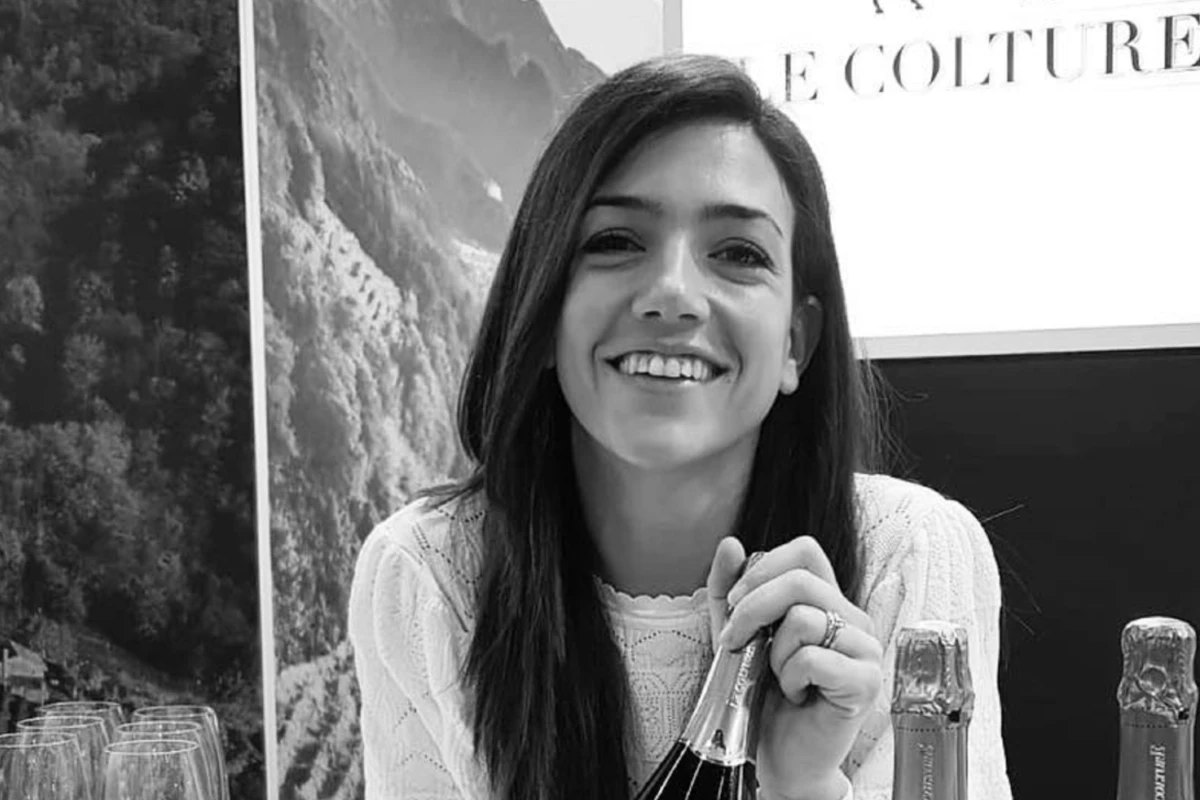
Veronica Ruggeri of Le Colture highlights the significant growth of wine tourism in Valdobbiadene, a UNESCO Prosecco region. She emphasizes authentic experiences, direct producer interaction, and the power of word-of-mouth. Ruggeri views global challenges as opportunities for market diversification, advocating for the value of Italian denominations and expressing skepticism towards dealcoholized wines.
In the pulsating heart of the Valdobbiadene hills, a symbolic territory of Prosecco Superiore and a UNESCO heritage site, wine tourism confirms itself as an essential driver of growth and identity. Veronica Ruggeri, Marketing & Communication Manager at Le Colture, leads us through a narrative that goes beyond a simple winery visit: a tailored, authentic experience, made of direct encounters with producers, which foster a sincere connection with customers and give voice to a territory rich in history and biodiversity. In a world marked by geopolitical uncertainties and evolving markets, Ruggeri sees every challenge as an opportunity—from adapting to new international markets to the importance of valuing Italian denominations, up to defending the quality of traditional wine against the trends of dealcoholized wine. An interview that illuminates the concrete steps and philosophy behind a sustainable and future-oriented wine tourism model.
How has wine tourism positively influenced your business in recent years? Have you seen substantial growth?
Yes, absolutely. The Valdobbiadene area has seen remarkable growth, so much so that our municipality reports a 20% increase this year in wine tourism. The Valdobbiadene hills, thanks also to UNESCO recognition since 2019, have received significant impetus in the wine tourism landscape. I’m seeing growing attention to hospitality, with more restaurants and more dedicated rooms for clients. Organized tours visiting various wineries for tastings are also growing. However, we practice a very selective wine tourism: since my brother or I conduct the tastings, we work with limited numbers or by appointment. The feedback is very positive, and I think this is very beneficial for the territory, because those who come here can truly understand where Prosecco Superiore comes from. We also have an accommodation facility, which dates back some time, when my father had already created a tourist rental with nine rooms, even if it is a bit far from Valdobbiadene, in Montello, a beautiful and historically relevant area. We see a large influx of tourists, mainly from nearby countries like Austria and Germany, but also recently from Eastern countries, such as the Czech Republic and Poland. America, on the other hand, is declining a bit compared to some time ago. In general, tourism is growing significantly in the area.
Has the type of visitor you welcome to the winery changed compared to a few years ago?
Valdobbiadene DOCG attracts a very diverse audience: there are curious young people in their twenties, but also more mature people, sixty and over. So, the target is very heterogeneous. Clearly, each company has its specificity; in our case, the target is mid-to-high, both for our offer and for the company’s history.
If Trump decides to implement tariffs on EU imports starting next July 9, do you believe they could impact wine tourism, or will they not have a significant influence?
In my opinion, no, because tariffs can exist, but no one can take away the territory from you. On-site visits will still happen. Indeed, it could even increase interest in rediscovering Italy if the value of Italian products starts to suffer.Therefore, I don’t believe there’s a direct correlation between tariffs and wine tourism.
How do you maintain contact with your visitors after the winery experience? Do you have a contact database to offer special deals, ad hoc promotions, or exclusive packages?
We don’t offer special deals or promotions. Our most beautiful business card is ourselves, because we, the producers, conduct the visit. This creates a relationship that lasts over time: often, customers themselves ask to return or bring friends. Word-of-mouth is fundamental for us, especially in a territory like ours where there are many companies, and it’s not easy to choose. Word-of-mouth remains our main added value. If the customer feels good and at ease, that makes all the difference.
Looking at the glass half full, is it possible that these tariffs, threatened by Trump starting July 9, will force us to move closer to BRICS countries and accelerate the entry into force of the free trade agreement between the EU and Mercosur, breaking some of the certainties on which the sector has relied for many years?
Yes, it’s an opportunity to consider. I’ve also heard other colleagues who think this could be a moment of change, to open up to new markets. It’s clear it’s not easy; the pie is always the same, and there are many producers, so today the market is much more competitive than when my father started, when there were fewer companies. However, with the right economic and promotional work, it’s an opportunity to seize. Some emerging markets won’t reach the numbers of the USA, but it’s still worth working on them.
In Italy, there are a myriad of denominations: 341 DOC wines, 78 DOCG, and 120 IGT. Do you think this volume should generally be downsized, or does it represent our wine heritage in the world?
It’s a great business card, and this heritage should not be downsized. Of course, it sometimes creates confusion, and perhaps a bit of unity among denominations wouldn’t hurt; in fact, it would make everything stronger. Everyone then does what they want in their own home, but coming out with stronger synergy on the market would be important.
In Italy, there are approximately 545 native varieties, an incredible biodiversity, unique in the world. However, markets show some difficulty in understanding the specificities and “digesting” this vast heterogeneity. How do you think this gap can be bridged?
This is a point in our favor, because abroad there are far fewer native varieties; international grape varieties are often used. The terroir makes the difference, and we have many wines that reflect the territory. Sometimes it still happens that someone doesn’t know that Prosecco is made with Glera, but that’s precisely why we are here: to explain and make people understand. It’s a unique added value. There are also dedicated courses to clarify things. I am also open to the idea of seeing how international grape varieties behave in our territories, as has happened in the past. Historically, Chardonnay, for example, was added for certain specific characteristics in sparkling wine, but today the winemaker has more awareness and knows how to best enhance the territory. I believe we should focus even more on the territory, because sometimes wines are produced whose origin is not grasped, while the beauty is recognizing a wine precisely for its origin and peculiarities.
Let’s talk about another central theme: dealcoholized wines are currently worth $2.57 billion, compared to $353 billion for global wine. Do you think they will remain a small market niche or gain significant weight?
I hope they remain a niche, because I would never consume them. I prefer to drink less but drink well. For me, a good glass of wine is worth more than three glasses of dealcoholized wine. It’s clear that the sector is opening up, but in our denomination, we never communicate dealcoholized wines, also because our Valdobbiadene has a medium-low alcohol level, around 11 degrees, while many red wines reach 14 and more. I believe this is precisely why our sparkling wine is drunk a lot: it’s lighter. I prefer people to consume a glass of wine rather than drink something that isn’t actually wine. It’s like drinking decaffeinated coffee: I prefer a good normal coffee rather than one without caffeine.
One of the main obstacles for dealcoholized wines is their gustatory and olfactory perception: do you think technology today allows for a product that can satisfy even the most demanding palates, or do evident qualitative limits remain?
There are still qualitative limits. Furthermore, often, when alcohol is removed, sugar is added, and that’s not very healthy. Personally, if I’m not drinking alcohol, I prefer to drink water. I would never consume a dealcoholized wine just for pure pleasure, because it has nothing to do with a glass of real wine. Technology helps, and interesting results can be obtained, but the most important part, in my opinion, is lost.
Key points
- Valdobbiadene’s wine tourism has seen 20% growth, boosted by UNESCO recognition.
- Le Colture focuses on selective, producer-led wine tourism for authentic connections.
- Tariffs are unlikely to impact wine tourism, potentially increasing interest in Italy.
- Italian wine denominations are a rich heritage and should not be reduced.
- Dealcoholized wines are seen as a niche with current quality limitations.