Australia’s wine industry is being called to fundamentally rethink its approach to China, now shaped by the 15th Five-Year Plan’s priorities of green development and quality growth. The lesson extends to Italy and Europe: repetitive promotional formats and volume-driven strategies are no longer sufficient. Markets today demand vision, coherence, and cultural alignment, not just presence.
For years now, we have all known that China is no longer the market we knew before Covid. It has changed profoundly in its consumption patterns, political priorities, the relationship between domestic production and imports, and in its cultural and qualitative expectations. Yet, despite this widespread awareness, we too often continue to approach it — and not only this market — with the same strategies, the same tools, and the same formats of the past.
The article “Beyond the Bottle: Why Australia’s wine industry must shift on China” by Anthony Coles, published by InDaily, represents in this sense a clear and courageous stance.
Not only because it questions the effectiveness of the policies adopted so far by the Australian wine industry, but because it clearly identifies a point that concerns everyone: the problem is not the market changing, but our inability to change with it.
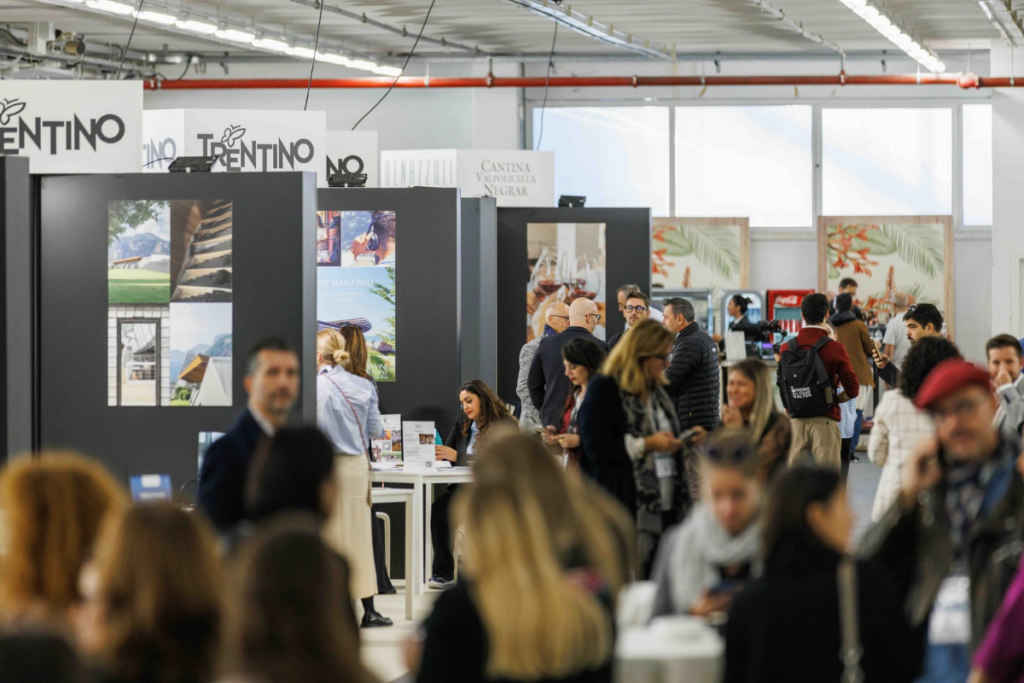
Coles describes without beating around the bush the inadequacy of an approach still centred on volumes, repetitive trade fairs, indiscriminate promotion, and a purely commercial reading of China. An approach that, despite evidence to the contrary, continues to be funded and replicated “as if nothing had happened.” It is a criticism that hits home because it comes from a country for which China is a vital strategic market, and precisely for this reason, it cannot afford to ignore its evolution.
The perhaps most relevant passage of the article, however, concerns the strategic context in which China is redefining its own economic future. Looking at the 15th Five-Year Plan (2026–2030), the priorities are stated explicitly: “Green Development, Rural Vitalisation and High-Quality Industry Development.” These are not slogans or rhetorical exercises, but structural guidelines that shape public policies, investments, regulation, and consumer behaviour.
In this framework, wine is no longer simply a product to be imported. It is part of an ecosystem that interweaves environmental sustainability, rural development, culture, experiential tourism, research, and the qualitative growth of the domestic industry. Continuing to present oneself in China exclusively as an exporter, without aligning with these priorities, means speaking a language the country no longer speaks.
The Australian reflection is therefore a litmus test that should also prompt Europe — and Italy in particular — to reflect. Because if it is true that China represents an emblematic case, it is equally true that the same strategic inertia can be found in other markets considered “mature” or “safe,” starting with the United States. Here too, we often witness the same promotional formats, the same protagonists, the same narratives being reproduced, with a growing sense of fatigue and, at times, of limited real usefulness.
The point is not to deny the value of promotion, but to recognise that promotion alone is no longer enough. Markets demand vision, consistency, the ability to build long-term relationships. They demand content, expertise, and systems. They demand that wine be told not only for what it is in the glass, but for what it represents in terms of territory, sustainability, culture, and development models.
This is where responsibility is distributed throughout the entire supply chain. Producers must have the courage to ask, and demand, different strategies. Consortia must question the real effectiveness of the initiatives they propose and fund. Institutions, including ICE, must be placed in the position, and under constructive pressure, to rethink tools, objectives, and criteria for success, moving away from the logic of mere continuity.
Coles’ article reminds us that wine can no longer simply “return” to markets. It must rethink its own role within markets. China, with its rapid and structured evolution, shows us that the time for inertia is over. But the lesson applies everywhere: those who continue to do the same things in a changing world are not defending their future, they are postponing it.
The global wine market is growing, but it is also maturing. The question today is no longer whether to change, but who will have the courage to do so first, and who, instead, will remain anchored to models that worked yesterday and will no longer be enough tomorrow.
Key points
- China’s wine market has deeply changed post-Covid in consumption, priorities, and cultural expectations
- Australia’s wine industry is criticised for repeating outdated strategies based on volumes and trade fairs
- China’s 15th Five-Year Plan (2026–2030) redefines wine as part of a sustainability and quality ecosystem
- Promotion alone is no longer enough: markets demand vision, long-term relationships, and cultural coherence
- Italy and Europe face the same strategic inertia: change is urgent across all major wine markets