In many Italian wineries, hospitality work is still seen as secondary to production and sales, even though Hospitality Managers build reputation, turn visits into purchases, and manage importers, journalists and international guests. This article looks at why their contribution remains undervalued inside companies despite being essential to commercial results and brand image.
Lately I have received many messages following my previous article dedicated to work in wine tourism, “Wanted: professionals for wine tourism, but on the right terms. The wine sector looks in the mirror“. The topic was simple: on one hand wineries complain about the difficulty of finding trained staff for hospitality, on the other hand skilled professionals report low salaries and little stability.
But among all the testimonies I received, one struck me more than the others. Because it brought into focus an even deeper problem: in many Italian wineries hospitality continues to be considered second class work, and often it is the colleagues from other departments themselves who say so, even just with a gesture or a joke.
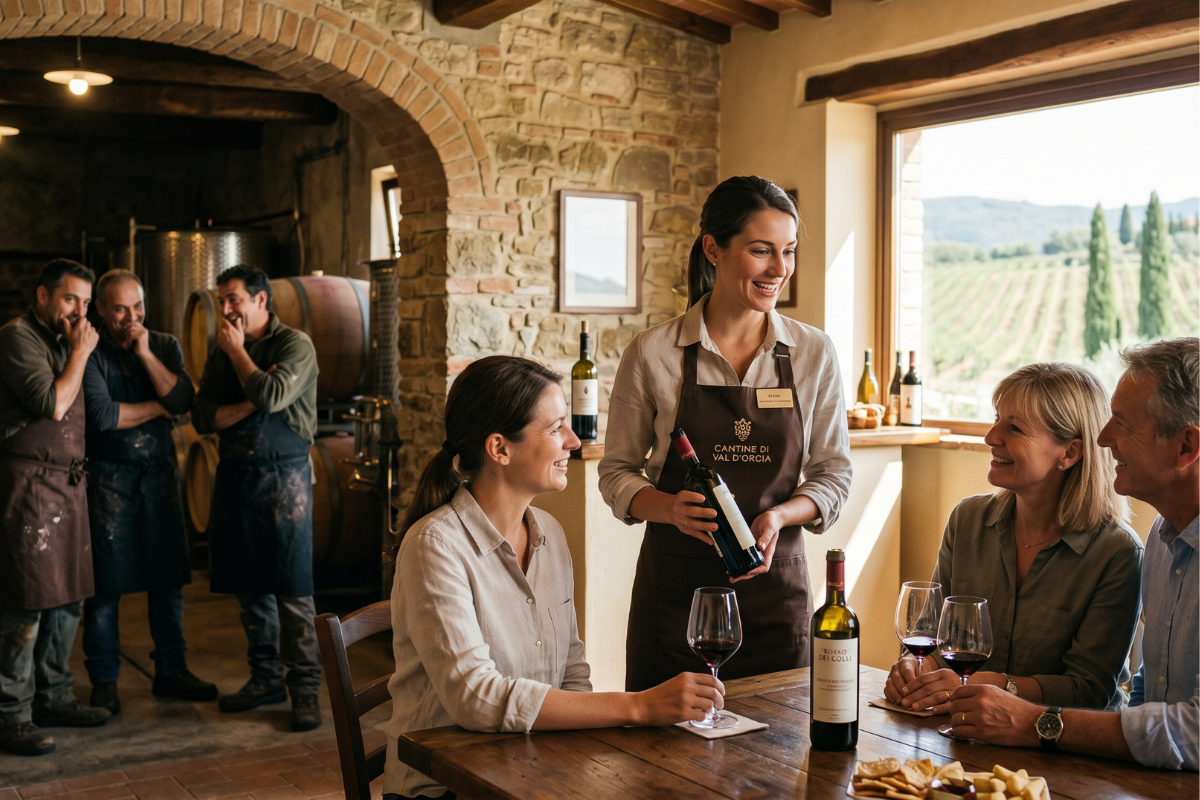
The phrase that Hospitality Managers hear most often comes from those who work in export, sales or production, and it goes more or less like this: “In the end you present the wines and have fun with the guests”.
It sounds like an innocent joke. Actually it perfectly describes the mentality that still exists in many companies. What counts is what can be seen: the vineyard, the winery, the production, the bottles shipped. Everything related to relationships, storytelling, experience and loyalty is perceived as something less concrete by those who work in other areas. Almost an accessory.
Yet today wine tourism works in a much more complex way. Those who deal with hospitality accompany people during tastings, of course, but above all they build reputation, create business relationships, turn a visit into a purchase, generate word of mouth, build customer loyalty, manage importers, journalists, wine lovers and international tourists. In many cases the Hospitality Manager is the first face of the winery and the one the visitor will remember longest.
The problem is that these results are rarely immediate or easy to measure. A customer who returns months later to buy wine online, an importer who becomes convinced after several visits, an article born from hospitality done well: all of this is often not linked back to the work of the person who built that experience.
So Hospitality Managers end up trapped in a paradoxical position: essential in company strategies and invisible in the internal culture of the winery. And this devaluation rarely arrives explicitly. It passes through jokes, distrust, little collaboration, exclusion from shared decisions, or in the constant need to explain to colleagues why one’s own work has as much value as that of the other departments.
This is where many companies make the mistake of investing in tasting rooms, architecture, wine clubs, events and marketing, but then fail to build a company culture that truly recognizes the role of hospitality. The result is that many skilled professionals grow tired. Because working hard is one thing, having to prove every day that you deserve respect from those sitting at the same desk is another.
Key points
- Hospitality work is often seen as less concrete than production or sales inside wineries.
- Hospitality Managers build reputation, convert visits into sales, and manage importers and journalists.
- Results from hospitality are rarely immediate, making the value of this work hard to measure.
- Devaluation shows up through jokes, exclusion from decisions, and lack of collaboration from other departments.
- Companies invest in tasting rooms and marketing but rarely build a culture that respects hospitality.