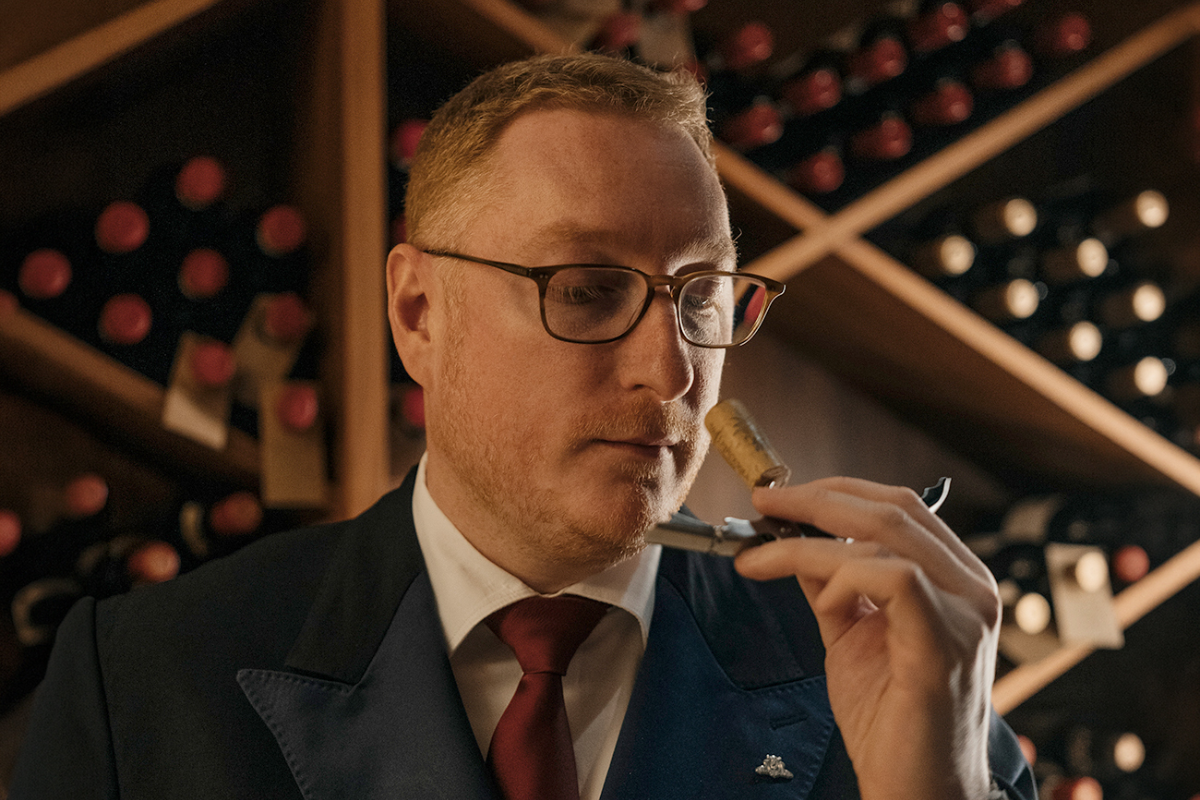
Paolo Porfidio, Head Sommelier at Milan’s Excelsior Hotel Gallia, analyzes modern wine trends. He highlights a significant shift towards consumption by the glass, moving away from monumental wine lists. Emphasizing the importance of fair pricing and engaging storytelling, Porfidio illustrates how sommeliers must adapt to become true selectors and guarantors of value for an evolving clientele.
In a time when wine is often described through the filter of crisis, declining consumption, distant young people, growing attention to health, and prices increasingly under scrutiny, there are places that allow us to read the change from a less predictable perspective. The Excelsior Hotel Gallia, a Luxury Collection Hotel, Milan, is definitely one of these. It is an international venue with a largely foreign clientele, but also with an established relationship with the city.
Here Paolo Porfidio, Head Sommelier of the hotel, observes every day how guests’ choices are changing, along with the weight of the glass, the role of the wine list and the very function of the sommelier. What emerges is that wine has not stopped generating interest, but it must be proposed in a different way. Less ostentation, more rotation. Less monumental wine lists, more selection. Above all, more attention to the relationship between price, quality and the customer’s real desire.
Today there is much talk about a customer who drinks less but better. Is it an overused formula or does it really describe what you see in the dining room?
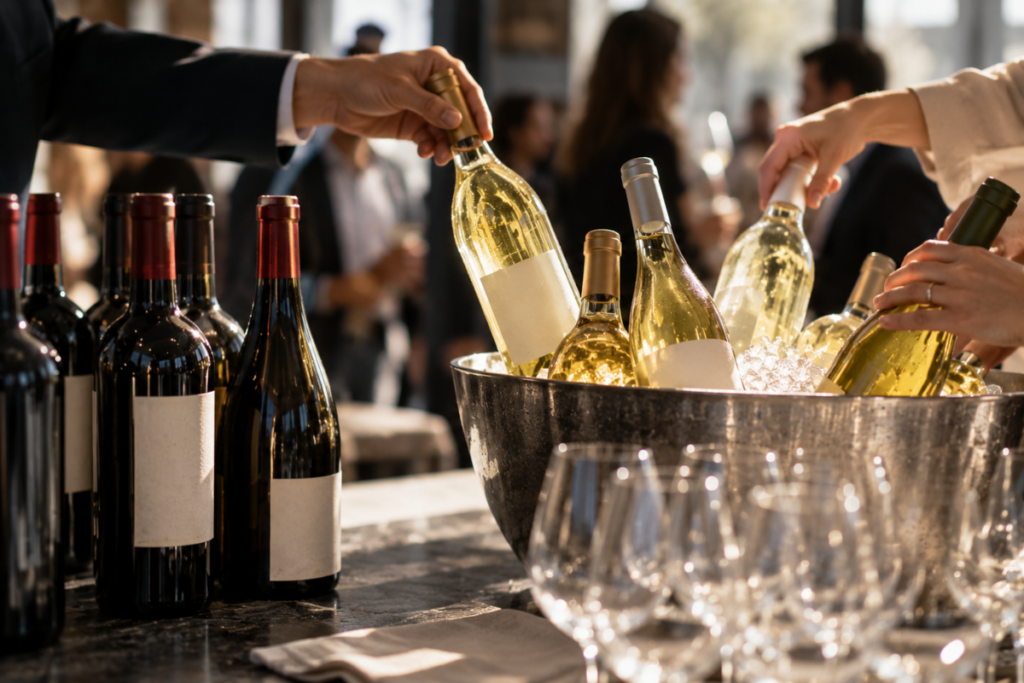
It is a formula that holds some truth. In our case the most evident change concerns consumption by the glass. It is a service we have always invested heavily in, also thanks to the use of the Coravin, which allows us to offer a wide and high level selection, ranging from the most accessible wines up to great Bordeaux, Burgundy and other important labels.
Over the last twelve or eighteen months we have seen this consumption method grow significantly. Even those who in the past would have chosen a bottle today let themselves be guided through two or three glasses during the meal. It is not always a matter of savings, as it is often the desire to try more things, or to have the feeling of drinking less.
Then maybe the final bill is close to that of a bottle anyway, especially if important glasses are chosen, but the mental approach has changed. For a restaurant this should not be read only as a problem. If managed well, the glass allows you to rotate the cellar, propose different wines and also work on labels that otherwise would have less visibility.
Which wines work best by the glass and how much does your international clientele weigh?
Our clientele is composed of about 70% hotel guests, therefore people arriving from all over the world, and the remaining 30% or 40% of Milanese or Italian customers who come for the terrace, the restaurant or the gastronomic experience. The great Italian appellations remain very strong, even with the foreign public. Barolo and Brunello di Montalcino, for example, are always among the most requested reds.
For sparkling wines we work a lot with Italy, proposing Franciacorta, Trentodoc and naturally Prosecco, which remains an immediate reference for the international guest. Champagne is still present, but with different dynamics compared to the past. On whites there is a clear demand for fresh and readable wines. Friuli and Marche work well, in particular Verdicchio, which I strongly believe in. There is an interesting rebirth in both Jesi and Matelica.
That being said, we try not to stop at the most predictable choices. We also propose appellations like Derthona, Soave or other territories that can arouse curiosity. Between the bar and the restaurant we have over 30 or 40 references by the glass and we change them often, even within the same season.
Does pairing remain central or is there a noticeable shift towards a freer choice?
Until recently I would have answered that pairing had a very strong weight. Today, instead, I see more demand for glasses chosen from time to time as the customer wants more freedom. Maybe they do not want to face five or six courses with as many pairings, but prefer two well thought out glasses to accompany the experience. There is also a difference between Italian and foreign clientele.
Foreigners tend to trust more, asking to discover something local, to taste an Italian wine, to let themselves be guided. Italians are often more prudent, more tied to the names and appellations they know. I would not say distrustful, but more careful. However, when trust is built, the Italian customer also lets themselves be guided.
This makes the sommelier’s role even more important. It is no longer enough to bring a bottle to the table, but you must understand how much the customer wants to drink, how much they want to spend, if they want to discover something or stay in a comfort zone.
Does price also have an impact today in a structure like the Gallia hotel?
Yes, and this is a very clear signal of the moment we are experiencing. For the first time since I have been working here, I see a greater attention to price even in a facility of this level. It does not mean that the customer does not want to spend, but they want to understand better what they are spending for. This applies to both Italians and many foreigners.
In the past people trusted with fewer questions. Today the customer observes more, compares, evaluates, and this is not necessarily a bad thing because it forces us professionals to work better on the selection. The point is not to raise markups on glasses because fewer bottles are sold. That would be a wrong shortcut.
The real job of the sommelier is to find quality wines, with a fair price, capable of giving real value to the customer and sustainability to the restaurant. The issue of markups today is very delicate. In many cases, looking at some lists, one wonders why a bottle should cost so much compared to the price it would have in a wine shop or online. If enthusiasts ask themselves this question, let alone the average customer.
How should an effective wine list be built today?
In my opinion, the time of monumental wine lists is over. For years there was a sort of competition to see who had the most references, who presented the most imposing volume. Today it is no longer sustainable, neither economically nor operationally. We have worked hard on reduction and rotation. Before Covid we had over a thousand references, while today we are just over six hundred.
It does not mean having a poor list, but a more manageable, more alive list, capable of rotating better. The good sommelier is not the one who accumulates bottles in the warehouse, but the one who builds a coherent selection, makes it rotate and updates it based on the market response. A list that is too large is often not even read, becoming an object to show off rather than a sales tool, which is why today we need a leaner list with a clear logic.
No-alcohol, low-alcohol and half bottles: are these real demands or more just topics for debate?
Regarding no-alcohol, we were among the first to introduce it, both on the wine side and, especially, on the cocktail side, working with our bar manager on low-alcohol and alcohol-free proposals. However, we must be honest: on dealcoholized wine in Italy the demand is not yet strong. We do not have many customers who sit at the restaurant and explicitly ask for an alcohol-free wine.
That being said, having it on the list is useful. If a person cannot or does not want to drink, it is important to be able to offer an alternative, and the reaction, when it is proposed, is positive. Abroad the phenomenon seems more advanced, also comparing myself with colleagues, but in Italy we are still in an initial phase. On half bottles the situation is different.
They are coming back, even in gourmet restaurants, often for a matter of cost and quantity. We have chosen not to focus on them because we work very well with the glass and with the Coravin. However, the demand exists, as several producers have told me that they have resumed bottling formats they had almost abandoned. Personally, I continue to think that the glass is a more interesting answer, also for quality of service and preservation.
In this scenario, how does the way of approaching a young or inexperienced customer to wine change?
We need to stop starting from technicalities. When a person sits at the table, in most cases they do not want a lesson on barriques, yeasts or vinification, but they want to feel good, relax and feel accompanied. My approach is to start from the story: the producer, the territory, an anecdote, a story that makes that wine memorable.
Very often customers, when they return, do not ask for that oak-aged wine, but rather for that wine from that producer about whom I had told that story. That is where the bond is created, because wine has sometimes remained too serious, too closed in its own language. Naturally it should not be trivialized, since wine is a complex beverage and this complexity must be respected, but it must be made accessible.
When it is said that young people do not drink wine, we must also remember that at 18 not even previous generations drank Barolo or Brunello. Many arrive at wine later, and the real change, if anything, concerns other segments: daily consumption has fallen, people drink less at home, the business lunch with wine has almost disappeared, the family dinner has lost its centrality. Wine has increasingly become the beverage of special occasions.
Is the relationship with distributors and “unobtainable” bottles also changing?
Yes, the market is cleaning up. In the past, it almost seemed like you had to beg on your knees for certain bottles. Today, in many cases, it is the producers or distributors who seek out the restaurant, which gives more power back to the sommelier, especially in important structures. The system of forced allocations, where to get a few highly requested bottles you had to buy large quantities of something else, is changing.
And in my opinion it is positive. If to get two bottles I have to buy thousands of euros worth of things that do not interest me, I prefer to give up. The customer does not get up from the table because a specific label is missing, as long as the list still has depth and valid alternatives. France is also paying for certain excesses.
Burgundy, for example, is released less compared to a few years ago. The same goes for a part of Champagne. Prices have risen a lot and today even that market feels the consequences. The point, in the end, is always the same: wine must return to being desirable, not just prestigious. And to do so, we need selection, storytelling, moderation and a more honest relationship with the customer.
Key points
- Consumption by the glass is replacing traditional bottle orders, allowing better cellar rotation and wider tasting experiences.
- Monumental wine lists are obsolete, making way for leaner, dynamic selections that reflect market response and manageability.
- Fair pricing transparency is now essential even in luxury hospitality, demanding better value curation from professional sommeliers.
- Engaging storytelling approaches attract younger and less experienced consumers better than rigid technical lessons on winemaking processes.
- Forced distributor allocations are declining, returning purchasing power to sommeliers who prioritize depth over specific unobtainable labels.