Every time yet another analysis on the decline in wine consumption comes out, the list of culprits is always the same: health consciousness, the breathalyzer, reduced spending power, the new generations who drink less. All true, of course. But the first name on the list is always missing. Us.
We producers, we sommeliers, we wine journalists. And we wine lovers too, who have proclaimed ourselves custodians of something that never belonged exclusively to us. We did everything we could to get wine out of Italian popular culture. And we succeeded brilliantly.
It must be said that at the start we had our reasons. Almost forty years ago, wine had an image tied only to quantitative values: hectoliters, alcohol content, price per liter. The methanol scandal was the peak of a deterioration that had been going on for some time. Building a culture of quality, raising the bar, teaching people to tell the difference: it was necessary, it was right, and it was the most beautiful season of Italian wine.
The problem is that we could no longer stop. We deluded ourselves that we could train millions of wine lovers around the world through an ever more complex, ever more initiatory language. We confused raising quality with raising the entry threshold. And so we began to clean house.
We abhorred any event that looked too “popular with the masses.” A gathering where the final public enjoys itself drinking a glass of wine without frills seemed to us the worst of the worst. We criticized Vinitaly for years, and yours truly wrote and said the same things, arguing that final consumers should stay outside the gates of Veronafiere, because a few drunks among the stands would stain the pristine image of our beloved wine.
We produced thousands of masterclasses a year in front of ever emptier rooms, and we told ourselves it was the fault of competition between events. We also raised a cordon around those who tell the story of wine. If you are not a specialist, you cannot access the prestigious role of communicator. If you do not hold official qualifications, you cannot afford to talk about wine.
Those who tried to make publications for the general public were swept away, almost burned at the stake like heretics. We generated a sea of influencers who influence the usual circle of the chosen, just talking to hear themselves speak among themselves. And meanwhile wine media are disappearing: soon paleontologists will be studying them.
Outside this bubble, meanwhile, everything else has happened. Alcoholic drinks colored orange. A world of mixology that does not care about looking culturally elevated and is “content” with being cool in its immediacy. They did not win because their product is better than ours. They won because they ask nobody to study before having fun.
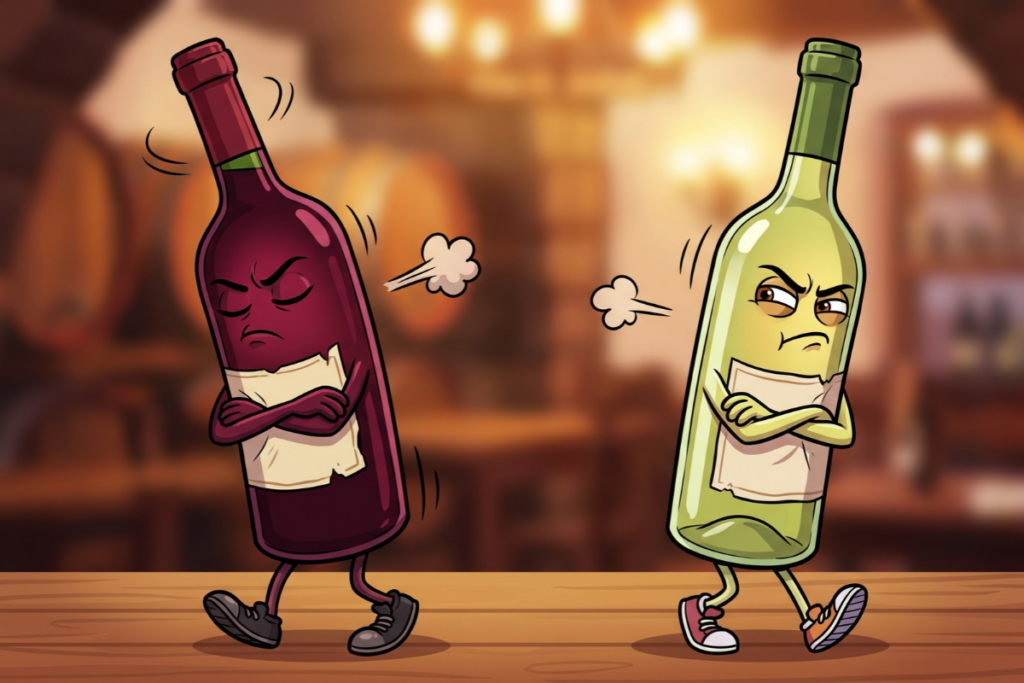
But the deepest damage is not in the market numbers. It is in relationships. Friends began to see us as pains in the neck. Relatives are terrified at the idea of gifting us a bottle, for fear of getting it wrong, and so they give something else.
At the restaurant, when the moment to order comes, everyone turns to us experts awaiting the verdict, as if we were the oracle of Delos. Nobody dares say “I like this” anymore without looking at our faces to understand whether they said something silly. We took away people’s right to make mistakes while drinking. And the right to make mistakes is exactly what makes a culture popular.
A few days ago my physiotherapist was massaging my back, hurting me terribly. Knowing what I do for a living, she said: “Listen, a patient of mine gave me a wine bought at the supermarket… but how can you buy wines from those shelves and delude yourself that they are drinkable? They are cheap, but absolutely mediocre. What do you think?”
I let out a groan. It was not because of my aching muscles. It was because that sentence contained all of our work of the last thirty years: a person who has nothing to do with wine, who received a gift, and who instead of drinking it with pleasure apologizes in advance for its provenance. We taught her to distrust a gift. We taught her that there are unworthy shelves and worthy shelves, and that without someone like me she cannot tell them apart.
That day wine lost another consumer. Not because of cholesterol, the breathalyzer, or the price. That said, I do not believe at all that the public is gone. In July, in Sibari, over thirty thousand people, many of them young, arrived at an archaeological park not easy to reach, in oppressive heat, paying for a ticket and gladly spending more, to drink wine and eat in a festive atmosphere.
The public exists indeed. It simply shows up when we stop questioning it at the entrance. I am not asking to give up competence: that would be the opposite error and equally stupid. I am asking to stop using it as a filter at the entrance instead of as a service. The difference between an expert and a priest is all here: the first helps you choose, the second makes you feel inadequate.
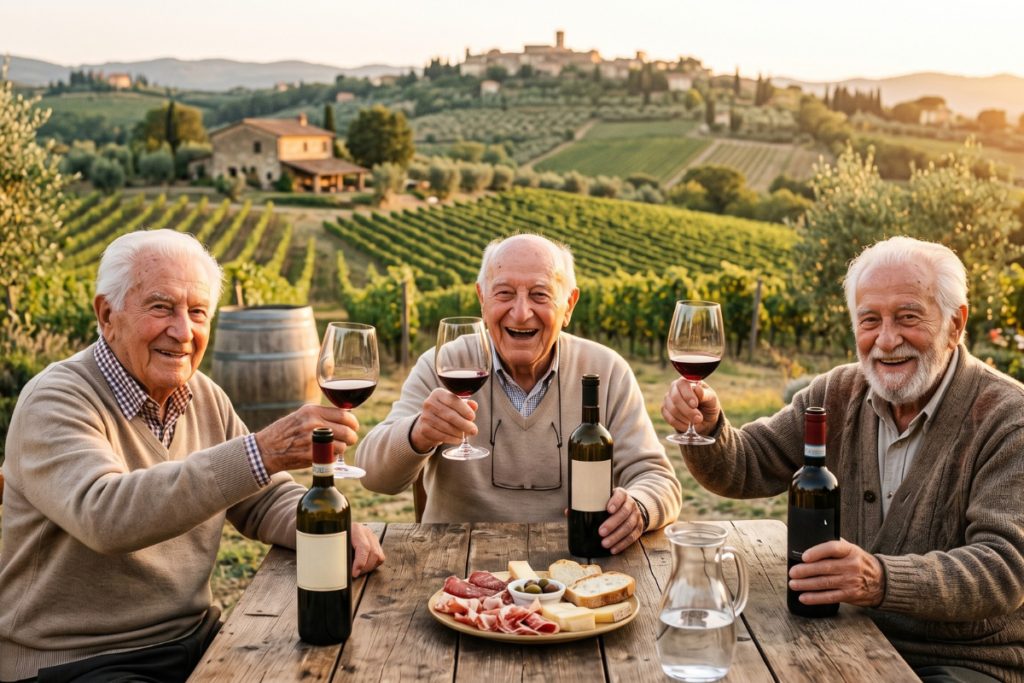
Wine will return to popular culture only when someone can drink a glass of it without feeling examined. Even at the supermarket. Even when getting it wrong.
In the meantime, let us count ourselves. And let us see how few we are.
Key points
- Expertise became a filter, discouraging ordinary people from enjoying wine without fear of judgment.
- Elitist events and communication pushed wine away from popular culture while mixology gained ground.
- The right to make mistakes is what makes a culture popular.
- The public still exists: over thirty thousand people attended the Sibari event in July.
- Competence should be a service, helping people choose instead of making them feel inadequate.