Two Italian wineries, Vigna Roda and Tenuta Maule, offer opposing views on growth in wine tourism. One deliberately caps visits at about 40 people to preserve authenticity, while the other, close to the motorway and station, struggles to reach tour operators. The key question: who sets the pace of growth, the winery or the territory?
The series of multi-voice interviews from Wine Meridian’s Wine Tourism Observatory continues. This time we put new questions to two realities that are very different in territory and approach: Vigna Roda, a small winery in the Colli Euganei, and Tenuta Maule, a Vicenza estate that produces Lessini Durello, Gambellara and other denominations of the area.
Vigna Roda openly claims its small scale: its limited size, they explain, is what allows a direct relationship with the guest, devoting time to storytelling and conversation instead of the logistics of large numbers. It is no coincidence that the winery has set a voluntary cap of about 40 people per event, to keep the family and authentic character it considers its distinctive trait.
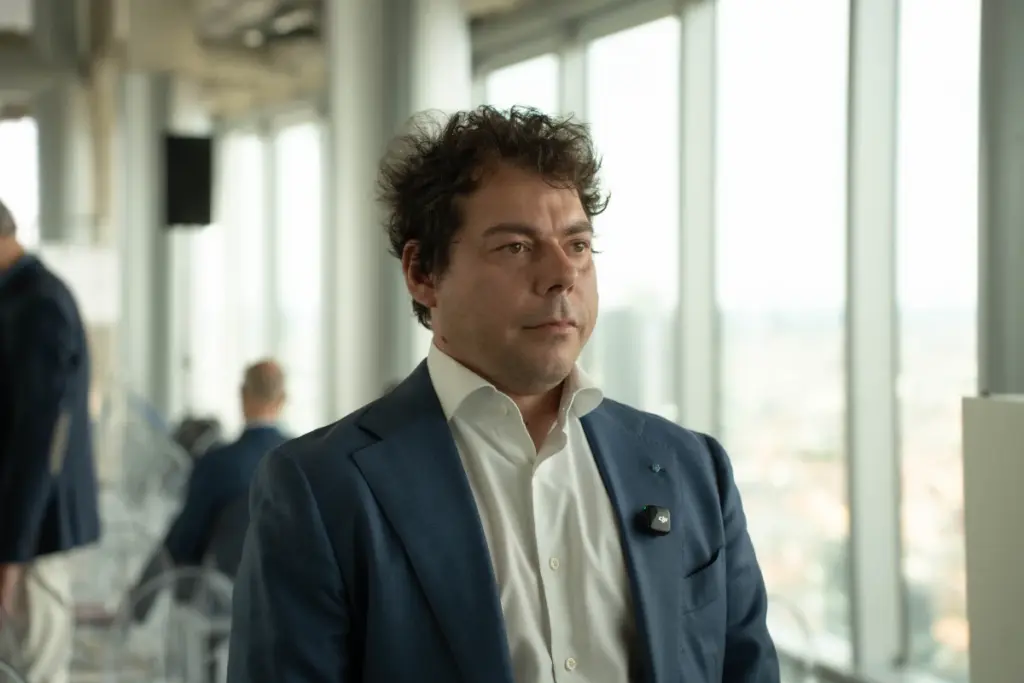
Mauro Maule of Tenuta Maule starts from the opposite position: for him, company size should not even enter the discussion, because wine tourism must be built on the product and the territory, not on the company’s numbers. But when asked to look at those in the area with fewer resources, he admits that strategies, of necessity, change according to what a company can afford. One point remains firm, however: without a bit of entrepreneurial risk, he says, you condemn yourself to offering “what everyone else offers”, and that is a battle lost from the start.
Starting from scratch: two different pieces of advice
Asked what they would advise those who start from a different size, the two companies converge more than one would expect. Vigna Roda insists on the need to first define the audience you want to welcome and to grow step by step instead of offering everything at once.
Maule reaches a similar conclusion through a personal experience: he recalls feeling, as a visitor in other wineries (even prestigious ones), treated like “a number to exploit”, with wines in the tasting that then did not even appear on the list. For him the advice boils down to a single priority: the customer comes first, even before the structure or the offer.
However, it is on external factors that the two testimonies drift furthest apart. For Vigna Roda, accessibility is a very concrete daily problem: Erasmus students arriving from Padua by public transport often have to walk more than a kilometre uphill from the bus stop, with few return services. For the winery, this shows that wine tourism cannot depend on individual wineries alone: connections and promotion of the territory are needed, designed also for those who travel without a car.
Maule, on the contrary, says he is in a fortunate position: the winery is five minutes from the state road, the motorway and the railway station. The problem, for him, is not logistics but collective promotion: although part of several consortia (Lessini Durello, Gambellara, DOC Vicenza, as well as the Identità Basaltica project), he laments that a common guideline capable of giving real visibility to the territory is still missing, beyond a few tasting stands which, he admits, did not bring the numbers hoped for.
On the tour operator front too, the two experiences mirror each other, turned upside down. Vigna Roda did not have to look for anyone: it was the operators who contacted them after discovering the winery, bringing small groups of foreigners or turning company meetings into tasting days. Maule, who would have the capacity to host two buses at a time, struggles to enter a market where agencies have long had established relationships elsewhere, while remaining convinced that it is a decisive tool, when it works.
Technology: telling your story or understanding yourself?
On the digital front, perhaps the most interesting gap emerges. Vigna Roda has activated online booking but does not yet use CRM or analytics tools, while acknowledging that investing in them will be necessary; for the winery, as for audiences, Italian visitors rely more on social media and reviews, foreigners more on direct word of mouth.
Tenuta Maule, instead, has invested for years in four paid applications dedicated to itinerant tourism (in particular the camper audience from Northern Europe: Germany, France, Austria), in addition to a website and its own social channels. But the most original fact concerns data analysis: Maule is himself a programmer and has developed in house the winery’s management software, with statistics on visitors and their return, a level of technological maturity that is almost rare.
With this second article we bring the story of two wineries with two opposite readings of the same concept: those who choose small scale as a value and those who would like to grow but run into a territorial promotion that is still fragmented. Perhaps the real question, for the Wine Tourism Observatory, is no longer “how much does wine tourism matter for a company”, but who decides the times and ways of this growth: the company itself, or the territory around it?
Key points
- Small scale can be a value: Vigna Roda caps events at about 40 people to preserve authenticity.
- Customer first: Maule advises putting guests before structure or offering, after feeling treated as a number to exploit.
- Accessibility matters: Vigna Roda says wine tourism needs transport links and territorial promotion for visitors travelling without cars.
- Collective promotion is lacking: Maule says the territory still has no common guideline despite several consortia.
- Technology divides them: Vigna Roda has online booking only, while Maule built his own management software with visitor statistics.