The 2026 California Winegrape Mapping Project reveals that 47,229 acres of vineyards, about 19,114 hectares, were removed between August 2025 and August 2026. Surplus wine, falling consumption and unsold grapes drive the correction, leaving 439,115 acres planted. Experts disagree on whether uprootings will continue, while the case offers Italian producers a lesson on managing supply early.
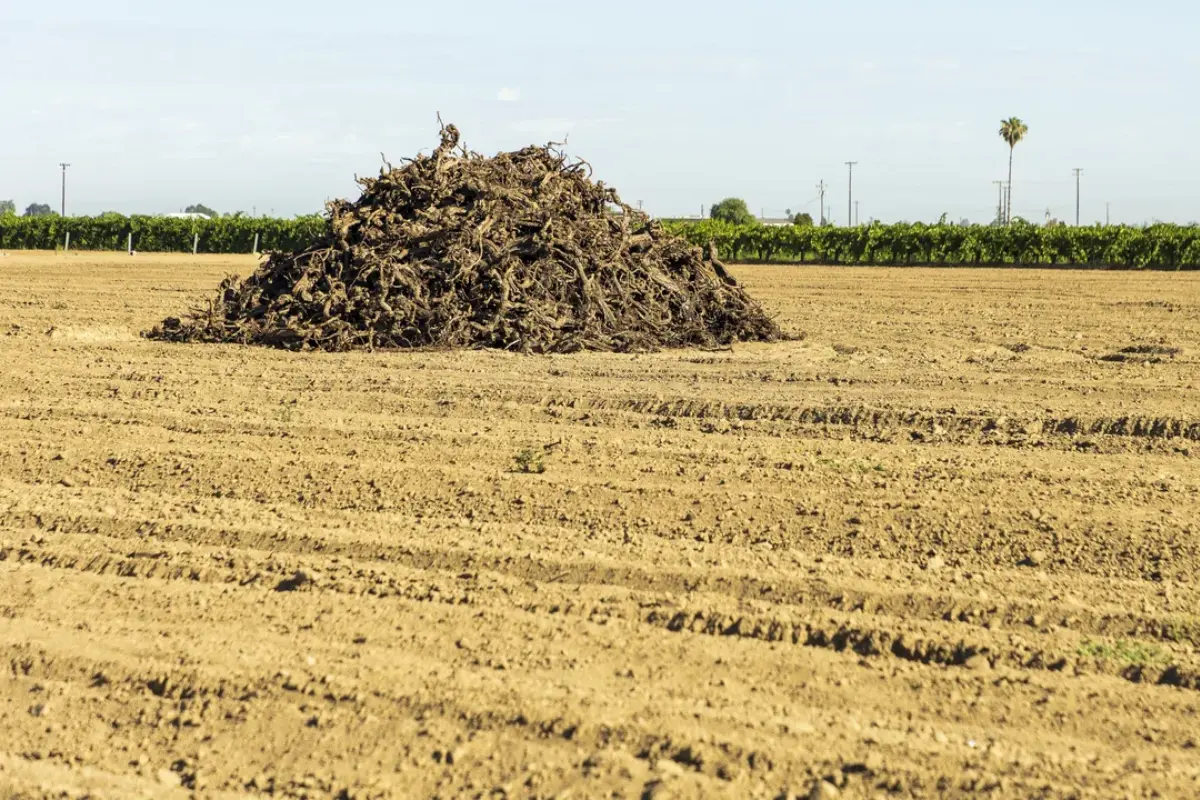
The California wine crisis is leaving an increasingly visible mark on the agricultural landscape of the American state. Between 1 August 2025 and 1 August 2026, 47,229 acres of wine grape vineyards were removed, equivalent to about 19,114 hectares. This emerges from the 2026 California Winegrape Mapping Project, promoted by the California Association of Winegrape Growers (CAWG) in collaboration with sector organizations and carried out by the company Land IQ.
As of 1 August 2026, the vineyard area still in place amounted to 439,115 acres, about 177,731 hectares. The figure signals a profound restructuring of the Californian vineyard, driven by a market in which the availability of grapes and wine continues to exceed demand’s capacity to absorb it.
Beyond uprootings: how much is the Californian vineyard shrinking
The comparison with the previous survey calls for a clarification. In 2025, 477,475 acres of standing vineyards had been recorded, while the new mapping records 439,115: a difference of 38,360 acres, equal to about 8%. This differs from the 47,229 acres uprooted, because the update also identified 8,869 additional acres through new surveys, classification corrections and greater precision in delineating the areas. Moreover, the period considered in the first edition was shorter.
The distinction goes beyond statistics. The census considers all areas on which vines are still present, including those not yet productive, poorly cultivated, temporarily set aside or abandoned. As a result, the area actually in production could be significantly lower than the declared total.
According to Jeff Bitter, President of the Allied Grape Growers cooperative, the effectively productive areas would now be close to 400,000 acres (161,874 hectares). This is an estimate reported by the San Francisco Chronicle, rather than a figure directly measured by the mapping.
Surpluses, falling consumption and grapes without a market
Behind the uprootings lies a crisis involving the entire supply chain. The slowdown in wine sales in the United States, together with the reduction in alcoholic beverage consumption, has aggravated an imbalance between supply and demand that had already existed for several years.
A significant indicator concerns stocks: according to estimates by the broker Turrentine Brokerage, about 28 million gallons of bulk wine, equivalent to about 106 million litres, would be available in California. Only 15 to 17 million gallons, about 57 to 64 million litres, would find buyers. Unsold wine limits the need to buy new grapes, putting pressure on the prices paid to growers.
The problem particularly affects the areas most exposed to the production of large volumes destined for the largest companies. In Lodi, in San Joaquin County, several vineyards are being removed or abandoned because grape revenues no longer justify the costs of cultivation and of a possible replanting. Some land is being turned over to alternative crops, such as almond and olive trees. This is therefore more than an agronomic choice: for many companies, uprooting means ending a production that has become economically unsustainable.
Will the correction be enough to rebalance the market?
Reducing the planted area alone cannot guarantee a rapid return to balance. Stocks of wine already produced continue to compete with new vintages, while demand remains weak. Jeff Bitter believes that uprootings may continue into the winter of 2026-2027, while suggesting that the peak may already have been reached. Other operators fear instead that an excessive reduction in production capacity could cause future grape shortages in some areas. Bitter, however, considers it possible to offset any deficits through imports.
One variable also remains difficult to measure: areas that are abandoned but not uprooted. In some zones, vines remain in the field even when they are no longer cultivated to obtain a marketable harvest. This makes it even more complex to assess how quickly the effective supply is adjusting to demand.
A reflection for Italian wine: governing supply before the market does
The Californian story offers a useful reflection for Italian producers as well. Growth in vineyard area and production capacity do not always equate to economic strength: when demand contracts, management costs and surpluses can turn an agricultural asset into a source of vulnerability.
For Italian companies and consortia, the priority should be to read market developments more precisely,distinguishing between volumes that can actually be placed, stocks, price bands and wine types. Each denomination and segment responds differently to changes in consumption. The response, moreover, cannot consist solely of raising perceived value through communication. Production planning, commercial positioning and consumer knowledge need to be connected, so that choices in the vineyard stop following market expectations that are by now outdated.
California shows how costly it is to correct imbalances once they become structural. For Italian wine, the aim is to anticipate difficulties rather than imitate American uprootings: understanding where to produce, for whom and in what quantities, because a territory’s competitiveness is also measured by its ability to preserve its companies before they are forced to give up their vineyards.
Key points
- 47,229 acres removed between August 2025 and August 2026, about 19,114 hectares of wine grape vineyards.
- 439,115 acres remain planted, although truly productive land may be closer to 400,000 acres.
- Bulk wine stocks of 28 million gallons put pressure on the prices paid to growers.
- Uprootings may continue through winter 2026-2027, though the peak might already have passed.
- Italian producers should anticipate difficulties by connecting production planning, positioning and consumer knowledge.