Euromonitor’s Top global consumer trends 2027 report leaves wine out, yet its five trends carry practical lessons for the sector. Reliability, AI, community, indulgence and distrust of the future each point to opportunities and weak spots for wineries, from transparent communication on vintages to verifiable claims, winery events and a balance between technology and human advice.
We read carefully the report Top global consumer trends 2027 by Euromonitor International, published in early November 2026. The document identifies five interesting changes in consumer behavior that will affect purchasing choices in the coming months: Shelf Assured, Reluctant Reliance, Peer Powered, Mode-Switching and Future Tense.
Out of curiosity, we tried to understand whether the trends hid any useful insights for the wine sector as well. Since wine is not mentioned in any of the five trends, the reading required an extra step: starting from the behaviors described by Euromonitor and asking how to make wine relevant in 2027. Five considerations emerged, some favorable, others more uncomfortable. A note on method. The data come from Euromonitor, the deductions about wine are ours.
1. Shelf Assured: value becomes reliability
Unpredictable prices, empty shelves and reformulated products have made instability an everyday condition. 72% of consumers worry about rising prices and 54% buy only from brands they trust completely. The question about value broadens: can I count on this product still being available, tasting the same and costing what I expect next month, or in a year? A single misstep (stock running out, a reformulation, a smaller format) can remove a brand from the shopping list, and retailers take advantage by steering disappointed buyers toward private labels.
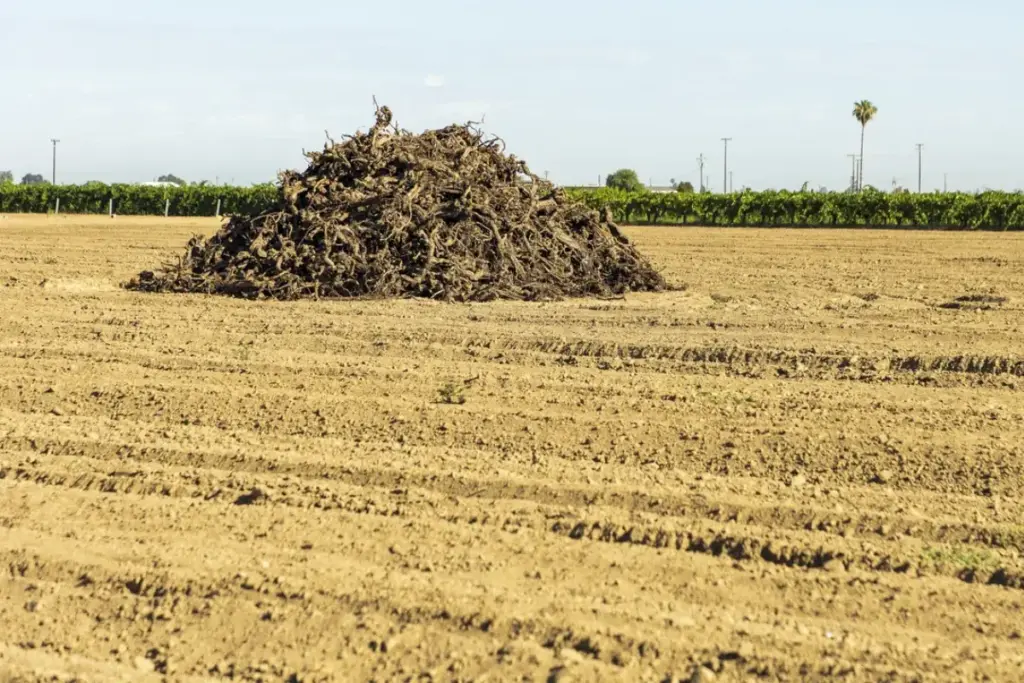
For wine this is partly an advantage, because it is a product that was made a hundred years ago and, in all likelihood, will still be made a hundred years from now. That rosier premise aside, the report states that consumers ask for consistency, while wine lives on vintage variability. The product comes from the land and nature can only be controlled to a certain extent: a bad vintage means fewer bottles, sometimes a different profile.
But the report offers a precise way out: when disruptions are unavoidable, transparency is needed, and open communication turns frustration into reassurance. Applied to wine, this means that a difficult harvest gets told, it is declared how many fewer bottles were produced and what changes in the glass. Whoever warns customers, clubs and the trade before they find an empty shelf protects trust. Whoever stays silent leaves room for the retailer’s private label, which in the report profits precisely from brands’ missteps.
2. Reluctant Reliance: AI helps, the decision stays with the person
81% of consumers use generative AI for everyday activities (it was 71% in 2025), but only 19% consider it an extremely reliable source for purchases and 12% for health advice. Consumers want AI to simplify choices but consider it important that the final choice remains theirs. Specifically, users ask for help ordering the options, evaluating brand promises and narrowing down the choice, which remains exclusively theirs.
Wine shares the characteristics of the categories where AI is used most: a huge and fragmented offering (denominations, vintages, producers), a technical language that is hard for non-experts, a choice often tied to an occasion (dinner, gift, pairing). AI can act as a first filter, with comparisons, pairings, summaries of product sheets and reviews, and suggestions based on budget and occasion.
For wineries the practical angle is visibility: the report warns that those who invest little risk losing ground, because AI is becoming an increasingly important gateway to information and discovery. Complete product sheets, clear pairings, occasions of use and updated prices help to appear in the answers.
The flip side is that in Italy unease toward this technology is among the highest, and in wine the human element (the producer, the sommelier, the wine shop owner’s advice) is part of the product’s value. A balance will have to be found between artificial intelligence and the human factor.
3. Peer Powered: identity becomes collective
People assert their individuality through communities that share values, interests and experiences. For example, run clubs, miniature painting evenings, repair cafés, walking routes and book clubs. Communities are also solid purchasing networks: 72% trust the advice of friends and family (the most highly rated source) against 46% for advertising, and 43% want to interact with brands to influence product development.
In our view this is the most useful trend for the wine sector because wine is by nature a facilitator of relationships, and every example of community listed in the report is a context where a bottle can find a place. It is only a matter of fitting into a situation that is already natural for the product.
The report summarizes in four levers what a brand can do: own the space, create the product that enables participation, shape the ritual, give members a voice. Wineries start with two levers already in hand: the space (the winery itself) and the product (the wine). The ritual is built with events followed by purchase.
A voice is given to consumers through reviews and word of mouth. A meeting at the winery, with the producer telling their philosophy, turns the guest into a sounding board among their friends, that is, into the source consumers say they trust most.
4. Mode-Switching: optimization, recovery, indulgence
Self-optimization has become a cultural expectation, and it generates fatigue. 58% of consumers experience moderate to extreme stress every day and 69% look for ways to simplify their lives. People alternate between three states: periods of intense optimization, deliberate recovery, strategic indulgence (the report writes of small treats, the most widespread behavior, at around 90%).
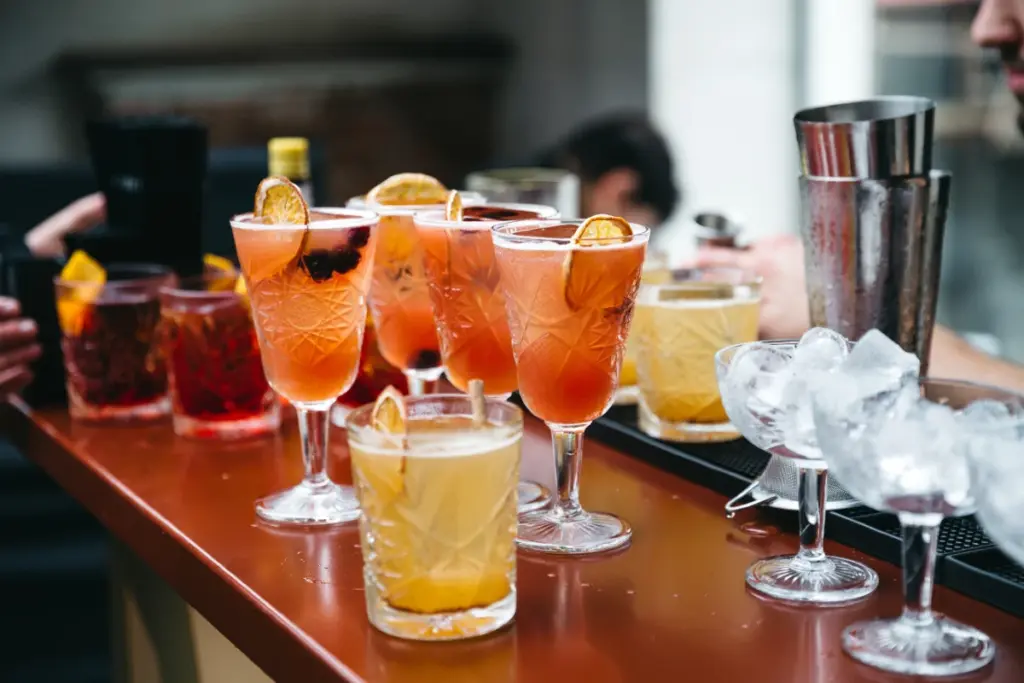
Wine finds its place in the moment of indulgence. After a week of meal planning and training, going out for pizza with a glass is a small moment of gratification. But small treats are countless and wine is only one of the possible options, because the moment of indulgence has to be earned, and wine does not inherit it by right.
On the opposite side, that of health and longevity, wine has more difficult terrain: the report indicates as a winning strategy positioning by occasion and legitimizing indulgence as an intentional choice. The Jumex case, which pairs protein smoothies with a line of alcoholic nectars to serve both optimization and reward, shows a brand occupying both states. For wine the question to ask is: on which occasion can my bottle be the right choice to unwind?
5. Future Tense: the promised future loses credit
Meager savings (only 26% have funds ready for an emergency), volatility perceived as permanent (38% think the world will be more dangerous within five years) and declining trust in systems of government push consumers in three directions: living in the present, changing the rules through activism (25% of those politically engaged boycott brands far from their convictions), redefining involvement toward interiority and spirituality. However, 44% say they enjoy life without worrying about planning.
Here wine meets the greatest resistance. In a socioeconomic and geopolitical crisis, a product that is not a staple risks suffering. But an alternative reading remains, coming from the previous trend: if indulgence is also a need and small luxuries are the answer to the here and now, wine can become an accessible gratification even in a period of deep financial tension.
The last insight is the sharpest, and it is aimed in particular at the B2B audience. Between January 2024 and June 2026, sales of fast-moving consumer goods with concrete, immediately verifiable claims grew by 33%, against 18% for products with generic claims verifiable only over time, a gap of 15 points. Among generic claims the report lists “natural”, “sustainable”, “ethical”, “responsible”. Among concrete ones are certifications (organic, vegan), awards and measurable results.
The data concerns fast-moving consumer goods in general and wine is not isolated. Wine, however, is full of generic claims, and the report’s advice is to abandon promises that cannot be proven and to show sourcing, prices and trade-offs with transparency. A winery that says “sustainable” would do well to add numbers, certifications and verifiable practices.
Read one after the other, the five trends neither endorse nor reject the wine sector. Because where relationship and occasion matter, the sector starts a few lengths ahead; whereas where consistency, proof and transparency are required, it has to sit down and do its homework.
And although these are forecasts for 2027, and neither we nor the wineries own a crystal ball, we believe it is useful to ask which of these five behaviors one’s own wine can truly intercept, and which is better left alone.
Key points
- Transparency on vintages protects trust: communicate bottle shortages and changes in the glass before customers find empty shelves.
- AI visibility requires complete product sheets, clear pairings, occasions of use and updated prices.
- Community events at the winery turn guests into trusted word-of-mouth voices among their friends.
- Indulgence occasions give wine its place among small treats, so identify the moment your bottle suits.
- Verifiable claims such as certifications, awards and numbers outperform generic words like “sustainable” or “natural”.