Allegra Antinori outlines the generational succession at Marchesi Antinori as a gradual, informal process rooted in shared family decision-making. She highlights a strategic pivot from pure commercial expansion to prioritizing corporate reputation and using hospitality as a vital marketing asset. The interview explores balancing 26 generations of history with sustainable innovation and the integration of new talent.
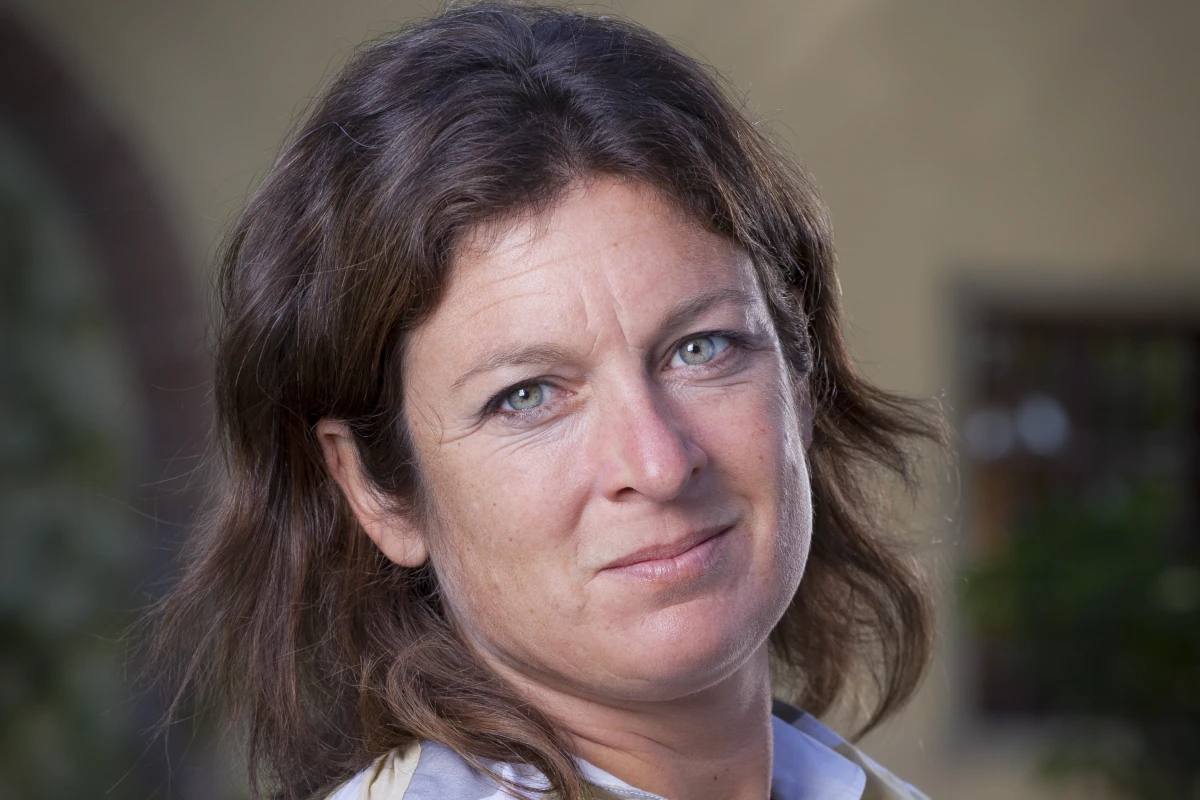
How do you guard a legacy that spans 26 generations while simultaneously projecting it courageously into the future? And how do you innovate without betraying a style that has become synonymous with excellence worldwide? These are complex questions requiring vision, balance, and a profound awareness of one’s role. These reflections spark the dialogue with Allegra Antinori, Vice President of Marchesi Antinori Spa and protagonist of a new appointment of “Amorim Wine Vision” focused on the theme of generational turnover. Amorim Wine Vision is a thought network that centers on the original visions of entrepreneurs and managers in the wine world, aiming to act as a catalyst for ideas, a place to share know-how, experiences, and brilliant perspectives, offering anticipatory perceptions and concrete insights.
Allegra Antinori’s words reveal not just the story of a company, but a true case study on change management. The interview unveils the outlines of a “shared and informal” generational passage that moves away from classic managerial models to embrace an exquisitely familial approach. A fundamental strategic transition is outlined: from the purely commercial focus of the past to a new priority—the enhancement and defense of corporate reputation.Furthermore, the almost unexpected power of hospitality emerges, transformed from a relationship tool into the engine of a brand capable of attracting tens of thousands of people. In this context, the greatest challenge becomes harmonizing historical memory, embodied by lifelong collaborators, with the energy of new talents, in a delicate balance between the value of details and the need to simplify decisions. A genuine and articulated narrative offering an authentic perspective on how to guide a long tradition toward continuous evolution.
In the transfer of responsibility from your father’s generation to yours, how was the transfer of decision-making power concretely managed? Were there areas where this process was more gradual?
In our case, the transfer of responsibility is an absolutely gradual and continuous process; there has never been a moment of rupture. It is a shared transfer of responsibility that, to tell the truth, happens in a rather informal manner. It is a sharing of decisions: we discuss them together and then deliberate. We are fortunate to be a unique company, also thanks to the presence of our CEO, Renzo Cotarella, who has been with us for almost 45 years and whom we consider part of the family for all intents and purposes. Decisions are made collegially, sometimes even at the canteen table. This family approach ensures that there hasn’t been a sharp transition, but a very soft evolution. My father is 87 years old and comes to the office every day, but he has freed himself from the most institutional responsibilities, leaving them to us children; the presidencies of the various companies, for example, are all our responsibility. At the same time, we are managing the entry of the new generation. The common goal is to slowly find the right people for the right place, a fundamental aspect to maintain that image of a family company that corresponds to our reality. The most important thing is to always have a family member assume the role of “family leader,” the same role my father has always had and that we try to interpret today: representing the family, knowing the markets, understanding what isn’t working in the company, defining the style of the wines. This last point is crucial for us, being a product-driven company. It is a work of sharing that we carry forward together for the good of the company.
Every generation brings a different approach. What is the main difference in managerial vision between you and the previous generation?
Our company has changed completely in the last 50 years. When my father took the reins, it was a completely different reality. Over the years, thanks to his vision, a bit of luck, and market contingencies, he made it grow exponentially. Consequently, the managerial approach today must also be different. While in the past the commercial aspect was a priority because the company was in full development, today the scenario has changed. There is a greater awareness of corporate reputation and how to protect it. I would say that today we are more oriented towards valuing reputation than the mere commercial aspect. Our approach and that of our managers are different precisely because the company has consolidated an image that it did not have 50 years ago. Furthermore, technological evolution has transformed relationships and the way of working: we travel faster, we have smartphones and video calls that make everything more immediate and have changed the very nature of managerial work.
Innovation is a fundamental engine for a historic company, as you confirm. What is a technological innovation, in the vineyard or in the cellar, that your generation strongly wanted and introduced, and what benefits has it brought?
The most important and impactful innovation we have realized in the last 50 years has been investing everything in our vineyards. This strategic choice, which required a great deal of time to bear fruit, allowed us to reach the goal we had set for ourselves: producing wines of the highest quality, capable of expressing a specific territory and a particular variety. Today, moreover, the world is moving increasingly towards sustainability. Climate changes, such as global warming, while being a challenge, have also created new opportunities. From a technical point of view, for example, we invested in Vitibot, a small company developing autonomous tractors, which certainly represents an innovation. We constantly conduct experiments in the viticultural field, always with a focus on sustainability. Although I am not an agronomist, I know there is ceaseless research work with the goal of making better and more sustainable wines and seizing the opportunities offered by climate change. All this, for me, is innovation.
Today new skills are required, from digital marketing to advanced wine tourism. How is the new leadership integrating these professionals into a company with a consolidated structure like Marchesi Antinori?
For us, hospitality is becoming increasingly important. Ever since I started working at 18, we have always used hospitality as a powerful marketing and relationship tool. In recent years we have made giant strides, both in catering—today we count about ten restaurants with different brands, including the historic Cantinetta Antinori in Florence—and, above all, with the opening of the Antinori winery in Chianti Classico, at Bargino, in 2013. This structure today welcomes about 40,000 visitors a year. The winery was born from the need to unite the two souls of the company, the management side of Palazzo Antinori and the production side of San Casciano, but we conceived it from the start to make our food and wine culture known directly to the public. The result exceeded every expectation: Bargino has become a brand, the second most visited place outside Florence after The Mall (a luxury fashion outlet located in Leccio Reggello, near Florence). It was an almost unexpected success that enormously strengthened the Antinori brand. For us, wine tourism and hospitality are not a business diversification, but a strategic tool to increase the company’s reputation. Our core business remains wine, but I believe that in this area there is still huge unexpressed potential. Precisely through hospitality, we can get to know the final customer better and share our history and wine culture. To fully exploit this potential, the ideas and digital skills of the new generations will be needed.
What are the biggest obstacles in balancing the continuity of the Antinori family’s historic values with the need to respond in agile and innovative ways to the new needs of the global consumer?
Difficulties are always there; they are the challenges that every company, especially a family one, must face. In my opinion, the main problem lies in the simplification of the decision-making model. Paradoxically, when companies become larger and more complex, making simple decisions becomes more difficult. The real challenge is this. To win it, deep market knowledge is needed, along with managers capable of facilitating processes, not complicating them with internal power dynamics. A rapid, fast, and simplified communication system is needed. Another fundamental aspect is training. We must teach young people, both family members and managers, that in a quality company, it is the details and nuances that make the difference. It is what distinguishes a good wine from a wine with character, a good dish from a memorable dish. We must seek contemporaneity in simplicity. The greatest work must be done on people, conveying the idea that attention to detail is everything.
You refer to long-standing collaborators, who represent the historical memory of the company, and to the new generation representing the future. How do you manage the integration between these historical figures and new talents, ensuring that experience merges with new perspectives without creating fractures?
This too is a great challenge, perhaps the greatest. The world changes, young people change, and the future will certainly be different from our past. We are actively working on it, trying to implement systems that encourage discussion. It is not easy, but we organize formal meetings with the whole family, sometimes with the help of external professionals, to understand the dynamics and pool different talents and values. The guiding principle is that everything must be at the service of the company, an asset that goes beyond individual people. One must not take from the company, but give, to ensure that the next generation can do the same. We have also drafted a sort of “Family Constitution,” a family pact that has more moral than legal value, and we try to involve young people to encourage communication and keep the family united, which is the fundamental element. Furthermore, a very particular aspect of our company is that we often hire the children of our historic managers who are approaching retirement. This strengthens the family approach even with collaborators, making them feel part of our extended family and involving them in the generational change. This creates very transparent communication and enormously helps integration.
Your father’s generation created iconic wines that defined an era. Is the challenge for your generation to create new icons or rather to evolve and perfect the existing portfolio to respond to a different taste and sensitivity in today’s consumer?
Ours is a product-driven company and, being such, has always sought to produce the best wines. But, as you know, in our world it takes time: from when you buy a vineyard to when you get a first significant result, at least ten years pass. Therefore, our first commitment is to continue improving our historic icons, such as Tignanello, Solaia, and Guado al Tasso, always respecting the “Antinori style.” I am convinced that ours, while not being a fashion company, is a company that creates style. We like wines with character, but with a recognizable signature. Every wine, while born in a different place and having its own identity, must reflect the Antinori style. That said, if we didn’t have the passion, patience, and obsession for quality, projects like Bolgheri or Cervaro della Sala would never have been born. Climate change, moreover, offers us new opportunities, pushing us to experiment in higher areas or with different training methods. There is constant research and a desire to always do better. We want to produce wines that are simultaneously classic and contemporary, not modern. Our DNA, our family motto, is precisely this: a long tradition that is always evolving.
Key points
- Generational succession is managed through a gradual, shared, and informal decision-making process involving family and key executives.
- Strategic focus has shifted from pure commercial growth to protecting and valuing corporate reputation as a priority.
- Hospitality serves as a strategic marketing tool to enhance brand image and connect directly with consumers.
- Innovation centers on vineyard quality and sustainability, leveraging technology like autonomous tractors to adapt to climate change.