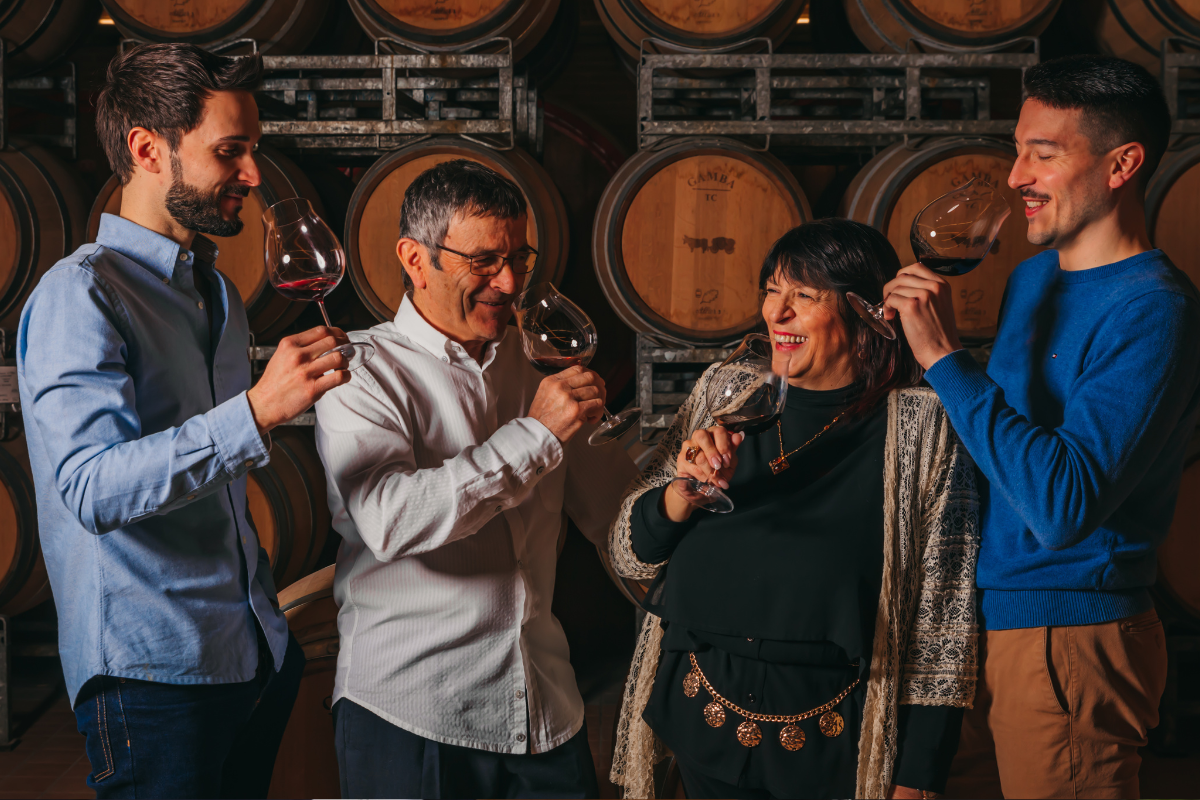
Piazzo’s Barbaresco story celebrates tradition, innovation, and the unique terroir of Langhe. From the iconic Argè to the refined Riserva Nervo Vigna Giaia, each wine narrates decades of commitment to Nebbiolo, blending elegance, complexity, and history. Simone Piazzo highlights their dedication to crafting Barbarescos that balance refinement with aging potential, offering versatility for diverse occasions.
Barbaresco has been deeply intertwined with Piazzo‘s story since the birth of the winery. The winery’s journey started in the 1960s in San Rocco Seno d’Elvio, a small area in the municipality of Alba. Armando Piazzo and Gemma Veglia, two young newlyweds from farming families, decided to invest in the unique territory of the Langhe, a region not yet renowned at the time for its gastronomic and wine excellence. In a historical period of hardship they decided to bet on wine, a sector that was completely new to them but in which they saw the potential. It was a real gamble.
Barbaresco DOCG Argè
Armando and Gemma’s story is closely tied to Barbaresco DOCG Argè. This traditional Barbaresco, the wine from which it all began, symbolizes the strength and balance of a couple who blended family and work: a solid union forged through compromises to harmonize different personalities. Its name, Argè, is an acronym of Armando and Gemma. Their foresight led them to invest in Nebbiolo, the grape variety now at the heart of some of the world’s most celebrated wines. From 1960 onward, they acquired and converted many vineyards for Nebbiolo cultivation. In 1979, they vinified their first Nebbiolo grapes intended for Barbaresco production. “Our Barbaresco Argè is the result of blending grapes from different vineyards located between San Rocco Seno d’Elvio, part of the municipality of Alba, and Treiso: two areas that, while close geographically, are distinct. Together, they create a balanced sip that remains faithful to Barbaresco’s origins,” explains Simone Piazzo.
Barbaresco DOCG Pajoré
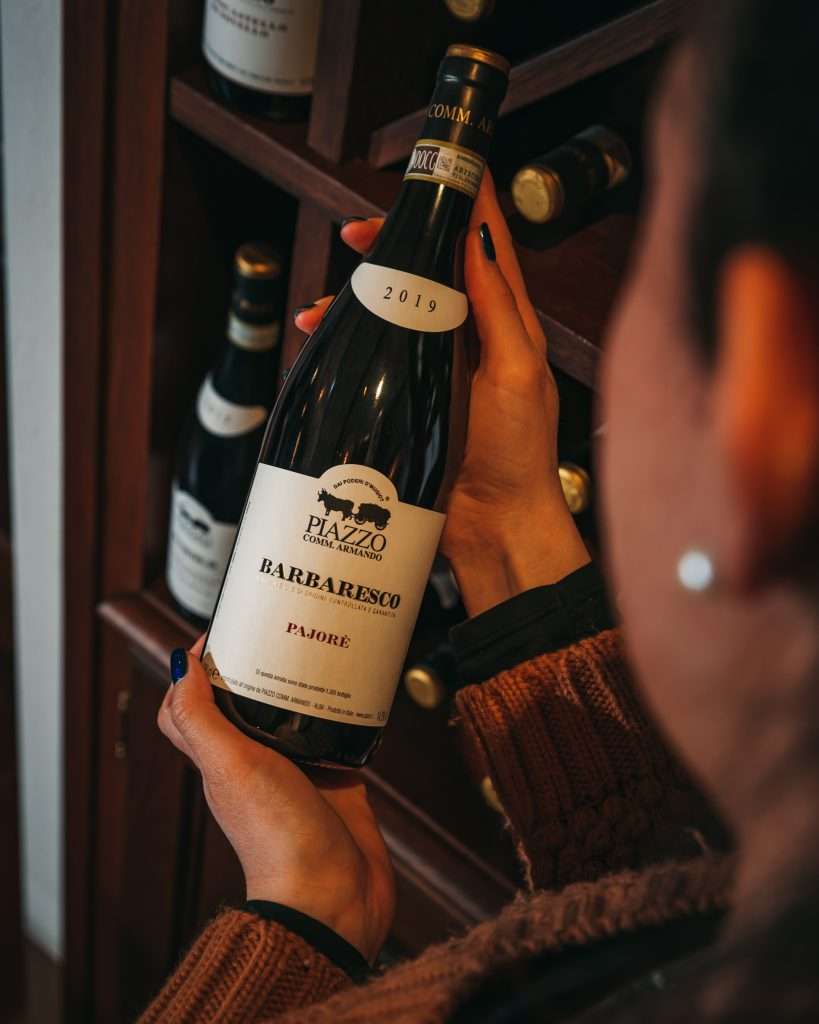
Exactly 40 years after the release of Piazzo’s first Barbaresco label in 1979, the winery introduced a new interpretation: Barbaresco DOCG Pajoré. This wine represents the expression of a renowned cru in the municipality of Treiso, one of the four towns included in the Barbaresco production area. The name comes from a farmhouse at the heart of this vineyard, likely named after its former owner Peirolero, which was later adapted into the local dialect as Pajoré. “This vineyard, rich in limestone and clay yet poor in nutrients, yields limited quantities of fruit but with intense aromas and flavors. These attributes give Barbaresco Pajoré its signature elegance,” continues Simone Piazzo.
Barbaresco DOCG Rizzi Vigna Fratìn
Following the delicate thread that unites all of Piazzo’s Barbarescos, history once again enriches these wines and territories with layers of detail and stories. Barbaresco DOCG Rizzi Vigna Fratìn is born in Fratìn, a unique area on a sun-drenched hill, one of the most suitable zones for Nebbiolo vines. This hill was once owned by a monastery, hence its name, which derives from the dialect term Fratin (“friar”). Preserved in the tasting room of Cantina Piazzo is a historical map dating back to just after Napoleon Bonaparte’s Piedmont campaigns and the brief occupation of Alba by French troops. This map, dated 1819, shows that the area then known as “Frattino” was already cultivated with vineyards over 200 years ago. “We still produce our Barbaresco Fratin from this area. The grapes from this vineyard are vinified separately, resulting in a wine with intense, complex characteristics and remarkable structure,” adds Simone Piazzo.
Barbaresco DOCG Riserva Nervo Vigna Giaia
Finally, the reserve: Barbaresco DOCG Riserva Nervo Vigna Giaia. Vigna Giaia is part of the Nervo cru, a designated geographic area in the municipality of Treiso, known for its pronounced southern exposure. The leaves in this area turn yellow earlier than usual, giving the vineyard a yellowish appearance from a distance—a trait reflected in the name Giaia, a playful term in the Piedmontese dialect meaning “yellow vineyard.” “In exceptional vintages, we select grapes from the oldest vines in this area for separate vinification, involving long macerations and at least four years of aging. The result is a wine of great structure that reaches its peak maturity around the 7th to 10th year after harvest, maintaining its quality in the bottle for many years to come,” explains Simone Piazzo.
“All our Barbarescos reflect our commitment to achieving the perfect balance between refinement and persistence. These are wines that broaden the occasions in which they can be enjoyed, combining increasing elegance with the traditional ability to age gracefully over the long term,” concludes Simone Piazzo.