Ahead of the second Barolo&Etna event in Paris on November 2, 2026, sommelier Hugo Courtois explains how Barolo and Etna can grow in France. He highlights complementarity between the two denominations, the need for consistent production, fair pricing and reliable distribution, and the decisive role of ambassadors who turn a territory’s complexity into an authentic story for consumers.
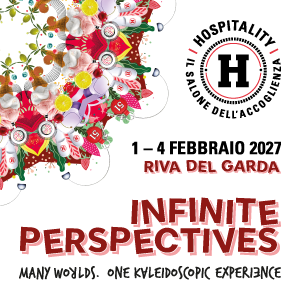
On Monday, November 2, 2026, Barolo and Etna will meet again in Paris (L’Usine Deguerry – 12 Rue Deguerry, 75011 Paris) for the second edition of Barolo&Etna, the initiative promoted by I Vini del Piemonte and the Consorzio di Tutela dei Vini Etna DOC, in collaboration with Strada del Barolo e dei Grandi Vini di Langa.
After the Paris debut in 2025, which involved more than 200 operators at the tasting tables, the project aims to consolidate the presence of two important Italian wine territories in a demanding market, the French one, where knowledge of them is still evolving. The 2026 edition also marks the start of an international path that will, for the first time, also reach London.
But what does it really take to capture the attention of the French market? And how can two such different denominations find space alongside the great wines of a country with a deeply rooted winemaking tradition? These are some of the questions at the heart of this interview with Hugo Courtois, sommelier, co-founder and managing director of Triple Vins SAS, who on the occasion of Barolo&Etna will lead two masterclasses for professionals, one on Etna DOC and one on Barolo DOCG.
From Courtois’s vantage point, the collaboration between the two territories is not a strategy to standardize their respective identities, but an opportunity to enhance them through a comparison that highlights differences, affinities and peculiarities. If Barolo can count on an already established reputation, Etna must turn the market’s growing curiosity into deeper knowledge of its contrade, altitudes, slopes and grape varieties.
For both, however, quality in the glass is only the starting point: production continuity, distribution reliability, consistent prices and the ability to reach new consumers are equally decisive. This is where one of the most interesting passages of the interview emerges: a great wine must not only keep its promise, but find someone capable of making its value understandable.
Ambassadors thus become decisive figures in connecting producers, distributors, restaurateurs and consumers, translating the complexity of a territory into an authentic experience without reducing it to a slogan. A reflection directly linked to the spirit of Barolo&Etna: working as a team to strengthen the international presence of Italian wine, without losing what makes each denomination unique.
Barolo and Etna come from two very different territories, but share a strong territorial identity. In your opinion, can this geographical and stylistic distance become a strength in presenting them to the French public, rather than an element of competition?
No, I don’t see competition but complementarity. Barolo and Etna are two very different denominations, each with an extremely peculiar identity, and this is precisely what makes it interesting to present them side by side. Barolo is a reference point in Italy, it is one of the first denominations to have obtained DOCG recognition and it is well established on the French market.
It takes on its role of responsibility by standing alongside Etna, a denomination that is still in a phase of discovery. Above all, both share the same search for truth, that of territorial wines, and the same desire to establish themselves in the Italian wine landscape.
The French market knows the great national reds very well, from Burgundy to Bordeaux to the Rhône. What is today the key through which a Barolo can enter the conversation of the great French wines without simply trying to resemble them?
From my point of view, Barolo is already counted among the greatest wines in the world. The French regions work in very different ways: Bordeaux classifies its châteaux, Burgundy its climats (terroirs). There is therefore no system to imitate, since each derives from the history and tradition of its own region or denomination.
Of course, one can draw inspiration, and it is important to observe what happens around us. But it is equally important to look through the prism of history and tradition and ask oneself, knowing these models, how to proceed along one’s own path.
And Etna? In recent years volcanic wine has gained growing international attention, but how well is Etna wine really known among French sommeliers, restaurateurs and enthusiasts? Where do you still see the main room for growth?
Etna is a denomination whose visibility in France is entirely recent: it is only now beginning to appear on wine lists. The market seems to show interest in Etna wines and in their story. It is a good start, but it is only the beginning.
Now that this interest exists, it must be developed. This requires regular production, which must be guaranteed every year, and communication campaigns. Ambassadors are also needed who know this story in depth and explain why Etna is such a singular terroir. Also because there is no single Etna wine, there are several.
From your vantage point, what does a French wine importer or merchant look for today when evaluating a high-end Italian wine? Does the reputation of the denomination matter most, the producer’s name, the uniqueness of the terroir, the price, or the wine’s ability to tell something new?
Wine first of all arouses emotions and a great wine must keep its promise in the glass. Beyond that, it must face more complex market logics. The market is driven by very different players and from this arise different purchasing dynamics that respond to equally different needs (location, clientele, restaurant offering …)
An importer or merchant looks for available volumes on which to apply a margin. Obviously, they look for continuity across vintages. A gastronomic restaurant looks for older vintages, a more exclusive range, while a wine shop looks for more accessible wines on which it can guarantee good stock turnover. Each player evaluates a wine through their own lens.
For a Barolo still little known to the final consumer, what in your opinion is the most effective path: starting from the denomination and the crus, from the Nebbiolo grape variety, from the producer, or directly from the tasting experience?
I don’t believe there is a better way to introduce a consumer to Barolo, and this is precisely the fundamental role of an ambassador. It is the ambassador who will provide the keys to interpretation and make the approach to wine a fun experience for the consumer.
Whether through the lens of the grape variety, the crus or a producer’s style, the discourse can vary and must also adapt to the person it is addressed to. It is essential that these elements are reflected in the tasting.
For Etna the discussion seems different still: the volcano is a very powerful narrative element, but it sometimes risks becoming a communication shortcut. How important is it, in your opinion, to go beyond the story of the volcano and help people truly understand grape varieties, altitudes, contrade and territorial differences?
If Etna wants to establish itself as a reference region in Italy, it will indeed have to go beyond the simple story of the volcano. The volcano will always remain in the background: it is the protagonist of this territory.
I believe the narrative should be built around the impact the volcano has on the territory. Why is this territory so singular? Altitude, contrade, slopes, grape varieties: it is the combination of these elements that creates such complexity and such diversity of wines, and this is precisely what makes Etna worthy of interest.
In your selection work for Triple Vins SAS, how difficult is it to find Italian wines capable of combining recognizability, depth and personality with a price that the French market still considers acceptable? And where does the real price limit lie today, beyond which it becomes much harder to win new consumers?
Italy is rich in wines, grape varieties and denominations: it is one of the richest countries in this respect. Every region produces wine, so to find originality, depth and character there is no need to go very far.
Price remains a variable to take into account in order to penetrate a market, but it must be explained and justified.Why does a Barolo today cost more than one hundred euros on a wine list? Because it is marketed more than three years after its production, and this has a cost. To explain it, ambassadors are needed. Nor should one limit oneself exclusively to the high end: a denomination can aim for the premium segment, but must always offer an entry point to make itself understood.
As for the price limit, there is no single truth: but with a wholesale price between €25 and €30 excluding VAT at a minimum, the wine is served at the restaurant for at least €100 and this is a positioning that is aimed exclusively at a minority of people.
Either one decides to work on this minority, or one creates an entry point so that as many people as possible can at least form an idea. This is the case of the Langhe wines, which remain a gateway to Barolo wines; however, ambassadors are needed who can explain this to the consumer.
Looking specifically at Parisian restaurants, what characteristics must a great Italian wine have today to truly enter an important wine list? Is excellence in the glass enough, or are distribution continuity, vintage availability and a story that is easy to convey to the customer also needed?
The product itself must keep the promise it makes in the glass, because this is the fundamental condition, but it is not enough. Every player in the supply chain has a role to play. The producer must be able to offer consistency in every vintage, a distribution policy coherent with reliable allocations, stability in the prices applied and, ideally, older vintages to build a wine list of substance.
The distributor, for its part, conveys the story of the product, provides context and transparency to professionals, acts as a link between the latter and the estate, and also has the task of illustrating the market to them. It is then up to the professional, on the basis of all these elements, to enhance the product in the eyes of the final consumer.
The Barolo&Etna event was born from a collaboration between territories and in 2026 also extends its path to London. In your opinion, in an increasingly competitive international market, how much can the ability of Italian territories to present themselves together, share knowledge and build joint initiatives matter, rather than each moving on its own?
There is strength in unity. The sharing of resources and knowledge gives rise to a stronger voice, whose impact will be greater. But the message must remain clear and enhance both identities, rather than dilute them.
If you had to indicate a concrete direction today to Barolo and Etna producers who want to grow in France in the coming years, what would be the question they should ask themselves even before thinking about how to sell a bottle?
Before selling a bottle, one must know who will tell its story. What is my story? Who are my ambassadors?
Key points
- Complementarity between territories: Barolo and Etna gain strength by standing side by side in the French market.
- Quality in the glass is the starting point; continuity, reliable distribution and consistent prices complete the picture.
- Ambassadors turn a territory’s complexity into authentic stories for producers, distributors, restaurateurs and consumers.
- Etna must go beyond the volcano, explaining contrade, altitudes, slopes and grape varieties.
- Justified pricing: a Barolo costs more because it reaches the market more than three years after production.