Cantine del Notaio, the historic winery in Rionero in Vulture, has inaugurated a Wine Museum dedicated to the region’s viticultural heritage. Housed in an eighteenth-century building, the itinerary combines artefacts, family archives and multimedia installations to tell the story of Vulture through wine culture, complementing the winery’s established tourism programme with a standalone cultural experience.
Wine tourism is a rapidly growing phenomenon and, as is well known, is steadily expanding its boundaries. Beyond the traditional winery tasting experience, the offer is evolving to meet the expectations of visitors who are increasingly seeking emotions and experiences capable of connecting wine with the territory, its history and the people who produce it.
The “Wine Museum” project by Cantine del Notaio, the winery based in Rionero in Vulture led by Gerardo Giuratrabocchetti, is much more than a visitor itinerary and has all the credentials to become a best practice. It is neither an initiative ancillary to the winery tour nor simply an exhibition space. The museum was created with the aim of offering a key to understanding the Vulture area through its wine culture, telling the story of a heritage that deserves recognition consistent with its historical significance within the national context.
“We felt it was our duty to create a place that tells the story not of our company, but of the land that gave birth to us. Anyone arriving in the Vulture area should understand that wine here is not a recent phenomenon, but the result of a thousand-year history that has profoundly shaped the economic and social life of this part of Basilicata.” According to Gerardo Giuratrabocchetti, Vulture is one of the symbolic places of viticulture in southern Italy.
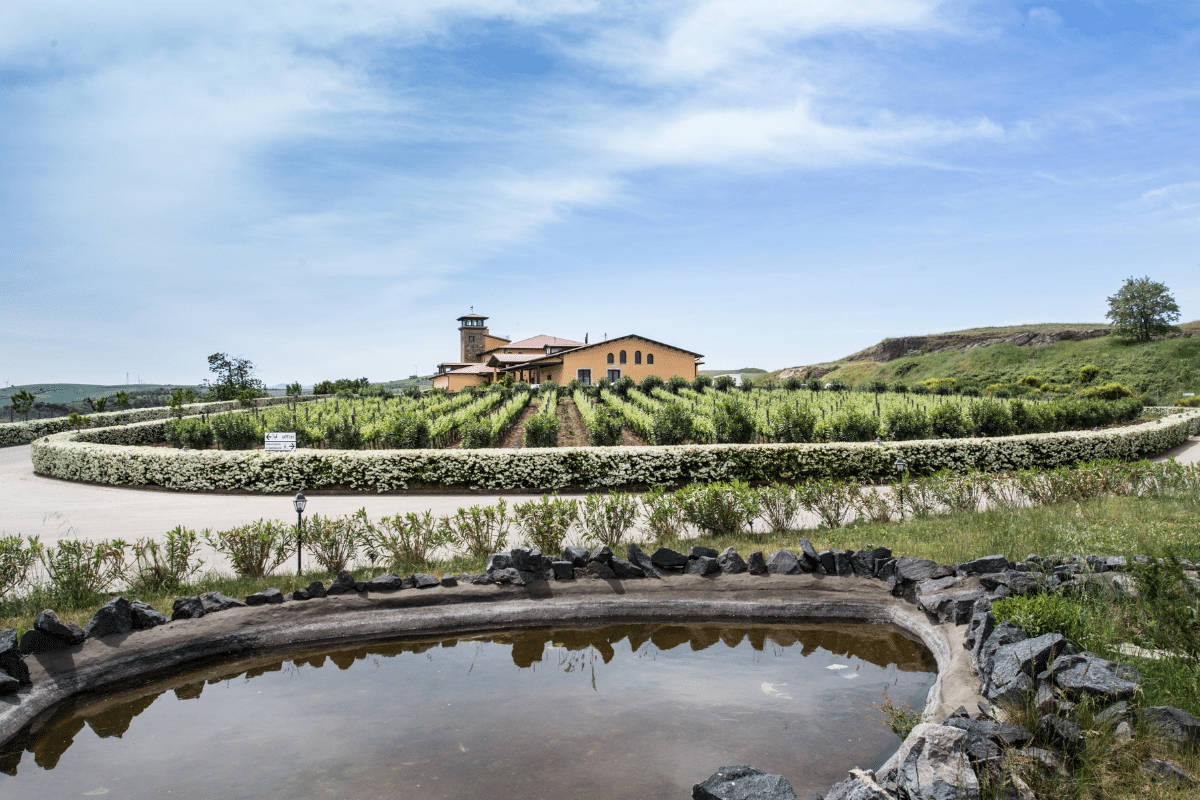
The itinerary unfolds within an eighteenth-century building, where the rooms once used as the owners’ residence coexisted with those occupied by the farmers. Within this historical setting, visitors encounter artefacts, objects belonging to the Giuratrabocchetti family, documents and testimonies of rural civilisation, alongside multimedia installations, high-definition screens and digital tools designed to engage different audiences, including younger visitors.
The aim is not merely to preserve memory, but to make it accessible through contemporary forms of communication. The narrative spans the different historical periods of the region, linking the evolution of viticulture with that of local society, leading up to the profound economic changes that affected the Vulture area throughout the twentieth century.
Experts from a range of different disciplines contributed to the development of the project, from viticulture and local history to entomology and cultural dissemination, with the intention of creating a scientifically rigorous itinerary that is at the same time engaging for the general public.
“The museum is intended to be a living place. New technologies do not replace history; they help make it understandable. We want even a child to leave here aware of having discovered a territory that has built its identity around the vine.”
Recently inaugurated, the museum naturally complements the wine tourism programme that Cantine del Notaio has been developing for years and which attracts around five thousand visitors annually, mainly from Italy. At the same time, it represents a standalone experience.
The wine tourism visit already takes guests through the historic ageing caves carved into volcanic tuff in the seventeenth century, underground environments that provide ideal conditions for the evolution of Aglianico del Vulture and represent one of the winery’s most distinctive features. The itinerary then continues through an extensive underground network where natural water flows and where the company’s vault houses every vintage produced since 1998.
Visitors are, in effect, guided through an ancient lava flow, discovering emotional, tactile and olfactory sensations that they will later encounter again in the wines they taste.
The offer includes two distinct experiences, both centred on the underground itinerary and the story of the winery’s origins. “Il Cuore Lucano” is a genuine discovery of the region’s gastronomic excellence, paired in a seated tasting with four of the winery’s wines. “Viaggio Emozionale” is a more streamlined experience featuring the tasting of two wines, designed to highlight the relationship between wine, landscape and local culture.
The geographical location of the Vulture area, easily accessible from Matera, Bari and Naples, offers significant opportunities to attract new domestic and international tourist flows.
“We believe that the future of wine tourism lies in the ability to create cultural value. Wine remains the protagonist, but today visitors want to understand the territory, the people and the history behind every bottle. If we succeed in conveying all this, the museum will have achieved its objective.”
This is therefore not a museum dedicated to the company itself, but a tool through which visitors can interpret the Vulture area and its winegrowing tradition. An investment that complements the winery’s production activities while strengthening a vision of wine tourism in which hospitality, knowledge and territorial identity become part of the same experience.

Key points
- New Wine Museum in Rionero in Vulture tells the region’s viticultural history through artefacts and multimedia installations.
- Eighteenth-century building hosts the itinerary, blending family archives with digital tools also for younger audiences.
- Multidisciplinary experts shaped the project, covering viticulture, local history, entomology and cultural dissemination.
- Existing wine tourism programme already draws around five thousand visitors yearly to underground ageing caves.
- Strategic location near Matera, Bari and Naples positions Vulture to attract new domestic and international visitors.