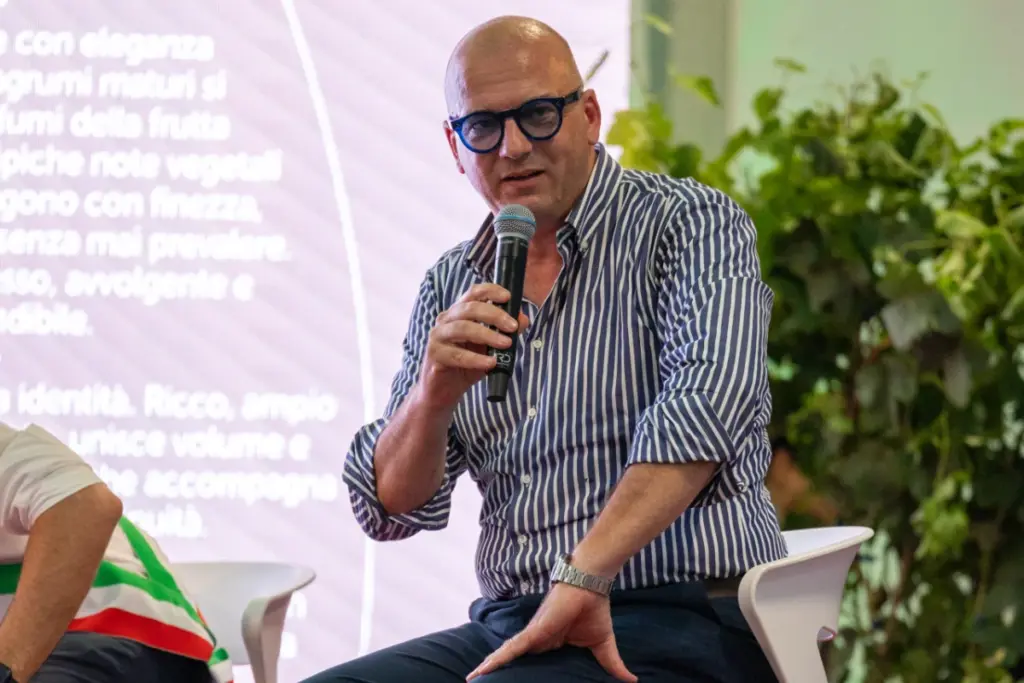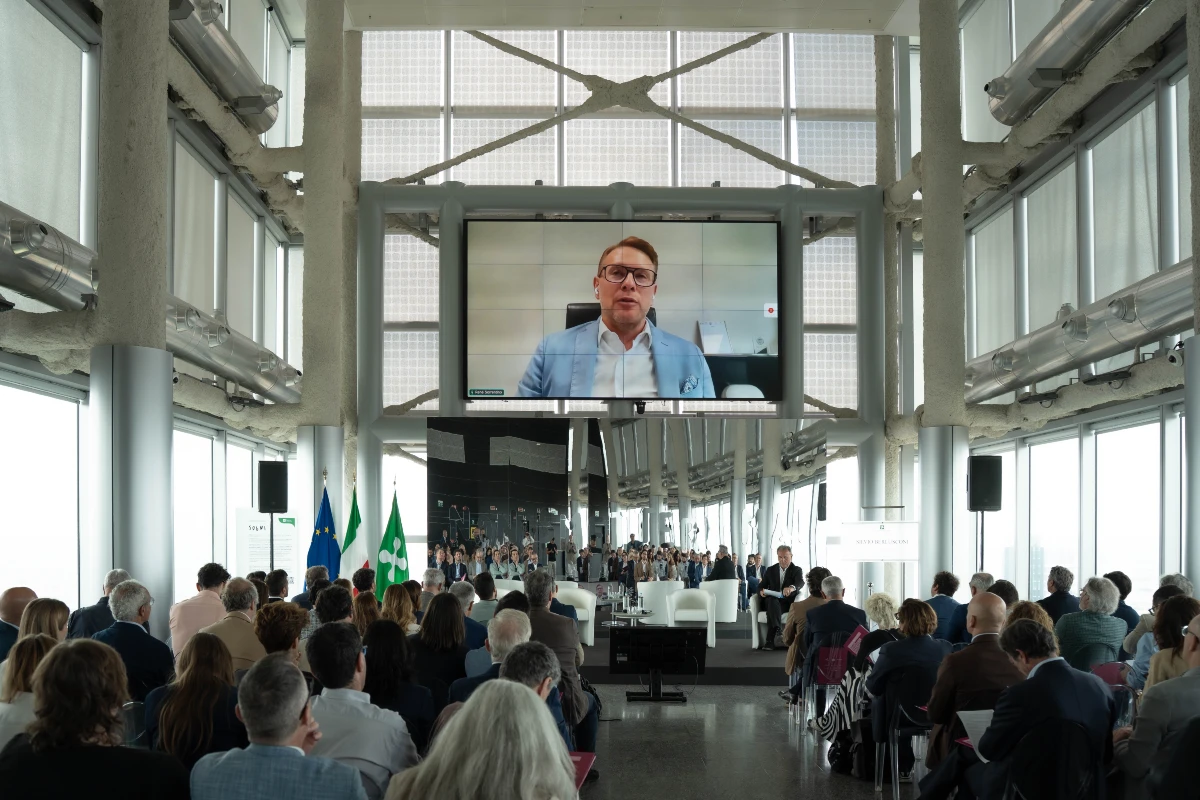
At Envisioning 2035 in Milan, René Sorrentino analyzed the German wine market, highlighting the urgent need for multichannel strategies. He emphasized that high restaurant markups alienate younger consumers, driving them toward cocktails and dealcoholized options. The wine industry must innovate its communication and adapt pricing to remain competitive today.
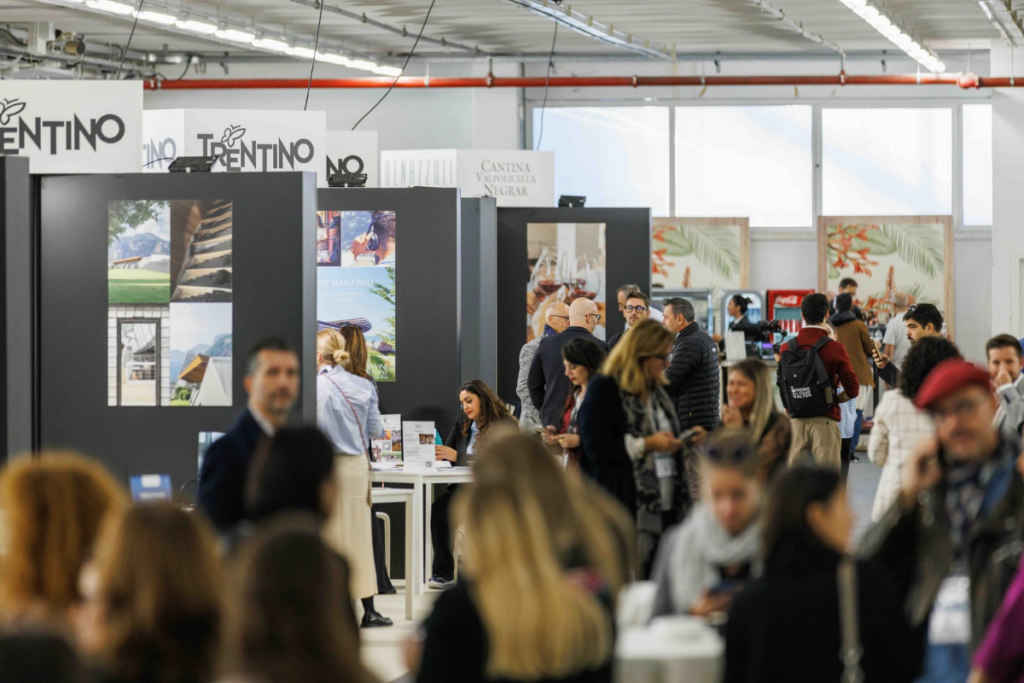
The second edition of Envisioning 2035 Wine [R]evolution took place in early June 2026 on the Terrazza Belvedere of Palazzo Regione Lombardia in Milan. Organized by Wine Meridian with the support of FreedL Group, the event brings together entrepreneurs and analysts under the guidance of director Fabio Piccoli.
They are called to indicate concrete priorities for the Italian wine supply chain in view of 2035, going beyond merely listing the sector’s difficulties. Bringing the perspective of one of the historically most important markets for Italian wine was René Sorrentino, owner of GES Sorrentino. He is one of the main players in the importation of Italian wine in Germany, and was connected via live video with the Milanese hall.
Wine has taken a back seat
Sorrentino opened his speech by recognizing the difficulties of the German market, but immediately indicating a precise interpretation. “I think that at the moment the German market is experiencing a special situation, a moment of difficulty,” he stated. “In my opinion, we must all understand that today wine has taken a back seat. Today, it is the service, the closeness to customers, the closeness to the market, and developing new ideas that make the difference.”
Regarding the relationship between Germany and Italy, he used words of genuine affection. “The German consumer has a daily use of Italian products that they no longer even see as Italian products, but as part of their daily life,” he explained. “La Dolce Vita” is certainly something that many German consumers would like to achieve. At the same time, however, price sensitivity remains extremely high.
“In the entry level world, we undoubtedly have an overproduction problem,” he added. “We see that precisely in daily products, the price of wine continues to fall.” There are incredible offers that ultimately do not help to build quality.
After the premium boom, a realignment
On the premium segment, Sorrentino offered a reading that invites an honest examination of recent years. “Premium wine had an incredible surge during Covid,” he noted. What was not spent in restaurants was often spent on consuming wine at home. In those few years, many companies sought premiumisation, and a lot was sold online.
Except that this situation has passed for a few years now. “Today we are back to pre Covid levels, and many of these premium wines are still unsold,” he stated. The conclusion, for Sorrentino, is not a crisis of premium in itself, but the need to adapt a bit to the market.
Multichannel as a new standard
To Piccoli’s question on how much the distribution world must also evolve, Sorrentino responded by advocating a model that differs from the traditional importer. “Today the focus where we are aiming heavily is multichannel, which we think is essential,” he emphasized. It does not mean that every winery is suitable for sale in every channel.
However, certainly more than one winery is suitable to sell its products in more than one channel. The restaurant industry, he added, has never fully recovered from Covid, making it necessary to simultaneously cover on trade, online, and other channels. “Old schemes no longer work today, a trial and error approach is needed,” he argued.
“There is a willingness to make attempts, no one knows if they will succeed, but only this willingness gives us the chance to act on changing consumption occasions.” This flexibility remains the primary key to understanding and serving the evolving needs of the contemporary wine consumer.
Packaging, communication, and dealcoholized wines
On the subject of younger people, Sorrentino proposed a clear change of language. “The old communication path that focused on the denomination, the grape variety, the vintages, and the aging is somewhat outdated,” he said. We must have the courage to say that this is a wine that has its moment, and clearly explain what this consumption moment is.
We must explain in what mood and in what state of mind we want to drink this wine. Packaging also enters this communicative revolution. “Perhaps with a QR Code that in 30 seconds tells all this that I have just said,” he suggested. On the front of dealcoholized wines, Sorrentino indicated a specific delay of Italy compared to Germany.
“In Germany it grew by 25 percent, 44 percent of families bought a dealcoholized wine in 2025,” he pointed out. As Italy we are not present, because we are still bound by legislative constraints. We have the constraint that we can only produce white wine and red wine, while other nations include grape varieties, and in Germany even Rieslings now make dealcoholized crus.
The real obstacle for young people is the menu price
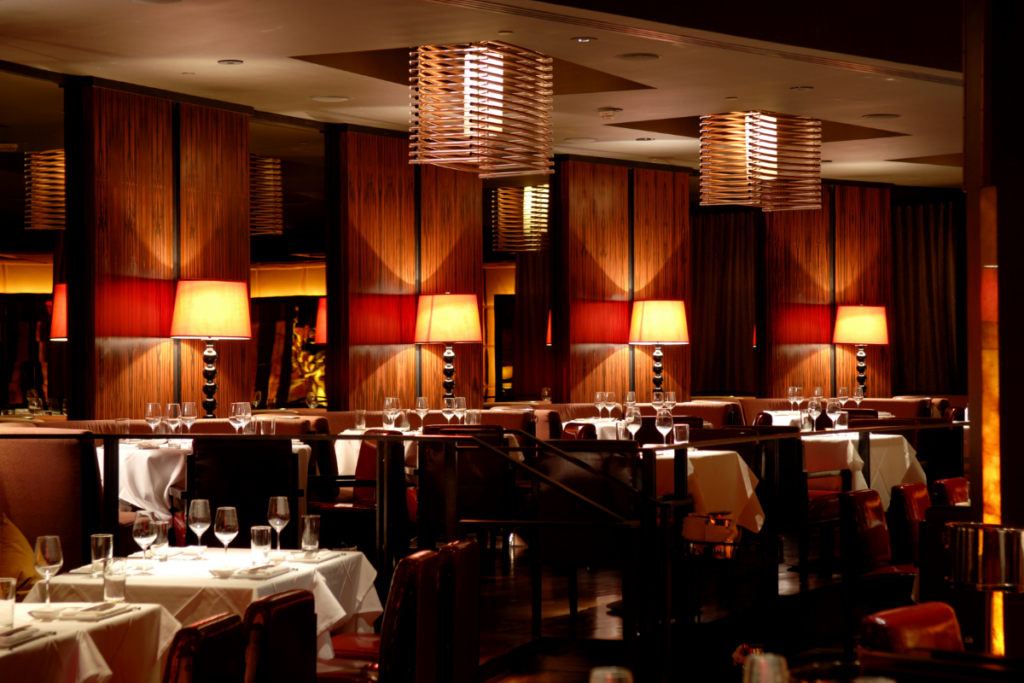
Sorrentino confirmed that the issue of markups in restaurants is central in Germany too, perhaps more than in Italy. “The German consumer for various reasons is less willing to accept wine increases,” he explained. We find ourselves with restaurant markups that can sometimes reach four or five times the purchase price, regardless of what the purchase price of the wine is.
A dynamic that, in his opinion, drives away the youngest consumers. “The consumer knows that they have to pay at least 50 or 60 euros for the bottle of wine, and they find themselves facing competition to wine from RTDs, Aperol Spritz, and cocktails,” he added. If the schemes are not changed a bit, young people will increasingly approach other things, easier to decipher and understand.
Key Points
- Multichannel distribution is now essential to adapt to changing consumption habits in the German wine market.
- Excessive restaurant markups alienate young consumers, pushing them towards accessible cocktails and ready to drink beverages.
- Dealcoholized wine demand is booming in Germany, highlighting a significant legislative delay for the Italian industry.
- Innovative communication strategies focusing on consumption occasions rather than technical details are crucial to engage buyers.