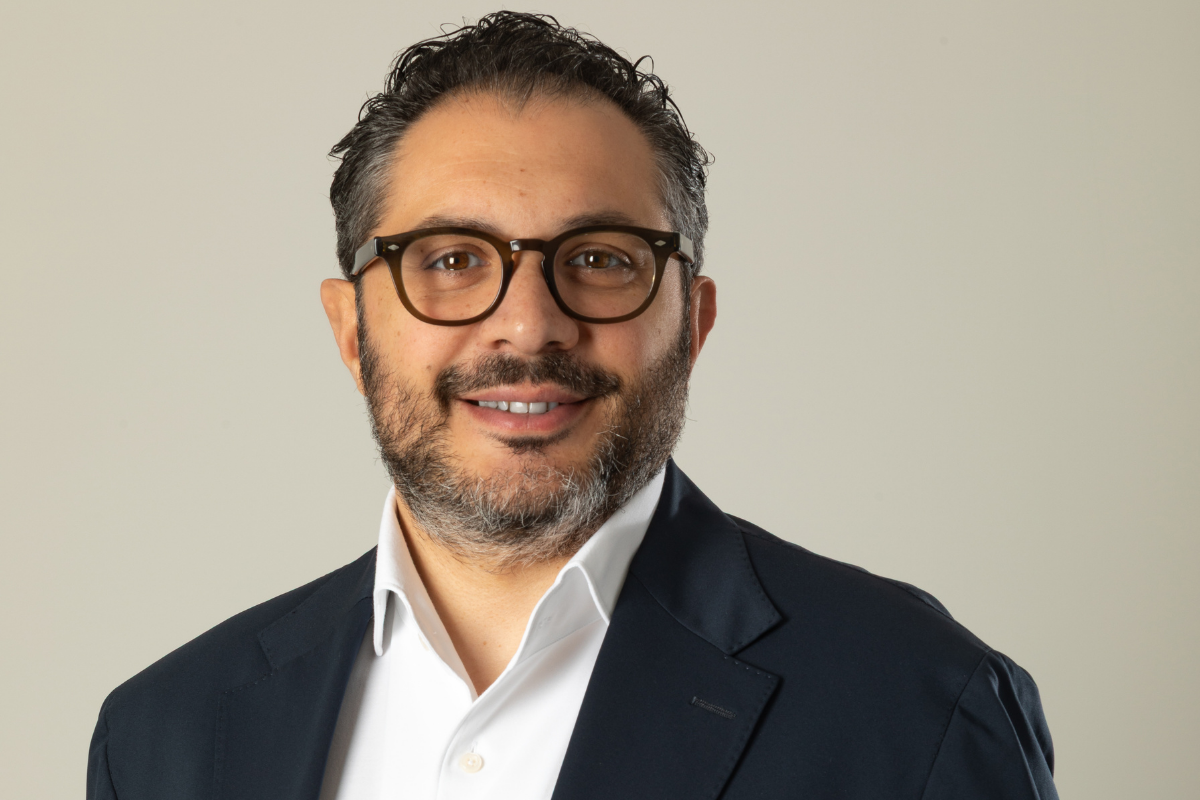
Mack & Schühle Italia CEO Fedele Angelillo explains the strategy behind Grapur, a line of organic and vegan wines that are naturally low in alcohol. Produced without dealcoholization, the wines combine early harvest, controlled fermentation and a sustainable packaging chain designed with partners to reduce environmental impact and widen consumption occasions.
In recent years, Mack & Schühle Italia has progressively expanded its role in the national wine landscape, complementing its distribution and commercial development activities with a growing commitment to product and process innovation. Part of the German group Mack & Schühle AG, the company is now a reference point for numerous Italian and international wine producers, thanks to a model that integrates commercial expertise, production, private label and the development of new projects capable of intercepting the evolution of consumption.
Within this path sits Grapur, a line of naturally low alcohol wines that interprets the themes of moderation, sustainability and quality. We talk about it with Fedele Angelillo, sole director and CEO of Mack & Schühle Italia S.p.A.
What strategic role does Grapur play today within your company vision? Where did the drive to develop a project like this come from?
Grapur perfectly represents the way we imagine the future of wine: innovative, sustainable and able to interpret changes in consumption behavior without giving up its own identity. In recent years, we have observed growing attention toward moderation, wellbeing and the search for lighter products, but also a consumer who does not want to give up quality, experience and wine culture.
Moreover, this target is very sensitive to the themes of circularity and ESG issues in their broadest sense. Grapur was born precisely to respond to this cultural and consumption evolution. For Mack & Schühle Italia, the goal goes beyond introducing a new product range: it is about expanding consumption occasions and intercepting new consumer targets.
We are convinced that low and no alcohol wines, rather than replacing traditional wine, will help widen the market, offering credible alternatives to those who, for personal choice, health, driving, work, religion or simply a more balanced consumption style, wish to reduce alcohol intake and calories.
In this sense, Grapur is one of the pillars of our innovation strategy and is part of a broader path linked to the zero and low alcohol world, which also includes investment in dealcoholization technologies. With Grapur and the investments in the Libero Wine project of Omnia Technologies, Mack & Schühle Italia is today one of the first Italian companies able to cover the entire spectrum of the market: traditional wines, naturally low alcohol wines and dealcoholized or partially dealcoholized wines.
We see these categories as complementary to different consumption needs, rather than in competition with one another. Our strategy is to offer consumers the freedom to choose the wine best suited to each occasion, always keeping quality, authenticity and sustainability at the center.
Grapur offers low alcohol wines without resorting to dealcoholization. What advantages does it offer in terms of wine quality, environmental impact and consistency with the company philosophy?
The distinctive element of Grapur is precisely this: it is not a dealcoholized wine. The project stems from a different agronomic and oenological approach. Through grape selection, early harvest and controlled fermentation, we naturally guide the wine to the desired alcohol level, without intervening afterwards to remove the alcohol. This means preserving the integrity of the aromatic heritage developed during fermentation, maintaining the balance and authenticity of the sensory profile and avoiding an additional industrial alcohol separation process.
Also from an environmental standpoint, this approach offers significant advantages, because it eliminates a production phase that in the past was often energy intensive, allowing a further reduction of the carbon footprint of the process.It is therefore a choice perfectly consistent with our philosophy: innovating while respecting wine, enhancing what nature offers and intervening only where truly necessary.
Grapur is organic and vegan, two certifications that today are often mentioned together but respond to different needs. How is attention toward vegan wine evolving, and what beliefs or consumption styles does it represent in your view?
Organic and vegan are two distinct concepts that are increasingly complementary and relevant. Organic describes an agricultural approach aimed at protecting the environment and biodiversity, while the vegan certification guarantees that no animal-derived processing aids are used throughout the production process. Today consumers seek more than a “vegan” wine: they look for transparent products, consistent with their values and able to tell the story of the entire supply chain.
This attention is particularly evident among the younger generations and consumers who adopt a more conscious lifestyle, where food, sustainability and wellbeing are part of what is by now a daily choice. For us, vegan wine is an evolution of perceived quality rather than a fashion: it means offering a product that respects different sensibilities without compromising the pleasure of the experience.
In the project, sustainability extends beyond the wine to every component of the process. How complex was it to build a supply chain in which every choice helps reduce environmental impact? And what concrete results do you expect this approach to produce over time?
The most important challenge was changing perspective. We set out to design a system in which every component concretely contributed to reducing environmental impact, rather than simply creating a “contemporary” wine. For this reason, we worked on the bottle, the cork, the label, printing materials and cartons, choosing structured and forward-looking partners that have been constantly investing for years in innovation increasingly attentive to the world around us.
This path inevitably requires more time and greater coordination than a traditional supply chain, but we believe it is the only way to give credibility and tangibility to a truly innovative project, both on the product side and on the packaging side.
In the long term, we expect growing attention toward these products that leads to measurable results, both in terms of reducing the carbon footprint and the reduced use of virgin raw materials, and in the ability to spread a culture of sustainability along the entire value chain.
Grapur is the result of collaboration with companies such as Verallia, Vinventions, UPM Raflatac, Luxoro and Ondulkart. When you chose these partners, which aspects did you prioritize? How much does sharing values and goals matter when building a project of this kind?
For a project like Grapur, the partner goes beyond being a supplier: it is an integral part of the innovation. From the very first moment, our partners showed enthusiasm for taking part in such a content-rich project, which then led us to obtain prestigious international awards in sustainable packaging and design.
Our selection certainly started from the technical quality of the solutions proposed by the technical partners, but equally important were the investments made in research, transparency, environmental certifications and the ability to share a common vision of the future of sustainable packaging. Every component of the project in fact tells the same philosophy: reducing environmental impact without giving up performance, food safety, aesthetics and perceived quality.
When all the players in the supply chain work with the same objectives, the final result is much more than the sum of the individual innovations. A replicable model is created, capable of generating value for the entire supply chain and accelerating the change of the sector.
Key points
- Low alcohol without dealcoholization: Grapur uses grape selection, early harvest and controlled fermentation to reach the desired alcohol level naturally.
- Wider market: low and no alcohol wines complement traditional wine, expanding consumption occasions and reaching new consumer targets.
- Full market coverage: Grapur and Libero Wine let the company cover traditional, naturally low alcohol and dealcoholized wines.
- Organic and vegan certified: Grapur guarantees an environmentally respectful approach and no animal-derived processing aids along the entire production process.
- Sustainable packaging: bottle, cork, label, printing materials and cartons were chosen with partners to cut impact and virgin materials.