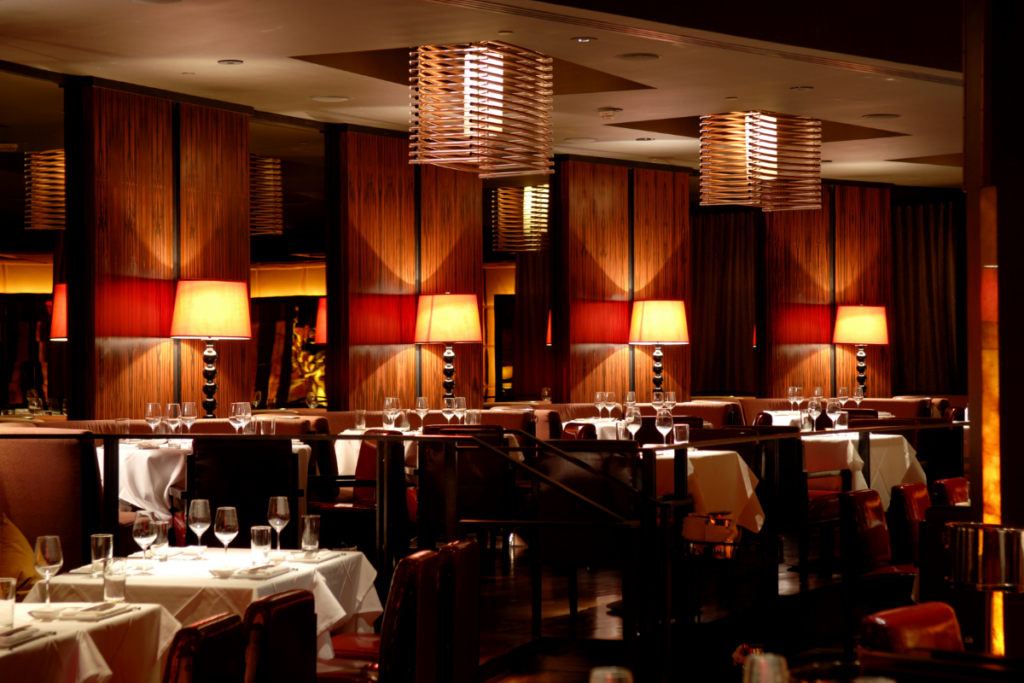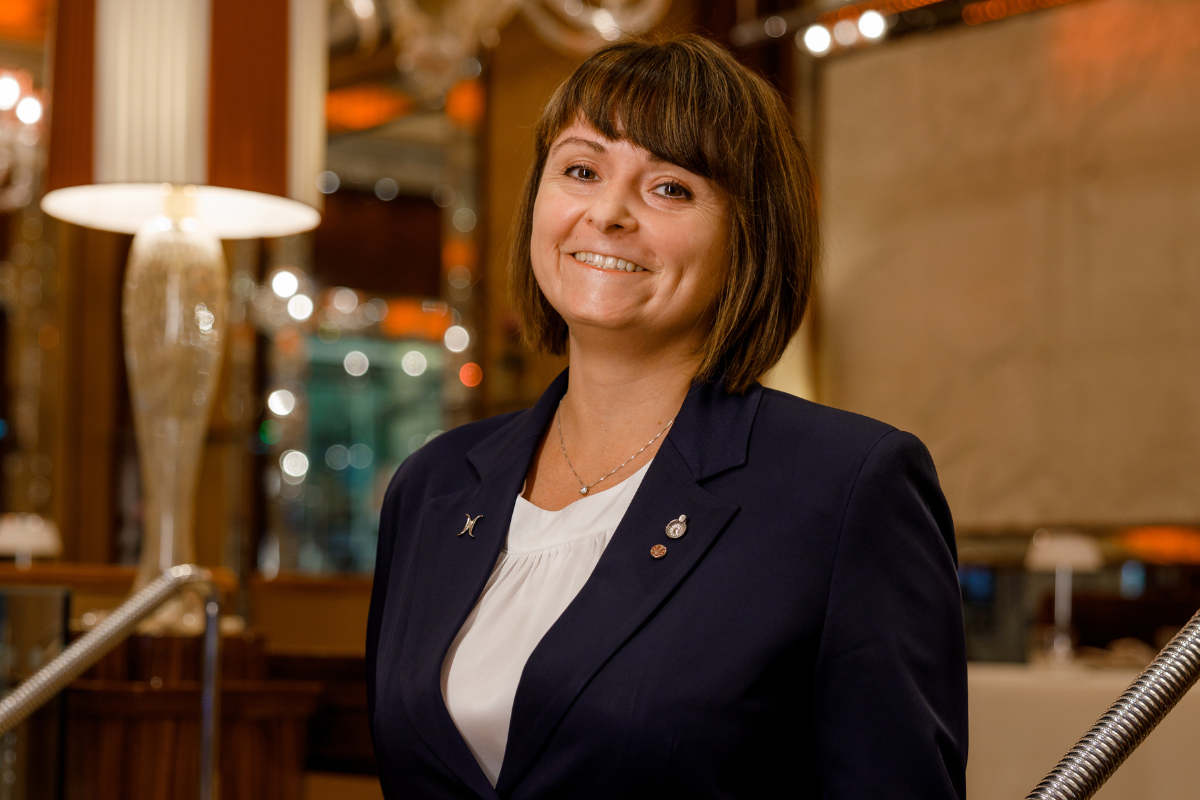
The customer arrives more prepared, drinks with greater awareness and, above all, prefers to avoid hearing the technical sheet of the bottle recited. At the Acanto restaurant, inside the Hotel Principe di Savoia in Milan, Mara Vicelli observes an international, business and Milanese audience every day asking for service, listening and a story, rather than lessons.
The wine list, composed of about 950 labels and 27 verticals, remains one of the central tools of the experience. However, the sommelier’s job today seems to shift increasingly from recommending the right wine to understanding who is in front of them, when to intervene, when to stay silent and when to surprise. This also means saying no to the requested bottle if the recommended alternative is more coherent.
With Franciacorta gaining ground on Champagne, wine by the glass growing strongly after stricter driving alcohol controls, half bottles increasingly requested by business clients and a selection built also on native Italian grape varieties, Vicelli describes a shift. It is a change less noisy than one might think, but very concrete.
In recent years, how has the Acanto restaurant customer changed?
The customer has changed a lot. Today they arrive more prepared, know the product better and often already know what they want. They prefer to skip the traditional recitation of what is inside the bottle, with percentages, grape blends and technical details. They already know that information or can easily find it on their own.
What really works is storytelling. The customer wants to live an experience, feel emotions, know the story of the producer, the family and the territory. They might want to know that the producer harvests at night, or that the company has been led by women for generations. These are details you learn by visiting the wineries and they interest people much more than a technical sheet.
Has the role of the sommelier changed?
Yes, today you have to be more of a psychologist than a sommelier. We have customers who arrive already convinced and in that case you just have to accompany them in the service, perhaps with decanting, pouring and a discreet presence. Then there are those who arrive prepared but still want to be involved, want a story and want to feel part of the experience.
Working heavily with business clients, you also have to know how to read the table. If people are talking about work, you cannot arrive at the wrong time. You must understand when to propose the wine list, when to intervene and when to step back. Sometimes, if you know a regular customer well, you can arrive directly with the right bottle.
In that moment you are not just providing a service, you are recognizing them in front of their guests. You are making them understand that they are at home here. But you have to know when to do it, because it is not always the perfect moment.
Is the search for fresher and leaner products confirmed?
Yes, especially in the younger part of the clientele. There is a senior demographic that remains tied to certain tastes, certain names and also a certain way of experiencing wine as a status symbol. The younger clientele easily leans towards less woody, fresher and more immediate wines.
That being said, in a context like ours you cannot rely on trends alone. The wine list must be balanced. Today we have about 950 labels and 27 verticals, so every addition comes from a specific question. We ask ourselves what is missing, what moves slowly, and what can be replaced with a more interesting producer.
How much do big names weigh compared to small discoveries?
I would say there is a good balance. Big names continue to have an important role, but over the years I have worked extensively on native Italian grape varieties. We have an enormous ampelographic heritage and I think it is right to tell its story, rather than just keeping it on the menu.
The work consists of finding the right producer for our target. You cannot add a wine just because it is fashionable or because someone suggests it to you. You have to taste, compare and invest time. If you want to offer a Lacrima di Morro d’Alba, a Pecorino or a Passerina, you must understand which one is truly suitable for your restaurant.
Sometimes the customer asks for a very famous label and I do not have it available. In those cases it is nice to offer a recommended alternative right away. If the alternative is right, the customer trusts you, and they might even request that bottle again later.
Which wine types are performing best today?
In the last year and a half, the demand for Franciacorta instead of Champagne has grown a lot. Before it was often the opposite. Today Franciacorta is perceived as more accessible and it also has the advantage of being a local wine for us. It works very well with foreign customers, who taste it and then perhaps find it again outside the restaurant during their stay in Milan.
For the rest, Tuscany and Piedmont continue to dominate sales. The great classics remain great classics. Pinot Noir, especially from Burgundy, always has its space, even if Burgundy today is a bit more stagnant. Ultimately, many sales still concentrate on highly recognizable historical territories.
Has pouring by the glass become more important?
Very much so. I have always believed in service by the glass and I was among the first in Milan to work with Coravin. I always liked the idea of being able to offer great names by the glass, rather than limiting it to simple labels. At first the customer was surprised by the price of certain glasses, then you told them the story and they tasted them.
In recent years, especially after the growing attention towards controls and breathalyzers, wine by the glass has grown tremendously. It happens that we do services with very few open bottles and almost everything sold by the glass. This implies that customers might drink two or three glasses during dinner, while tasting completely different things.
Half bottles are also very successful. I have always worked with them because they are perfect for business clients, who want to treat themselves to three glasses in the evening and stop there. I specifically requested half bottles of great Italian labels and we also worked with producers who created them for our rooms. It would be useful if more companies started thinking about this format.
What role do non-alcoholic, kosher and pairing options play today?
Kosher has always been important for us. We maintained it because there is a specific clientele, also linked to Shabbat, and in the past there was a highly structured effort with dedicated spaces and kitchens. On the non-alcoholic side, quality is improving. We have a non-alcoholic option within the tasting menu, built with non-alcoholic spirits, cocktails and also a non-alcoholic wine.
The classic pairing works very well on the tasting menu, especially on weekends with Milanese clients who love complete gastronomic experiences. We have two paths, a basic one and a premium one. In the first we work more on small wineries and less known territories, while in the second we also give space to more important names. The goal is always to make the wine dialogue with the dish.
We also organize tasting evenings, about one every two months, often in collaboration with a winery and a guest chef when possible. These events work because the public is looking for something that goes beyond dinner. They want a story, an occasion and a compelling reason to return.
How do you build a wine list of the future?
You build it following the clientele and the market, completely bypassing the sommelier’s tastes. When a customer asks me for advice, the first thing I want to know is what they usually drink. From there I can accompany them towards something new, avoiding imposing my own personal taste.
The absolute good wine does not exist. There is the right wine for that person, in that moment, with that dish and on that evening. My job is to create an experience that leaves the customer deeply satisfied. If they say it was a beautiful dinner, then the wine has done its job perfectly.
In the coming years, reds will continue to weigh heavily, especially for an evening clientele that wants to treat themselves to an important bottle. The direction will be increasingly linked to listening, understanding what the customer asks for and which producers truly deserve space. The wine list must breathe and adapt continuously to the environment.
Key points
- Engaging customer storytelling replaces technical wine lectures, creating a memorable and emotional dining experience.
- By-the-glass pouring surges in demand due to stricter driving regulations and a preference for diverse tasting.
- Native Italian grape varieties offer a balanced, authentic alternative to world-famous historical wine labels.
- Reading the table accurately allows modern sommeliers to provide perfectly timed and psychologically intelligent service.