The Italian wine sector is facing a deep structural crisis, not a cyclical downturn. While problems like fragmentation, climate change, and bureaucracy are widely recognized, there is a dangerous silence on solutions. The author criticizes the lethal individualism preventing “system-building,” warning of dramatic losses for territories like Sicily and challenges for organic farming.
This summer of 2025 is not yet over, although the heavy rains at the end of August and beginning of September are quickly projecting us into an autumn that promises to be complicated once again for our wine sector.
As usual, since the post-Covid era, I spent this summer period traveling around Italy in a camper van, between the sea, wineries, mountains, and more wineries.
My children have almost reached the milestone of 1,000 wineries visited, and I fear this oenological full immersion will lead them to become teetotalers.
For me, however, visiting wineries, meeting producers and managers increasingly represents the only way to understand something about this now crazy world of wine, where today anything and its opposite are valid.
The only point on which everyone now agrees is that we are facing a structural crisis that has very little to do with cyclical trends. And this, in some respects, is good news because it at least avoids that dangerous immobility of those who hope or delude themselves that “this too shall pass.”
But if almost everyone has understood the structural difficulties of our beloved wine sector, no one, and I stress no one, has recipes or ready solutions to present.
Practically everyone, in fact, now agrees that our sector is too fragmented, that there are few, dramatically few, recognizable brands, that there is a deficit of competent human resources, that there are still very few denominations of origin with adequate notoriety, that there is an excess of intermediation in wine commercialization, that there is unsustainable bureaucracy, that climate changes are underway which are profoundly affecting many wine-growing regions of our country… and I could go on much longer.
But if on the “problems” front the consensus is increasingly broad, on the “solutions” front there is a worrying silence.
Our wine sector, although it would be more correct to speak of the wine supply chain, given that the trade in all its different segments (from Horeca to large-scale retail) is also involved in this impasse, appears like that student who did well for many years of school – through cunning, because he was in a class where it was easy to excel, because he had lenient professors – but then arrives at the final exam totally unprepared and remains silent.
The metaphor of the unprepared student should not seem so far from reality because, in effect, the difficulty in identifying solutions today testifies to gaps in the wine supply chain that have accumulated over time and that cannot be attributed only to the current, albeit serious, contingencies.
But, to these gaps is added one that, in my opinion, can truly represent a dramatic hatchet for many of our wine businesses: the absolute inability to build a system (fare sistema), a lethal mix of individualism and superficiality.
And it is precisely this last factor that I consider most worrying, also because it generates dangerous lobbying drifts, of a few who hope not only to prevail but to easily eliminate many competitors.
For this reason, I would like to reawaken the awareness of many entrepreneurs and wine managers who today passively endure this drift, thinking that there is nothing to be done and that today everyone is doing badly and therefore it is useless to get agitated.
It is precisely this passive attitude that is the most dangerous humus that is leading our sector to a selection that, if in some respects inevitable, on the other hand, risks making us lose precious values both in terms of businesses and territories.
And, speaking of territories, I have just returned from a tour in Sicily that made me experience firsthand how, if a serious wine policy does not intervene, we risk losing huge vineyard areas in a very short time, with truly dramatic economic, landscape, and environmental sustainability repercussions.
When I hear people talk facilely about cooperatives that are better off closing, of winegrowers who are better off thinking about doing something else, perhaps they don’t realize what impact the disappearance of viticulture in vast areas will have on our country, particularly in our South. We are truly playing with fire (and in this case, it is not just a metaphor); if we continue like this, what were once vineyard gardens will turn into desert with all the relative dramatic consequences.
And, since we are talking about Sicily, it is quite easy, unfortunately, to highlight how the great communication investment in Etna over the last decade has made us forget that we are facing one of the most extraordinary wine continents with a territorial and productive biodiversity that has few equals in the world. Whoever decided to let only Etna speak in recent years will have to explain it to posterity, at this point.
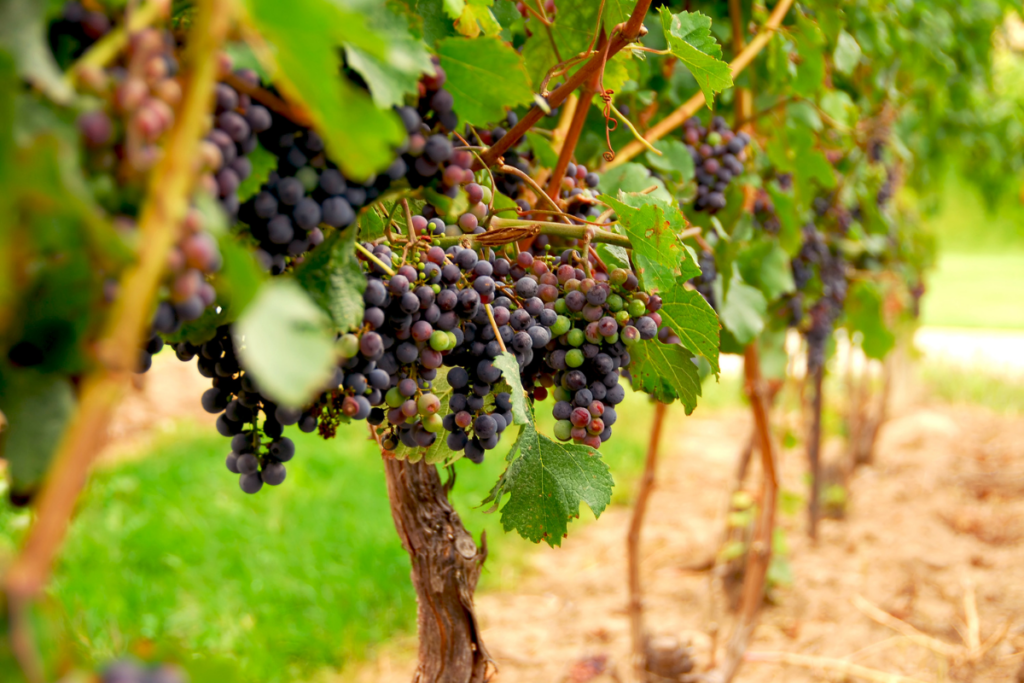
A final note, the result of summer reflections, concerns the theme of organic farming. Also from Sicily, it emerges how the resurgence of some phytopathologies requires a strong review of the treatments usable in organic viticulture. This year, for example, large areas of western Sicily, particularly in the Trapani area, were plagued by devastating attacks of leafhoppers, insects that feed on leaf sap, causing yellowing, marginal necrosis, and leaf roll, compromising photosynthesis and the general health of the plant.
Considering that Sicily is among the most organic wine-growing regions in the world, it is easy to understand the serious damage caused by this insect, which not only weakens the plant in the current year but also reduces its ability to accumulate reserve substances for the following year.
The vineyards I saw in many areas of the Trapani area are immediately distinguishable between the “organic” and the “conventional” ones; the former are brown, as if it were late autumn, the others are green.
Not reflecting more on these aspects says a lot about how sector policy is also moving.
Today, practicing organic farming, also in light of climate change, can be considered a heroic act.
But if Italian viticulture needs heroes, there is little to be happy about.
Key points
- The Italian wine industry faces a structural crisis, not a cyclical one.
- Widespread agreement on problems exists, but a total silence on solutions.
- Individualism and the inability to “build a system” are the biggest threats.
- Sicily risks losing vast vineyard areas without serious policy intervention.
- Climate change and pests make organic viticulture an “heroic” challenge.