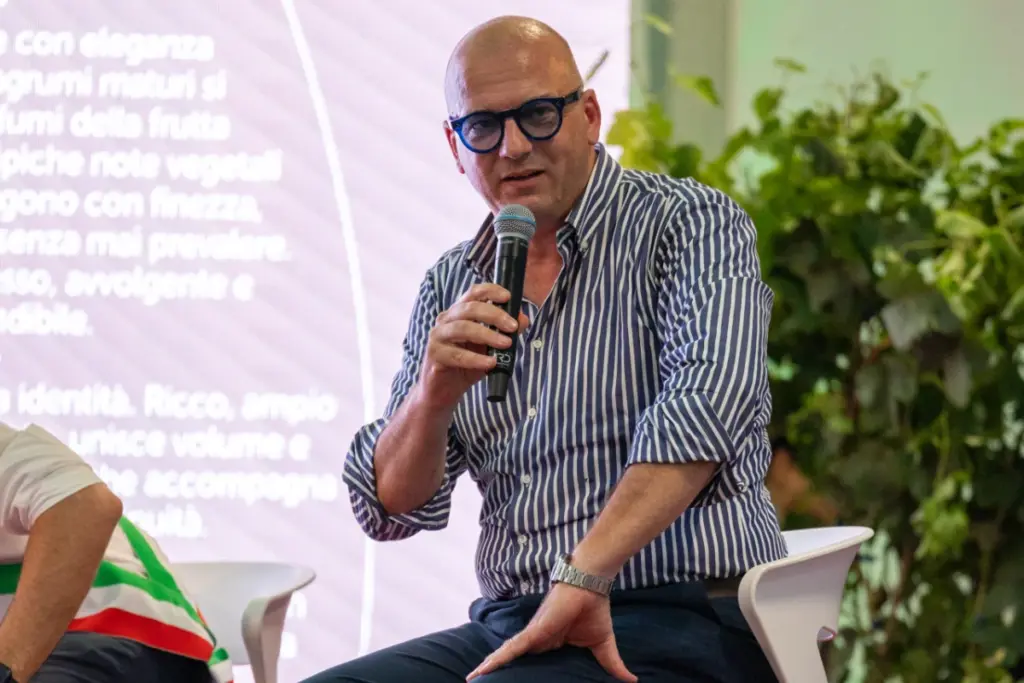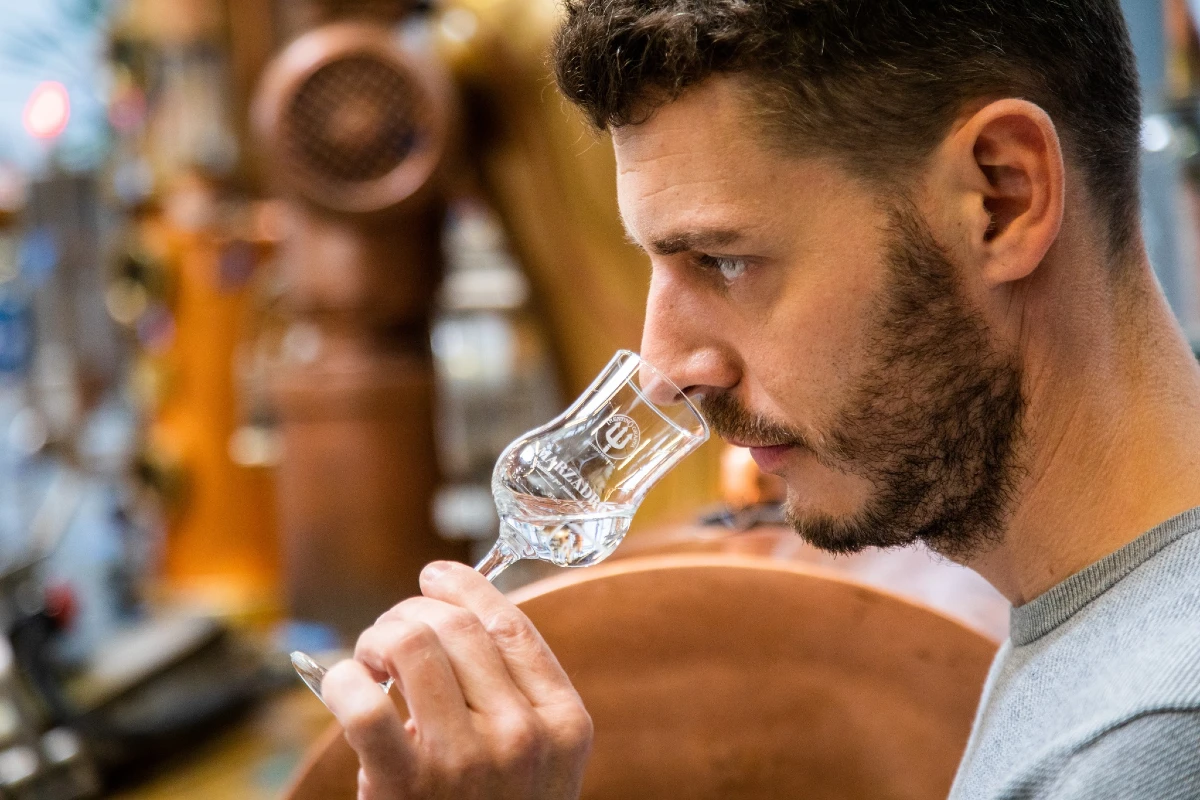
Alessandro Marzadro, CEO of the eponymous Trentino distillery, reflects on a complex 2025 marked by export growth and contracting domestic consumption. His response: turn the distillery into a destination. Through experiential tourism, direct hospitality and territorial storytelling, Marzadro is building consumer loyalty and protecting margins in a volatile, algorithmically driven market landscape.
In 2026, the grappa market presents itself as a territory of contrasts: while exports continue to trace promising routes toward emerging markets, domestic consumption is going through a phase of profound change, moving away from traditional rituals. In this polarised scenario, the challenge for producers is no longer simply to sell a distillate, but to defend the identity of an entire sector.
In this exclusive interview, Alessandro Marzadro, CEO of the eponymous Trentino distillery, offers a lucid and rhetoric-free assessment of a complex 2025, turning management challenges, from soaring costs to contracting domestic consumption, into an opportunity for strategic evolution. The heart of his philosophy emerges clearly: grappa stops being a simple “shelf product” and becomes a vehicle for relationship-building.
Marzadro’s analysis rests on three pillars:
- Tourism as a shield: welcoming visitors to the distillery is no longer a secondary activity, but a fundamental lever for protecting margins and communicating real value beyond the price tag.
- Balanced innovation: an approach to Artificial Intelligence that does not compromise the sanctity of ageing, but optimises service efficiency and the personalisation of the guest experience.
- Territorial cohesion: a reflection on Trentino as a “system” capable of creating critical mass, where the company brand and geographical destination merge into a single value proposition.
In 2025, the Italian grappa market as a whole showed a polarisation. Exports maintained a crucial role with significant growth in emerging markets, while the domestic market showed a contraction in traditional consumption. What is your assessment of the past year?
2025 was a complex but very formative year. Market polarisation was evident: exports growing and the domestic market weaker in terms of traditional consumption. Our overall assessment is nonetheless positive because we worked on the company’s total value, not just the product. In this sense, experiential tourism played an increasingly important role: opening the distillery, telling the story of the territory, letting people experience grappa in the places where it is born allowed us to build relationships and loyalty, not simply consumption occasions.
Exports in 2025 showed mixed signals depending on the geographical area. Which foreign market surprised you most for its maturity, and which required a rethinking of strategy?
Germany continues to impress us with its maturity and ability to read the product in its cultural dimension. It is a market where the story of the territory works very well. In other contexts we had to rethink our strategy, focusing less on sell-in and more on experience: bringing importers and opinion leaders to Trentino, letting them experience the distillery and the territory is often more effective than any price list.
Looking at production costs in 2025, between energy and raw materials, what was the most complex management challenge you faced in protecting margins?
The main challenge was protecting margins without compromising quality. Here too, tourism was an important indirect lever: direct sales, hospitality and experiences at the distillery make it possible to better communicate the product’s value, explain the price and reduce purely cost-based competition. Experience and margins, when well managed, move in the same direction.
2025 was also a year of growth for mixology. Do the figures reflect a real impact of grappa in out-of-meal cocktails, or does it remain an appealing but numerically marginal niche?
Mixology is still a niche in numerical terms, but strategic in terms of image. The first encounter with grappa increasingly takes place through a cocktail or a guided experience at the distillery. Tourism therefore becomes a cultural accelerator: those who visit, taste and understand the product are more open to seeing it outside the classic after-dinner context.
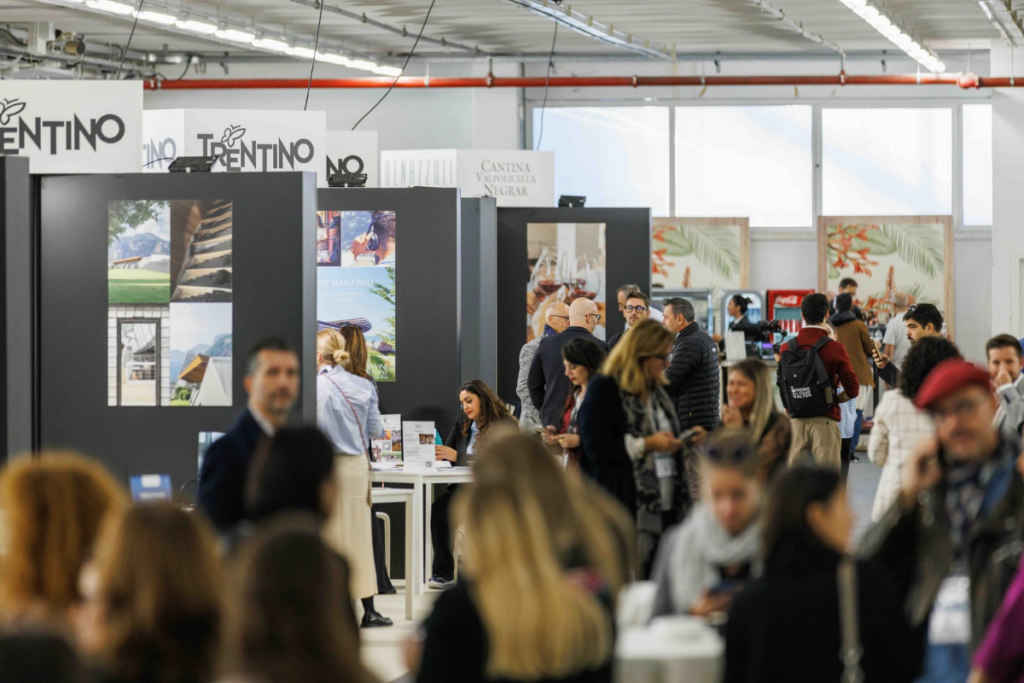
Vinitaly 2026 has recently concluded. Beyond the toasts and handshakes, what kind of “sentiment” did you perceive among international buyers?
At Vinitaly I sensed buyers who were more selective and less improvised. They are looking for solid brands, clear identities and long-term projects. Experiential tourism was often a topic of conversation: not just what we sell, but where and how we can bring the brand to life. This approach strengthens credibility and clearly differentiates those who compete on product alone.
The Trentino Pavilion has always been a strong point. At this 2026 edition, did you perceive a territorial cohesion capable of creating critical mass, or does a certain fragmentation and individualism remain?
Trentino has enormous potential because it combines product, landscape and hospitality. I saw positive signs of greater cohesion, but the real leap in quality will come when tourism is experienced as a systemic project, not an individual initiative. Creating critical mass means offering a complete territorial experience, not merely a sum of individual companies.
There is much talk of artificial intelligence applied to logistics and demand forecasting. In a reality like yours, where time is also marked by waiting and ageing, how much room is there for these kinds of technological innovations?
In a reality like ours, time remains a non-negotiable value. Artificial intelligence does not replace the wait, but it can help improve everything that surrounds it: bookings, tourist flows, visit management, personalisation of experiences. Technology, when well used, can make hospitality more effective and more sustainable.
If you had to bet on a single label from your range that, in your view, has the potential to become a new success “case study”, which would you choose and why?
I continue to say Diciotto Lune, not just as a product but as an experience. It is a label that lends itself to telling the story of our approach to grappa: time, wood, territory. At the distillery it is often the endpoint of the visit, the moment that transforms a tasting into a memorable story. This is the true potential of a modern case study.
In a complex context, characterised by volatility and instability that seem to have become chronic, what are your prospects and objectives for 2026?
In 2026 we want to consolidate what we have built, with an increasingly integrated vision encompassing product, brand and territory. Tourism is a strategic lever, creating authentic experiences means building value over time, educating the consumer and making the brand less vulnerable to market fluctuations. In an unstable context, experience is one of the most solid forms of continuity.
Key points
- Experiential tourism has become a core strategic lever for protecting margins and building consumer loyalty.
- Germany stands out as the most mature export market, responding strongly to territorial storytelling.
- Mixology remains numerically niche but serves as a powerful cultural entry point for new grappa consumers.
- Artificial intelligence can optimise hospitality logistics and personalisation without replacing the irreplaceable value of ageing time.
- Diciotto Lune represents the ideal case study, combining product identity, time, wood and territory into one experience.