Masciarelli has turned its commitment to art, charity, and community into key assets of its brand. By focusing on innovation, wine tourism, and sustainable practices, the company attracts younger generations who value terroir and sustainability. Through initiatives like the “Masciarelli Art Project,” the brand engages the market with a unique blend of cultural and business strategies.
Masciarelli promotes and funds projects related to scientific research, healthcare, education, and the protection of civil rights. We see wine not just as a product but as a vehicle for philanthropy, culture, and knowledge. How do you transfer this commitment to the market, and what results have you seen?
All of these activities we do and will continue to do are the result of thirty years of effort, and the fact that I have always wanted young people around me, predisposed to change. Even though there was some initial skepticism, the desire to innovate, progress, evolve, and challenge oneself has become Masciarelli’s genetic code.
I think it is essential to involve employees in these projects so that it becomes corporate culture; this was Gianni Masciarelli’s DNA, and we have continued on this path.
Today, our team is made up of very independent people, free to bring new ideas. A real “ideas club” has emerged within the company. Sometimes I try to synchronize them, prioritizing one idea over another, but it is essential to propose ideas, and even if we can’t implement them immediately, they may be useful in the future.
For Masciarelli, all of this represents an intangible asset and company value. Entrepreneurs working in family businesses pass these values from generation to generation.
This powerful asset becomes brand value and contributes to various actions linked to art, charity, community support, women, and youth.
The market can appreciate and understand this, but it is not always obvious. The company is a living entity; to make products and manage vineyards requires planning, thoughts, and sleepless nights.
This awareness must be shared and not be the responsibility of just one person. These are all dynamics that mature over time, and to transfer them to the market, one must be able to communicate and engage new consumers.
Many young people who have had the chance to travel at affordable prices have discovered new destinations and integrated their wine culture. Wine is a journey, first and foremost mental and then cultural.
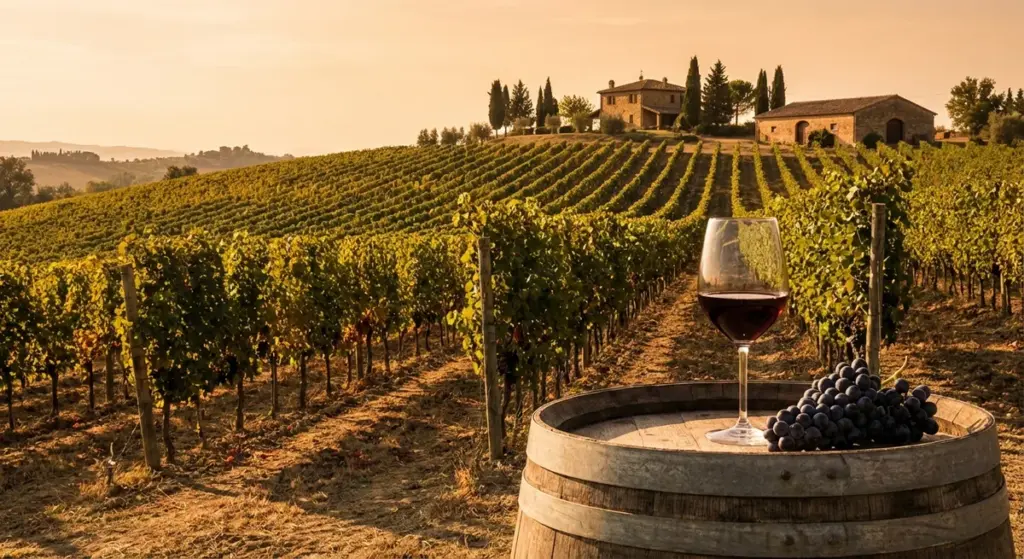
Wine is not just a product to consume but a social and cultural vehicle. The development of wine tourism is another fundamental asset that allows people to discover the countryside as a place of well-being.
These journeys create an awareness of consuming well and moderately. Behind wine tourism is the wealth that is the landscape, built over decades, the result of a symbiosis between man and nature.
Wine producers are “makers of beauty”; my daughter says they are “guardians of beauty.” But can a farmer be a guardian of beauty? Can he be an artist? I say yes because arts and crafts go hand in hand. The winemaker’s profession encompasses a fine spirit, full of competence, science, and knowledge, and can also transmit beauty.
Many producers and consortia in recent years have wanted to combine wine and art, finding various ways and meanings to connect these aspects. You are doing so through the “Masciarelli Art Project.” Beyond the charm and beauty these initiatives express, is there a marketing strategy aimed at the market, or are they purely cultural initiatives?
I think that owners and employees must cultivate the pleasure of working in the company and have the ability to transfer passions into their work.
I’ve always had a passion for interior design; I’ve cared for the places, not only the Semivicoli Castle but also the warehouses and industrial components. I’ve always tried to give them a personality, a personal imprint. My passion from when I was a child, I transferred to the company.
My daughter is also fascinated by photography and art. So, these choices make sense; to communicate and transfer our passions, even stepping out of the usual frameworks.
Through various artists, we’ve sought a language that could bring young people closer to wine and our reality. I encourage young people to try, dare, and even if mistakes happen, they can be corrected the next year.
The global wine market has been characterized for years by oversupply and a general decline in consumption, especially among younger people. A better understanding of consumer behavior evolution is essential to adapting production in the long term. What concrete actions can be realistically implemented in this regard?
I have three children, and they all have different tastes. I’m in love with Cerasuolo paired with pizza, Mexican or Brazilian cuisine; I find it a universal wine.
Rosé wines are a bit neglected, but Generation Z is rediscovering them to drink at all hours. There’s no longer white with fish or red with meat; young people are looking for a wine that pairs with everything.
Sparkling wines and rosés pair perfectly with their tastes and lightness. The new generations pay attention to packaging; they are very sensitive to nature conservation. They are less concerned with the product and focus more on packaging and territory, the origin of the vine, and terroir. We need to get new generations to discover the wine landscapes that Italy offers from North to South.
For us, the quality of the product was fundamental; for them, it’s the territory, the context in which the vineyard grows. If you think about it, this perception is much more advanced than ours.
Our French competitors, thanks to a network of representative offices in key export markets (e.g., China), enjoy a significant competitive advantage and are able to develop and manage commercialization, promotion, training, and relations with authorities from privileged locations. What does the Italian wine sector lack to reach the “French cousins” level?
Italian governments say we, as producers, should work as a system, but the question is: do they work with us?
It’s the state, through embassies, that is the biggest promoter of Italian wine worldwide. Italian ambassadors must be wine experts, promoters, and defenders of Made in Italy. It’s the state that must act effectively in the markets because we can only go so far.
Prosecco has done something beautiful; it managed to bring together institutions, politicians, entrepreneurs, and workers. But Prosecco’s success is not just about one decade; it’s the result of a strategy from a region that managed to transfer and enhance this territory over 30 years ago.
Your production is based on experimentation: reducing yields per hectare, harvesting by parcel, enhancing little-known indigenous vines, long macerations, and aging in wood and bottle. Is the market ready to reward these choices, or are you working with a long-term evolution outlook?
Yes, certainly, the market is very mature, not only in Italy but also abroad. Through globalization, sommeliers and industry associations have truly contributed to the development and ability to taste wine, ensuring greater maturity and awareness for quality wines in different markets.
Wine has been a happy contamination in the globalization process and has helped create high-quality dining. A competition between different cuisines worldwide, based on high-quality food and wine, has led to considerable benefits.
This interview was conducted in partnership with Amorim Cork Italia as part of the “Amorim Wine Vision” project – a network of thought leadership on technical and topical wine-related issues, spotlighting the original visions of industry entrepreneurs and managers.
Key points
- Masciarelli blends wine with philanthropy, culture, and education.
- The company promotes innovation through a young, dynamic team.
- Wine tourism is key to their strategy, highlighting Italy’s wine landscapes.
- Generation Z values wine’s connection to sustainability and terroir.
- Prosecco’s success is a model of regional cooperation and strategic promotion.