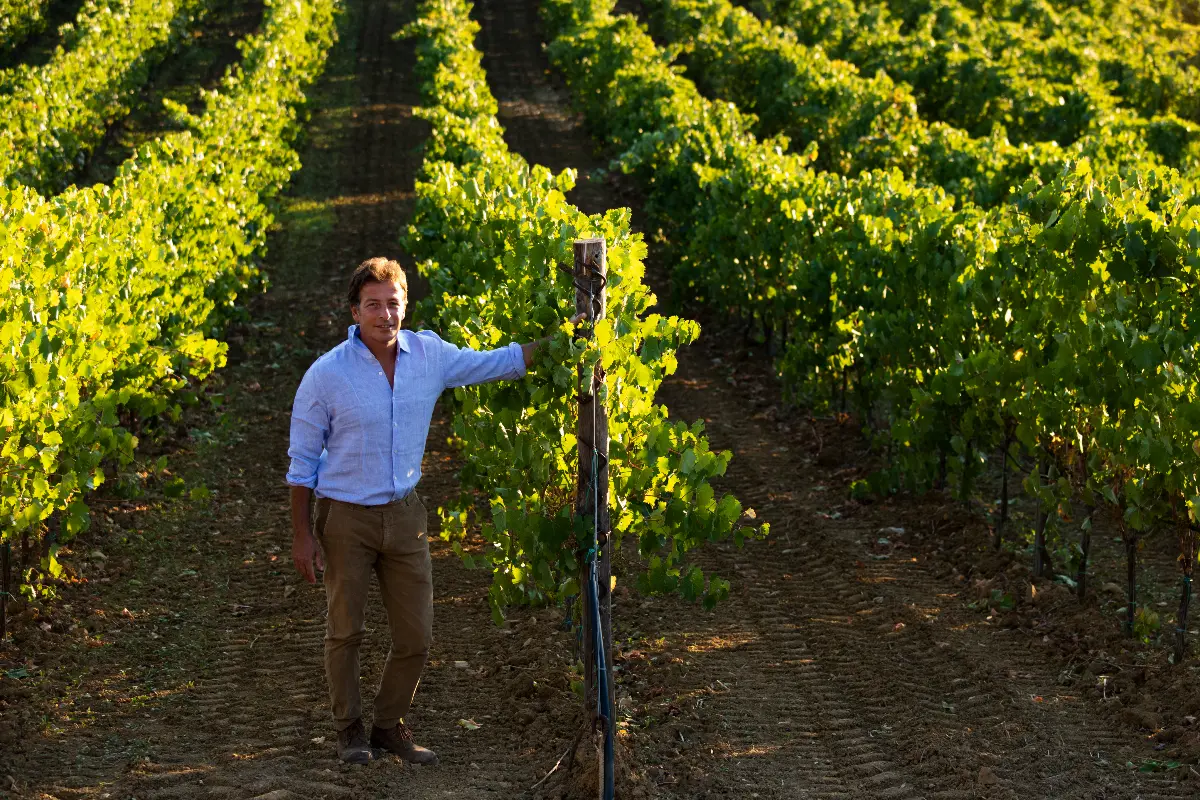
Alberto Tasca shares his vision of sustainability as a strategic and evolving tool for competitiveness in wine. From data-driven decisions to social impact projects like EduSOStain, and the potential of blockchain and AI, SOStain offers a replicable model for regions seeking effective and credible sustainable practices.
Sustainability in wine is not a cost, but an investment that improves business efficiency and competitiveness. This is the vision of Alberto Tasca, President of the SOStain Sicilia Foundation and CEO of Tasca d’Almerita, who in this exclusive interview for Amorim Wine Vision – a network that gathers original visions from entrepreneurs and experts – dismantles preconceptions and stresses the importance of measurement for real sustainability.
Tasca highlights how the SOStain certification relies on objective data to ensure transparency and credibility. Digital innovation, with tools like blockchain and artificial intelligence, can support sustainability, but must be used mindfully. Social impact is also crucial: projects like EduSOStain show how sustainability can generate value for local communities. This interview offers a concrete and forward-thinking perspective on the transformation of the wine sector.
Some producers see sustainability as a cost rather than an investment. What’s your response to this view?
It is crucial to define what we mean by sustainability. It’s a working method based on data monitoring, enabling conscious decision-making and improved business efficiency. While starting a sustainable path does require upfront investment, especially in data collection and analysis, it allows for long-term optimization of resources, waste reduction, and profitability improvement. It’s not just a strategy – it’s a necessity for those wanting to operate with foresight.
Many producers apply sustainable practices but few measure and effectively communicate their impact. Is unmeasured sustainability an illusion?
Without measurement, we cannot speak of real sustainability. A holistic approach requires objective data to assess impacts and continuously improve performance. Transparency is key not only for corporate credibility but also to communicate effectively with consumers and international markets increasingly focused on these issues.
SOStain certification is becoming a model for other regions. Which Italian or international areas do you see as ideal candidates to replicate this model?
Each territory has its own sustainability model, from programs in the U.S. and South Africa to protocols in France. The important thing is that the metrics are standardized to allow fair comparison. SOStain Sicilia isn’t competing with other models but aims to be a collaborative system among producers and managers to enhance the territory and face common challenges.
Can digital innovation support sustainability in wine? Do tools like AI and blockchain have a role in developing and monitoring sustainable practices?
Innovation is a pillar of sustainability, but the energy impact of certain technologies must be considered. Blockchain provides transparency and traceability to production processes, and AI is as revolutionary as the leap from abacus to calculator. The goal is to use such tools smartly to boost performance without increasing energy consumption.
In mature markets like Scandinavia, sustainability is a must. Do you think the day will come when wines not certified as sustainable are excluded from major commercial channels?
Quality wine remains the priority, but sustainability is becoming a key driver in many industries, including wine. Consumers are more conscious and increasingly choose products that reflect their ethical values. The recognition of SOStain by Intertek, commissioned by the Scandinavian monopolies, is an important signal: sustainability will no longer be optional.
Wine is an ambassador for Sicily, but could it also help raise awareness of climate change? How can Sicilian wine storytelling reflect this?
A practical example is the project with O-I Glass to produce lightweight bottles using recycled glass collected entirely in Sicily. Many municipalities struggle with glass waste; this creates a virtuous circle involving collection services, glassmakers, and SOStain – helping communities and reducing costs and carbon footprint. This can be communicated effectively: consumers want concrete actions, not vague claims.
Light bottles reduce environmental impact, but glass remains energy-intensive. Is glass the future, or are there real alternatives?
The future lies in evolving consumption habits and continued research. Heavy bottles were once linked to quality, but now markets favor low-impact solutions. In some countries, like Scandinavia, Tetra Pak is already preferred over glass. It will be interesting to see how these trends develop.
The social aspect of sustainability is often overlooked. What are the most effective actions a wine company can take to make a positive impact?
The social dimension is critical. We obtained BCorp certification, which focuses on social sustainability, beginning with internal analysis and appointing a manager to link company wellbeing and employee satisfaction.
With SOStain Foundation, we launched “EduSOStain” with nonprofits in Palermo (Club Itaca and Yolk) to provide training and job opportunities for disadvantaged individuals. Our staff taught them to grow a garden, develop packaging, and sell products – generating value for both the participants and the companies involved. Social sustainability is not just an ethical duty, but a collective growth opportunity.
Our staff were proud to share their professional know-how with people facing major challenges. Those trained had never worked at such a professional level before and gave their best. This is something worth communicating and proves that in every direction of sustainability, there are evolutionary prairies.
What is the biggest mistake companies make when approaching sustainability? And how can it be avoided?
The biggest mistake is treating sustainability as a marketing tool instead of a true commitment. Approaching it only to improve image or increase short-term sales risks losing credibility. Real sustainability takes consistency and dedication – and when done seriously, it brings tangible benefits like operational efficiency, waste reduction, and stronger customer loyalty.
Key points
- Sustainability must be measured to be real and credible.
- SOStain uses data to boost efficiency and reduce waste.
- Blockchain and AI can support smart sustainability.
- EduSOStain shows the social value of green projects.
- Avoid treating sustainability as marketing, it must be authentic.