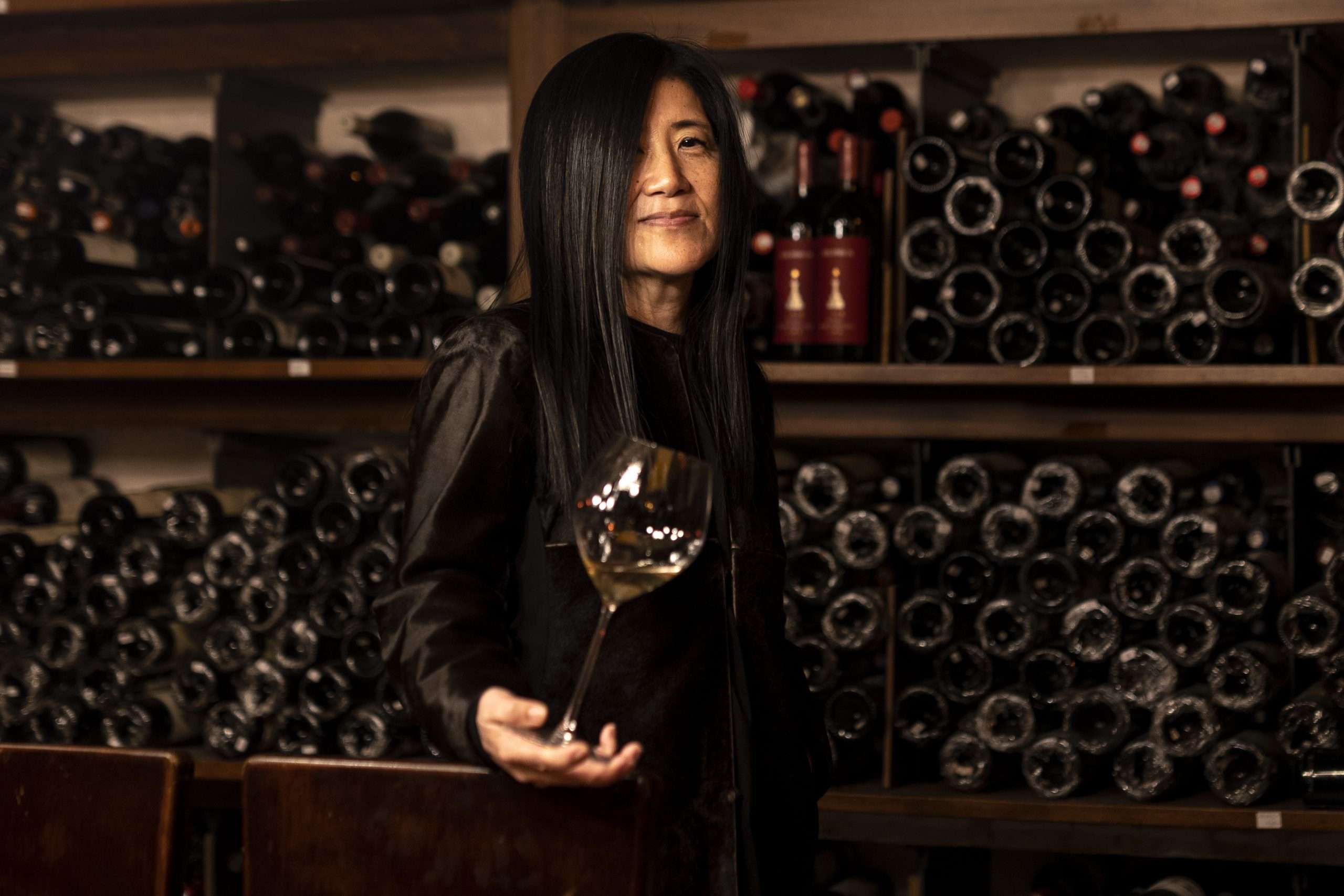
Stevie Kim is a unique figure in the Italian wine world, with international experience that spans various cultures and continents: born in Korea, raised in the United States, and currently living in Verona, where she holds the position of Managing Director for Vinitaly International.
Stevie has played a leading role in promoting the Vinitaly brand and Italian wine culture internationally. Her commitment is driven by the desire to make the complex world of wine more accessible and engaging to a wider audience. By investing in social media platforms and emerging communication tools, Stevie aims to build an international community of wine enthusiasts.
A professional who has always paid close attention to new generations, with a strong curiosity towards novelties, digital communication, and technological innovations.
Thanks to her constant effort to engage the wine community and her support for wineries, Stevie Kim has carved out a prominent role as a communicator and international face of Italian wine. For this reason, in the “Amorim Wine Vision” project, we wanted to gather her testimony.
According to a survey conducted by Wine Meridian, only 14% of wine businesses have an internal figure dedicated to communication, while the majority (47%) use a cross-functional resource who also holds other roles. What is your opinion on this reality?
Actually, I think the figure is higher, both in Italy and abroad. Most companies are small to medium-sized and don’t have the resources to dedicate someone specifically to communication.
Their priority is the product; they focus on production and marketing, the link between vineyard and winery. They don’t think about the link between winery and sales, which is where communication comes in.
In family-run businesses, it’s often the producer or the export manager who handles communication. As communicators, we need to help businesses understand the added value of investing in communication, but before investing, they must recognize the importance of this aspect and the need for the right human resources to achieve their communication goals.
On several occasions, you’ve stated that it no longer makes sense to distinguish between digital marketing and traditional marketing, especially in relation to social media management. Could you explain why?
Companies and the entire supply chain think of “digital marketing” as synonymous with “social media.” This is not the case. Digital marketing covers various aspects: pricing, storytelling, packaging, sustainability, placement, and promotion. These are all traditional marketing elements; it’s just the medium that has changed.
With the advent of social media, there was a big change: consumers could finally engage with producers and directly express their opinions.
Once, advertising spending was tied to TV, radio, and print media. In 2017-18, total spending on digital advertising (Google AdWords, social media promotions, etc.) surpassed traditional advertising for the first time.
Trends have evolved, and consumers, especially in the past three years, have radically changed their purchasing behaviors, priorities, and occasions of consumption. However, these changes have not been followed by communication strategies that address them. What do you think are the reasons for this?
With the pandemic, people necessarily discovered and started using e-commerce, but the Italian wine sector was not ready for this change. There was a huge increase in sales, but this process mainly benefited large, medium-high-end companies, as e-commerce is largely driven by brand recognition. The entry-level sector suffered more during the lockdown.
People who weren’t going to restaurants started ordering directly from producers or via e-commerce and consumed at home. In the US, remote working is still very common, and the new philosophy is to consume well at home.
Young people in Gen Z are the future of success in the wine world; they represent a real opportunity for small and medium-sized companies because they are less focused on the brand than Millennials and Boomers. They are more open to experimentation, alternative formats, and want experiences. For them, these elements are more important than brand recognition, and communication needs to evolve in this direction.
Among the determining factors for effective promotion and communication, you mentioned “training,” “innovation,” and “internationalization.” What practical advice would you give to a wine entrepreneur to achieve these goals?
These three elements are important, but I would like you to think of them as interrelated rather than separate. In my opinion, internationalization requires training, and innovation requires both training and internationalization. These aspects are connected; it’s a circular dynamic where they overlap and depend on each other. Innovating doesn’t just mean developing technology, it means thinking “out of the box,” creating lateral thinking. It’s a dynamic flow, not static or hierarchical.
Wine businesses’ communication is still very product-centered. Companies want to talk about their product, pursue recognition and awards, and this absorbs a lot of energy. What is your view on this?
Awards are becoming less and less important, much less influential than before; it’s not just me saying this, but the companies.
They are losing relevance, especially because the market is flooded. However, I should point out that in the US market, the most important one for Italian wine, the Wine Spectator and Robert Parker scores still carry some weight.
Also, a point about young people: these standards were set by Boomers, but young people are looking for stories and are attentive to packaging, not scores and awards.
We need to foresee and intercept the perceptions and trends of the wine markets, but the focus should be on the new generations.
In this sense, I’ll pose a provocative question: “La Marca” is the most exported Prosecco brand in the US, it’s number one in the world, and the gap with the second is enormous. This line isn’t sold in Italy. How did they achieve these results? This is what we need to analyze and focus on.
This interview was conducted in partnership with Amorim Cork Italia as part of the “Amorim Wine Vision” project – a network of thought leadership on technical and topical wine-related issues, spotlighting the original visions of industry entrepreneurs and managers.
Key points
- Gen Z values stories and experiences over brand recognition and awards.
- Digital marketing encompasses more than social media; it includes pricing, packaging, and sustainability.
- The pandemic accelerated e-commerce in the wine industry, benefitting larger companies.
- Wine communication must evolve to meet new consumer behaviors and preferences.
- Internationalization, innovation, and training are essential for wine businesses to succeed globally.