Armando Castagnedi reflects on thirty years of winemaking at Tenuta Sant’Antonio, highlighting the 2025 vintage’s success for whites and the difficult decisions made for red wines. The interview explores the winery’s strategic evolution, the brothers’ collaboration, and their ambitious mission to elevate Valpolicella d’annata to international prominence through elegance, balance, and territory-driven identity.
Thirty years of harvests are not just a milestone, but an archive of choices, seasons, and intuitions. In this conversation, Armando Castagnedi, co-owner of Tenuta Sant’Antonio, opens this archive with a rare and precious sincerity, not hesitating to recount the difficulties and painful decisions, a quality that few producers possess and that should be praised. An authentic portrait emerges of a company that has made conscious growth and fraternal bonds its stylistic hallmark.
The narrative begins with the 2025 vintage, a faithful mirror of this philosophy: a year of two faces, excellent for whites but complex for reds, which forced the brave decision to sacrifice quantity to defend the qualitative integrity of Amarone. But the interview goes beyond seasonal news, delving into the alchemy that allowed four brothers to build a solid project, based on a division of roles that is as natural as it is strategic. Armando reveals the company’s path of evolution, a trajectory that led them to define their identity through a contemporary bet.
This bet involves restoring dignity and complexity to vintage Valpolicella, a wine often misunderstood but representing the purest expression of the territory. Our dialogue concludes with an ideal reflection, an imagined conversation with a master like Giuseppe Quintarelli, which does not celebrate a myth but reveals the deep awareness of a mature stylistic path. This journey has finally arrived at a search for elegance, balance, and drinkability that defines the current production.
The 2025 harvest has just concluded. What was the first feeling when you brought the grapes of this vintage into the cellar?
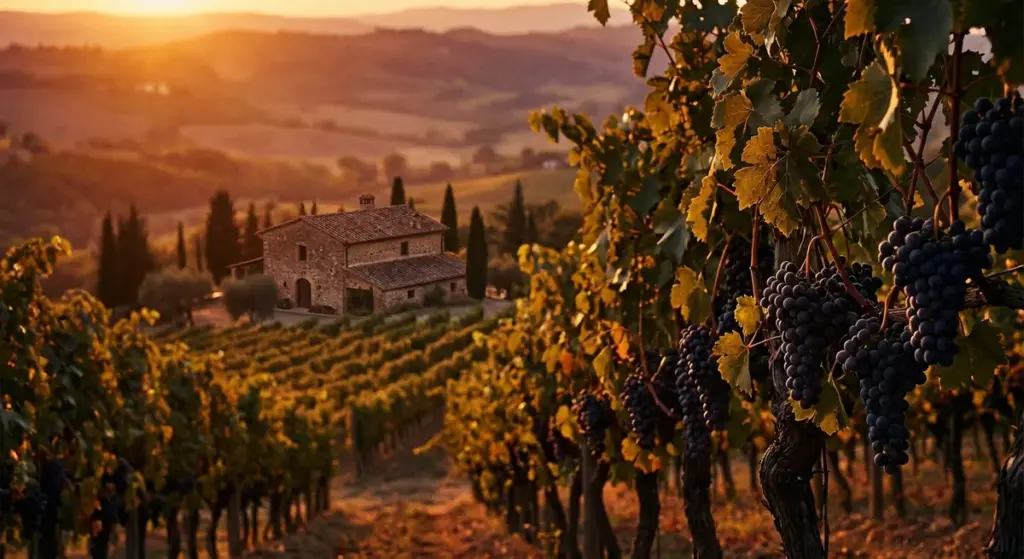
To be honest, 2025 was a rather contradictory vintage. We had great expectations, both from a qualitative and quantitative point of view. Conditions until mid-August had been interesting: a rainy spring favored excellent budding and well-developed clusters, foreshadowing good production. The summer was hot, but not scorching like that of 2024. By August, some temperature fluctuations seemed to have created the perfect premises for a high-quality harvest.
For the white wines, these premises were confirmed. The less hot year gave us grapes—Chardonnay, Pinot Grigio, Garganega—with much more balanced acidity and pH compared to 2024, a year in which we faced greater difficulties in the cellar. This year, however, the grapes arrived healthy and our technicians did not have to face any particular critical issues. The excellent balance found in the whites represents one of the most satisfying aspects of this specific vintage.
The problem, unfortunately, arose for the red wines. Towards mid-September, precisely at the crucial moment for the selection of grapes destined for Amarone, the rains arrived. This represented an enormous challenge. When it rains in that phase, the berry swells with water and the risk is not so much bringing the grapes home, but being able to keep them healthy during the delicate drying process. The potential for mold to develop was very high, forcing us to make a drastic choice.
For this reason, strengthened by the experience of difficult vintages like 2001 and 2014, having reached about 60-65% of our potential, we made the difficult decision to suspend the harvest. Consequently, we will certainly have a lower production of Amarone in terms of quantity, but we have safeguarded the quality. We preferred to sacrifice part of the volume rather than compromise the integrity of our most representative wine.
You have already partially answered, but did the climate reserve any other particular surprises this year?
Yes, as I was saying, from a qualitative point of view we are very satisfied, especially for the whites that we are now preparing for bottling. Perhaps they had a slightly lower sugar content, but this is not a problem; on the contrary, it aligns with our corporate philosophy. We aim to gradually lower the alcoholic strength of our whites to enhance their freshness and aromas. The balance between acidity and pH was excellent right from the vineyard.
Every vineyard has its own personality. Is there one in particular that surprised or disappointed you this year, and why?
I would say it was the vintage in general that left us not completely satisfied for the reds, rather than a single vineyard. We had very high expectations, as our vineyards are almost all of high quality, in hillside positions, and they give us great satisfaction. The disappointment concerns mainly the impact of the rain on the grapes destined for Amarone during the final ripening stage. Working an entire year to tend the vineyard and then seeing the result downsized is never easy.
In the company you collaborate with your brothers. How do you manage moments of disagreement or different visions on important choices?
It is a question many people ask me. It is not easy, but not impossible either. We had the example of our parents: my father had eight brothers, and six of them worked together until they were 70. I remember the discussions and difficulties, but also my father’s advice: “During the day work together, but in the evening everyone at their own home.” The key in our case was being able to divide the roles effectively according to individual inclinations.
We started from scratch, with experience in grape production but not in wine. When we started vinifying, we approached the various responsibilities and, slowly, personal inclinations and the character of each of us guided us. I, for example, realized I was not suited for cellar work, which requires patience and almost maniacal precision. My brother Paolo is perfect as head of production but does not like traveling or visiting clients like I do.
Thus, responsibilities were defined in a natural way: I follow the foreign market, another follows Italy, one the vineyards, and one the cellar. Everyone respects the work of the other. Of course, every now and then we discuss things animatedly, but it is always done with full knowledge of the facts and with the common goal of moving the project forward. This mutual respect and clear division of labor is the foundation of our thirty-year stability.
Thirty years of activity is a significant milestone. Looking back, what decision had the most unexpected impact on the project?
Thirty years, it seems incredible! At the beginning, our project was much smaller. One of the first challenges that led us to a fundamental decision was the management of the DOC regulations. We were young and felt that the rules, at times, were a bit tight and did not allow us to express ourselves as we would have liked. From there was born the decision to develop a line of IGT wines, which proved to be absolutely crucial.
This choice gave us the freedom to experiment and created a range of products that made us known and grow much faster internationally, reaching a different clientele. This success, in turn, allowed us to consolidate and focus even more on high-quality production for our denomination wines, Soave and Valpolicella. The most important decision was choosing whether to remain small producers or grow into a real structured company.
Is there a wine in your portfolio that you feel is still misunderstood or undervalued?
Absolutely yes. If we go back to the discourse of evolution, I believe that today the wine with the most unexpressed potential is the vintage Valpolicella Nanfrè. The market knows Amarone and Ripasso very well, but young Valpolicella has been forgotten or labeled as a simple product. Today, thanks to techniques in the vineyard and cellar, we can produce a Valpolicella with extraordinary character and complexity.
I see enormous potential for this wine in the current market, which seeks more agile but not trivial products. The historical problem is that to make a great Amarone, the best grapes are selected, and what remains struggles to produce a great Valpolicella. For this reason, we have dedicated specific vineyards exclusively to its production without selecting any clusters for drying. The results are truly exciting and represent our most authentic territory.
If you could sit down to dinner with a historical producer of Valpolicella to taste your 2025 wines, who would you choose?
It is a beautiful question. Without wanting to be cliché, the person I would choose is Giuseppe Quintarelli. I had the good fortune to know him, even if only a little, when I was young. I would be very curious to hear his opinion because he represented a philosophy that we have learned to appreciate more and more. At the beginning of our career, we were fascinated by more powerful and structured styles.
Quintarelli, instead, always maintained a more traditional style of incredible elegance. He said that wine follows the style and life of those who produce it. In the last ten years, we too have moved towards a style that seeks more pleasure and drinkability, while maintaining complexity. It would be fascinating to sit with him and see, through his eyes, the stylistic path we have traveled in these thirty years.
Key points
- The 2025 harvest was excellent for white wines but required significant sacrifices to preserve the Amarone quality.
- Tenuta Sant’Antonio is focusing on Valpolicella d’annata, aiming to restore its dignity and international relevance.
- Strategic division of roles among the four brothers has been the foundation for the winery’s thirty-year success.
- The winery’s stylistic evolution prioritizes elegance and drinkability, moving away from overly structured and powerful wine styles.