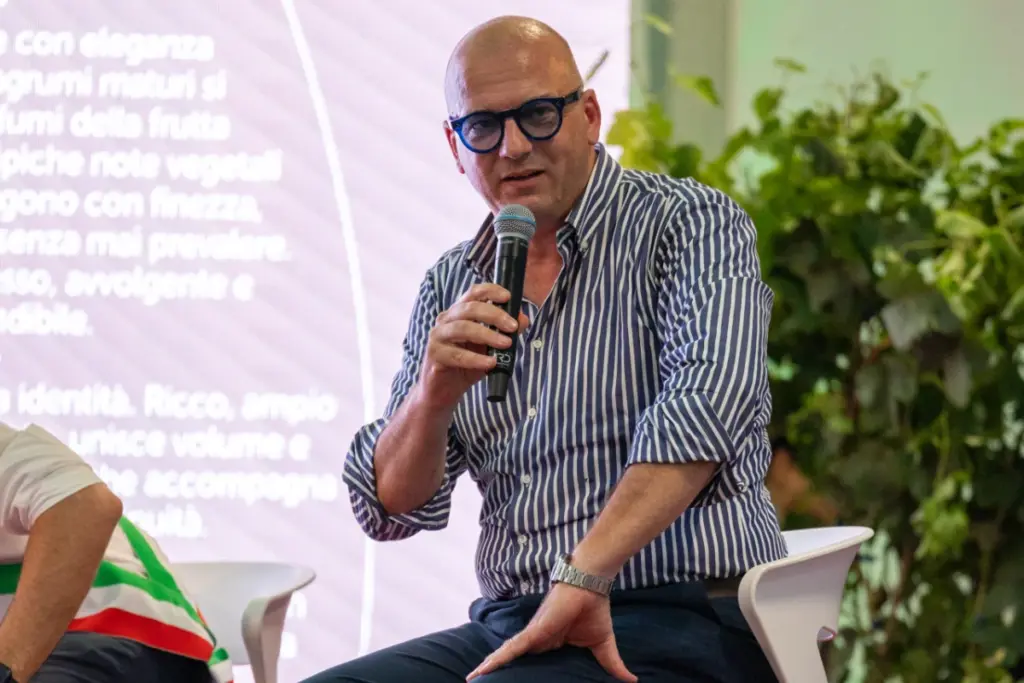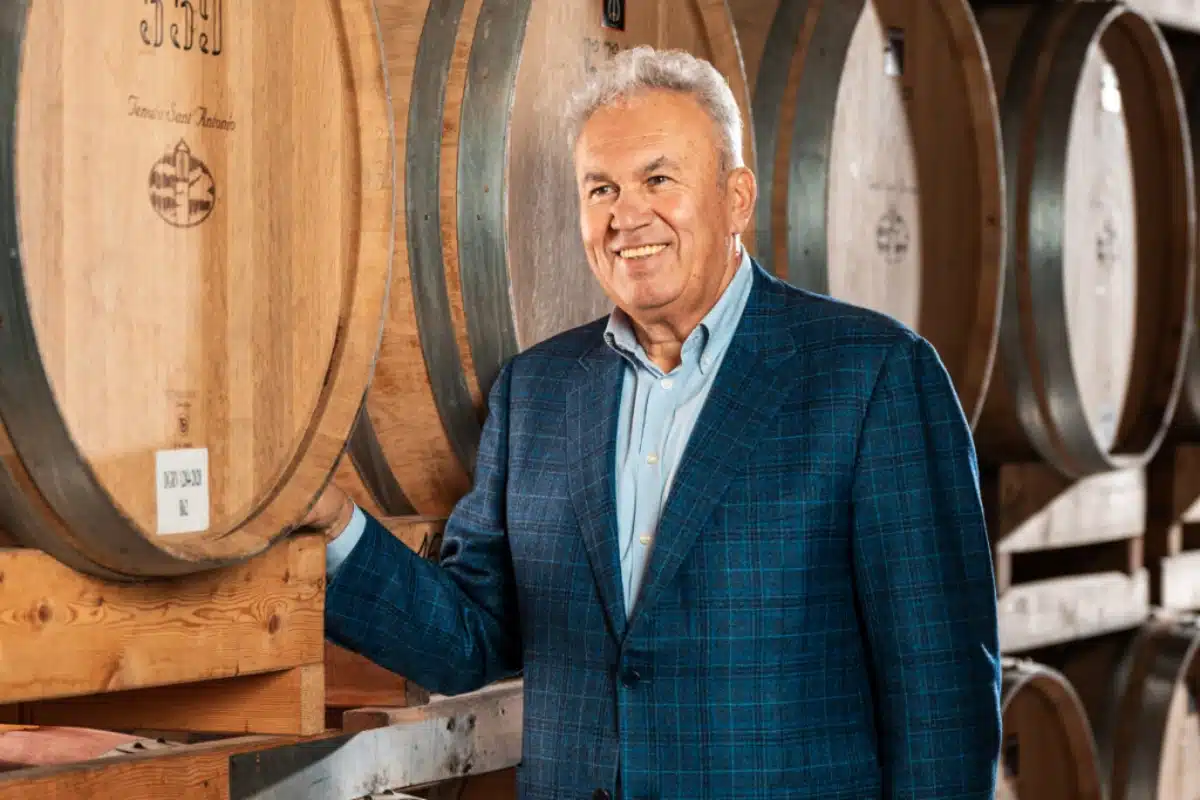
Armando Castagnedi, co-owner of Tenuta Sant’Antonio, reflects on the pressures reshaping the wine industry: post-Covid inflationary speculation, the blurring of Horeca and retail channels, and unsustainable markup chains. He describes the winery’s deliberate shift from family-run intuition to structured managerial governance, alongside product innovation in low-alcohol wines and emotionally driven label design.
The wine world today stands at a crossroads, suspended between the legacy of family tradition and the unavoidable need for managerial governance. In this conversation, Armando Castagnedi, co-owner of Tenuta Sant’Antonio, offers a clear and unfiltered view of the dynamics rewriting the rules of the global wine market.
Far from cold sales data, Castagnedi digs into the folds of post-Covid uncertainty, denouncing the risks of inflationary speculation and inviting the entire supply chain to an act of intellectual honesty on the quality-price relationship. From the collapse of the wall between large-scale retail and Horeca, to the challenges posed by new generations and the low-alcohol wine trend, a portrait emerges of a producer unafraid to innovate, transforming “human contact” and the “pat on the back” into a solid and competitive business structure. A deep, empathetic and pragmatic reflection on what it means, today, to produce excellent wine while remaining accessible.
First of all, I would like to understand where you have picked up the most interesting market signals over the past year, beyond the numbers, and where you see the greatest criticalities.
“It’s a complex question. We find ourselves in a layered set of situations that remain quite tangled. Looking at the United States, despite tariffs and a less favorable exchange rate, we now finally have certainty about the context. This stability, even when difficult, allows us to make work plans, something that was impossible last year due to a devastating uncertainty. Since November we have resumed planning strategies and pricing, and results are coming in.
The real criticality, however, is economic. The cost of living has risen and the consumer has become far more attentive: the quality-price ratio is now the fundamental driver. People have learned to spend wisely and to identify real value, in a world where too many wines are overpriced. I believe the entire sector must examine its conscience regarding product valuations and supply chain markups. After Covid there was inflationary speculation that did no good. We must return to accessible prices; I do not believe people are consuming less, I simply believe they have less disposable income.”
On the subject of distribution channels, what are the most significant changes you are observing?
“I see the historic opposition between Horeca and large-scale retail fading. In Italy, large distribution is evolving: it still seeks the family brand, the territorial producer, and maintains an important qualitative balance. The modern consumer does not always have time to visit a specialist retailer; if they find a quality wine at the supermarket, they buy it without prejudice.
Today, between restaurants and the shelf, there is no longer a ‘devil and holy water’ relationship. There is coexistence. With a network of over 60 agents, we work to cover both channels professionally, selecting different labels for different targets but the selection you find in supermarkets today is incredible compared to just five or six years ago. If a brand is strong, the two worlds can comfortably intersect.”
Many producers express concern about price increases in the Horeca sector, which risk pushing young people away. How do you see this price escalation?
“The problem is systemic and goes beyond wine alone. Consider the paradox of mineral water: in certain contexts it costs more than petrol. In the restaurant industry, excessive margins are often imposed by managerial logic that takes no account of the nature of the product. We producers work an entire year in the vineyard, vinify and wait years in the cellar, often operating on minimal margins to stay competitive.
Sometimes I struggle to justify certain retail prices. When the markup is four, five or six times the purchase price, you are inevitably selecting, or excluding, the clientele. If you have a strong brand you can try to impose a fair price, but without bargaining power you must adapt. It is not a simple situation for the future.”
If you had to identify an urgent need for your business, a necessity for the future that is perhaps currently held back by the complexity of the period, what would it be?
“More than a single need, it is a combination of pieces. Over the past year we have accelerated the transformation toward a managerial structure. I have brought in three key figures: a commercial director, an administrative director and a communications director.
We grew with the ‘family management’ model, based on the pat on the back and looking each other in the face, but that time is over. The market today demands professional interlocutors capable of engaging at the same level as large groups. On communications too we must be more discerning: we are bombarded with offers and must know where to invest so as not to waste resources.”
You are also experimenting extensively at product level, for example with low-alcohol wines and packaging.
“Exactly. We have tested low-alcohol proposals and received interesting feedback, but the foundation remains the same: the wine must be good, regardless of the alcohol level. We have understood that the consumer seeking low alcohol content also looks for sustainable and minimalist packaging, not necessarily luxurious, because they associate the product with a concept of freshness and accessibility.
We are also rethinking the way we communicate through labels. Rather than simply showing the vineyard or the soil, we want to convey the style of the wine. For our Valpolicella Superiore, for example, we chose the image of a woman in nineteenth-century dress evoking our vine rows: a symbol of elegance and refinement. We seek an emotional connection with the consumer, while knowing that some will always remain attached to the classic label. It is a continuous evolution.”
Key points
- Quality-price ratio has become the primary purchasing driver for today’s more economically cautious wine consumers.
- The barrier between Horeca and large-scale retail is dissolving, requiring producers to cover both channels professionally.
- Inflationary markups across the restaurant sector risk excluding consumers and damaging long-term brand loyalty.
- Tenuta Sant’Antonio hired three professional directors, commercial, administrative, communications, to replace family-based management.
- Low-alcohol wines and minimalist, sustainable packaging are emerging as a coherent, consumer-driven product segment.