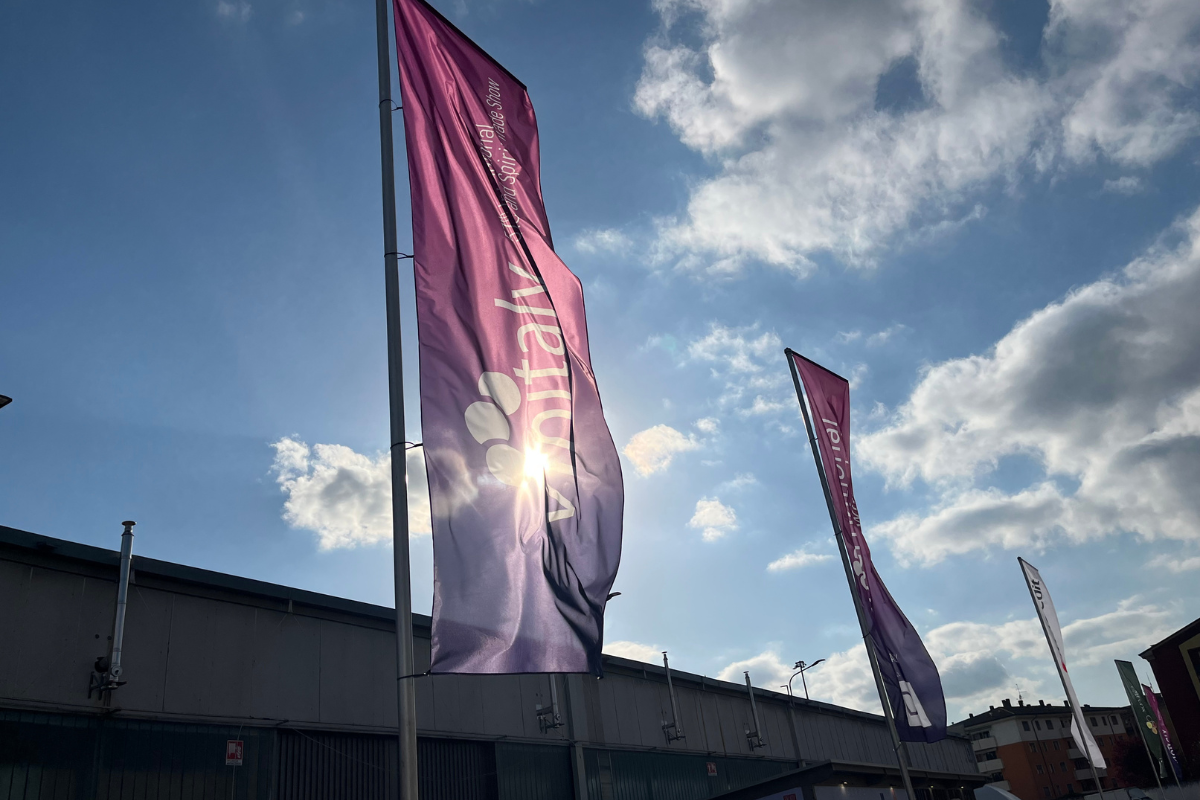
Vinitaly 2026 opens amidst global economic uncertainty and shifting consumer habits. While the event remains a cornerstone for Italian wine, the industry faces significant challenges from international competition and rising costs. Beyond the traditional marketing buzz, the fair must now offer a strategic vision for a sector navigating between simple resistance and a much-needed structural renaissance.
Every year, at the opening of Vinitaly, I find myself with more or less the same thought: I could write the opening editorial even at the end of the event, changing little or nothing. Because Vinitaly, much like Sanremo, has its own repeating ritual. Protagonists, controversies, and slogans change, but the script often remains very similar. Smiles must prevail over concerns, the party must triumph over real confrontation, and the image must continue to run faster than the substance.
Yet this year, as always, here I am looking at Verona with attention, curiosity, and even a bit of confidence. Because Vinitaly remains Vinitaly. And because, despite everything, it continues to be the place where Italian wine puts itself on display, tells its story, compares itself, and above all measures its state of health. The truth is that this 58th edition opens in a moment that is anything but easy.
The wine market is experiencing a complex phase, perhaps one of the most delicate in recent years. Consumption is not showing reassuring signs, markets appear tired, and confidence is not what it used to be. Added to this is a heavy international context, marked by conflicts that destabilize geopolitical balances and inevitably affect economic dynamics and production costs.
Let’s be clear: if we had the power to push today’s rulers toward less wicked choices, we would do so without hesitation. But we also know that we would likely just be wasting time. This, besides causing anger, leaves a sense of helplessness. It would be beautiful to see entire economic sectors raise their voices and officially rebel against foolish decisions, short-sighted strategies, and increasingly incomprehensible silences.
Instead, prudence or an absence of position too often prevails. Even from those who should at least try to oppose choices that seem to damage everyone, without it being easy to understand who can truly benefit, if not the arms industry. Vinitaly 2026 arrives within this scenario. So the real question is: how does Italian wine present itself today at its most important fair?
I believe it presents itself for what it is: an extraordinary sector, rich in excellence, territories, skills, and identity, but at the same time crossed by deep uncertainties. There is no point in telling ourselves fairy tales. It would be wrong to hide the fatigue behind the scenery. However, it would be equally wrong to confuse the difficulties of the moment with an idea of inevitable decline.
In recent months, we have seen the further growth of Wine Paris, which has now established itself as a major international wine event. We have also seen the clear downsizing of ProWein, which has returned to a more Germanic and Eurocentric dimension. In this framework, Vinitaly continues to have a precise identity, perhaps less international than other fairs, but still very strong in representing Italian wine.
This is one of the aspects that make Verona still central: Vinitaly is not just a fair; it is a square. A great square of Italian wine where business, relationships, promotion, politics, territories, storytelling, and inevitably much representation coexist. Sometimes even too much. On the business front, as always, it will be difficult to understand how much will actually be built over these four days.
This is not because business doesn’t matter, but because at Vinitaly, communication has almost always beaten commerce. This is not a scandalous thesis; it is a fact that anyone who has attended this event for years knows well. Just look at what happens in the hours immediately preceding the opening, with the editorial office flooded by invitations to events and masterclasses.
Behind every invitation lies the same message: “we are here, come visit us, come listen to what we have to tell.” It is all understandable and right. But every time, the same doubt returns: how many of these companies concentrate all their communication cartridges in these four days, only to almost disappear for the rest of the year? Regarding buyers, the questions remain open about how many will arrive with the concrete will to expand their portfolios.
Speaking with some producers and export managers testing the matching platform, the impression is not one of overwhelming enthusiasm. But here too, it would be too convenient to attribute everything to Vinitaly. The truth is that the problem lies much further upstream: the wine market today sends signals of evident fatigue, and this exhaustion is reflected in the fairs.
Should this influence my approach to Vinitaly? Frankly, no. And I don’t say this out of duty or superficial optimism. I say it because I think that precisely in the most complicated moments, we need to observe better, tell the story better, and distinguish better. And because this year is not lacking in elements of interest and innovation, such as the entry of wine tourism.
The structured entry of wine tourism with the Vinitaly Tourism area is an important signal. It tells us that wine continues to seek new ways to tell its story and create value. If wine tourism truly enters Vinitaly strongly, the event is enriched by the fundamental link between wine, territory, and experience. On this front, Wine Meridian, in collaboration with Wine Tourism Hub, has provided a concrete contribution.
For once, I prefer not to make predictions. I am not interested in guessing in advance if this will be a brilliant or disappointing edition, nor in jumping into the usual budget written before everything begins. I am much more interested in entering the fair, listening, seeing, understanding, and collecting real signals from the ground.
As always, we will do it with our entire team, monitoring the progress of the event with maximum attention. But above all, we will do it with a hope: that Vinitaly 2026 manages to tell something more than simple resistance. We hope it suggests the idea of a sector that still tries to reinvent itself, react, and build rather than just defend.
Because today, more than ever, Italian wine needs not a reassuring performance, but a vision. And if Verona can offer even just a few signals in this direction, then we can truly talk not of decline, but of a desire for renaissance.
Key points
- Vinitaly 2026 faces economic instability and declining global consumption, demanding a shift from marketing to substantial strategic action.
- While Wine Paris grows and ProWein shrinks, Vinitaly remains the primary square for the Italian wine identity.
- The introduction of Vinitaly Tourism highlights a move toward experiential value and territorial storytelling for future sector growth.
- The industry needs a strategic vision rather than just reassuring performances to overcome current market exhaustion and fatigue.