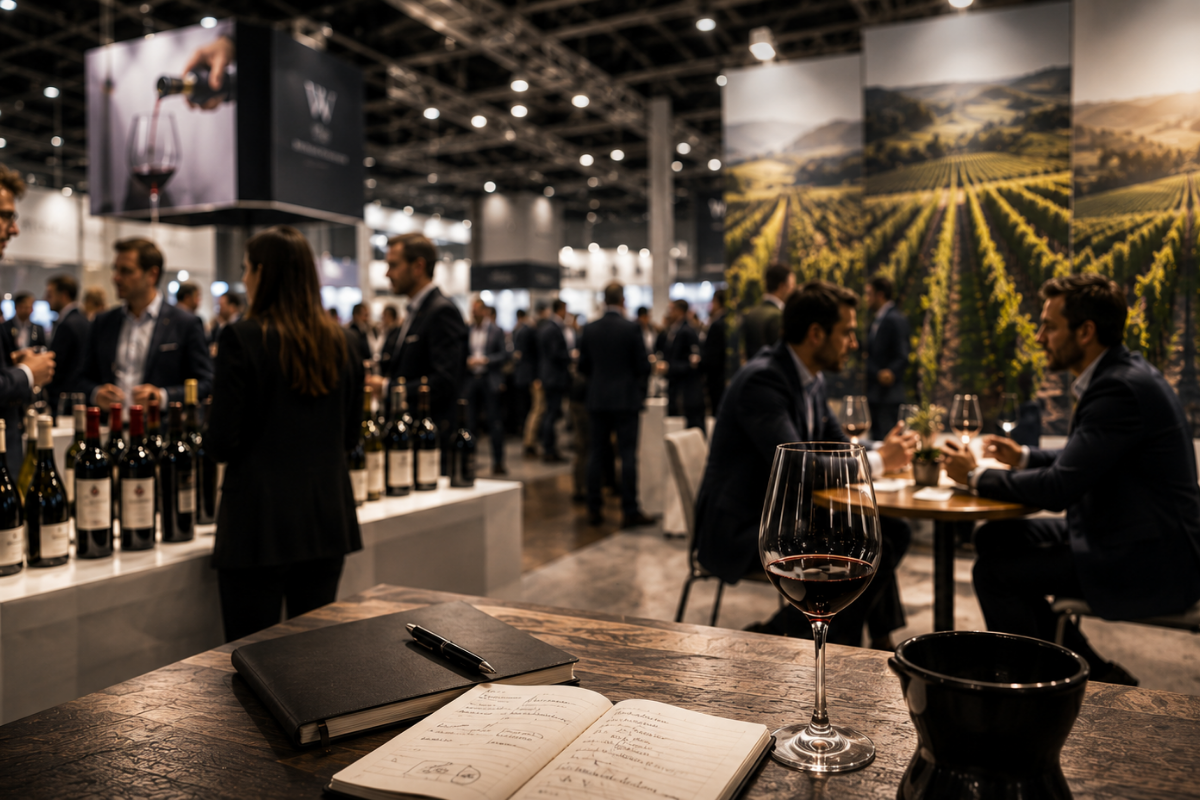
The trade fair calendar has always been, and remains, the pivot around which much of the commercial activity of wine companies is organized. Today, however, the context has changed profoundly. Buyers have less time, events are multiplying, costs are rising and return on investment is no longer taken for granted.
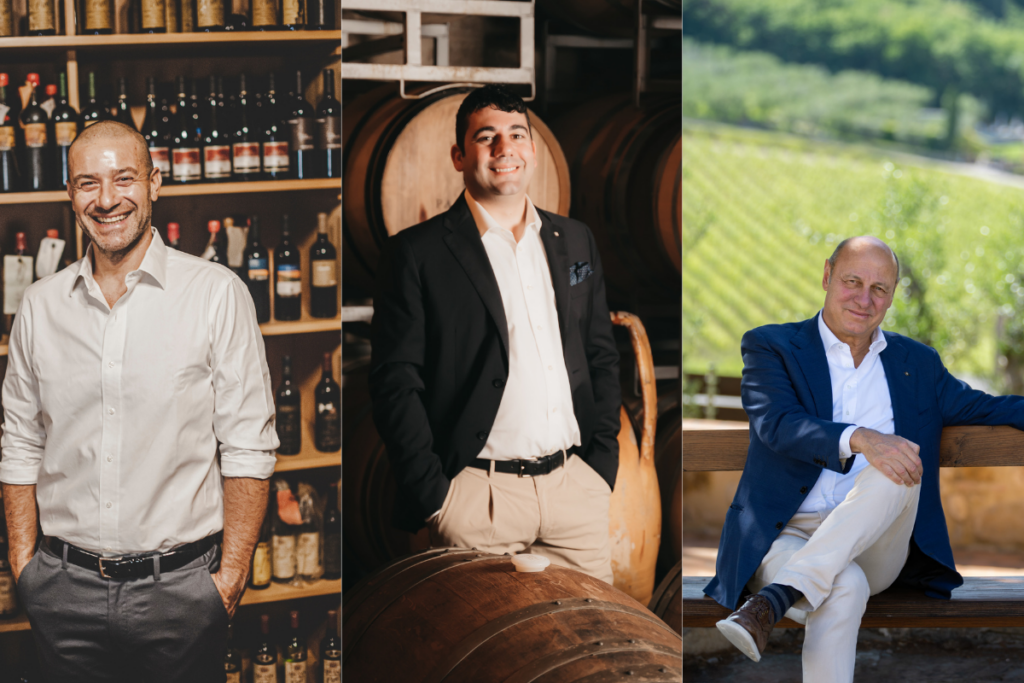
We asked three entrepreneurs from prestigious Italian wine territories, Sergio Zingarelli, at the helm of Rocca delle Macìe in Chianti Classico, Paolo Librandi, co-owner of the historic Calabrian company Librandi, and Stefano Leo, Export Sales Manager of PaoloLeo, one of the reference realities in Puglia, to reflect on how the role of the sector’s fairs is changing. The result is a reflection that goes beyond the choice of whether or not to take part in certain types of events and concerns the best way to build commercial relationships.
Does the fair business begin when the gates of the event open?
There is an established point on which the three entrepreneurs naturally converge: the fair is no longer the place where clients are sought by strolling among the stands. “The change is evident”: in Librandi’s words, “today a buyer has very clear ideas and a well-organized schedule. For this reason it becomes decisive to move well in advance, trying to enter his agenda even before the event begins. The presence of buyers or opinion leaders from specific target markets remains the first criterion for evaluating an event, and the real work, therefore, begins weeks, if not months, before.
The best companies, on the other hand, work all year round and in all directions. A company’s presence and success also depend on its ability to oversee markets with lively marketing, public relations, participation in institutional events, and more: in other words, one does not live on fairs alone.”
Sergio Zingarelli too says: “The fair should be one of the moments of the commercial strategy, not the only one. It is important to distribute activities throughout the year, organizing smaller, targeted meetings on specific markets. On the other hand, attending a fair without an already built agenda is no longer an effective or sustainable approach. The first indicator of a show’s success is not the number of people passing in front of the stand, but that of qualified appointments actually held.”
“The fair is only one stage of a much broader commercial path,” says Leo along the same lines. “The fair is not the only moment of communication. The real work begins beforehand, with the planning of appointments, and continues afterwards, through quick follow-up, client visits, digital activities and constant communication. Those who keep the relationship alive throughout the year achieve far better results than those who concentrate every effort in the days of the event.”
Does the stand still matter, or is it time to rethink the way we meet?
“The sector needs less waste and more concreteness. The large international fairs maintain an important role, but ever higher investments in spectacular set-ups are hard to justify if not accompanied by concrete results. Hence our preference, in many cases, for smaller and more targeted formats, guided tastings, meetings by appointment and masterclasses dedicated to specific targets.” These are Zingarelli’s words. “From the birth of Rocca delle Macìe we have, moreover, strongly believed in hospitality and in the possibility of letting our clients experience the estate first-hand.
Today this conviction is even stronger: we consider it essential to invest in hospitality and to create occasions for meeting in our facilities, because the territory and the experience we offer represent an incredible added value and far more complete than is possible in a fair context. At the international level we often favor the portfolio tastings organized by our importers and distributors, as well as targeted activities in individual markets, because they allow us to work more effectively and with genuinely interested counterparts.”
For Librandi the central point is not the chosen format: the stand continues to have a function, but what determines the success of an event is the ability to bring together influential operators. Leo, meanwhile, imagines a hybrid model, in which the stand provides visibility but moments of genuine relationship are also offered:
“The traditional stand still has its function, especially at large international events, but today it is not enough on its own. The most productive moments are often those organized in more private spaces, where it is possible to taste calmly, exchange views and build relationships. Wine is a product that tells a story and requires time: for this reason I believe the future is a combination of the visibility of the stand and more qualified and personalized meetings, even without the pressure and noise of the big shows.”
Do fairs still have the role of anticipating the market?
“Today information also comes from data, social media and ongoing dialogue with importers, so I would not say that this is now the main role of a fair; certainly, however, the possibility of meeting operators from all over the world in the same place continues to make these appointments an observatory on the changes under way, and therefore occasions not to be missed”: this is Leo’s opinion.
Zingarelli’s thinking is sharper: “Trends are not born in fairs: the market determines them. The shows serve above all to consolidate existing relationships and, for younger companies, to open new commercial relationships, but they hardly represent the place where changes in consumption can be read in advance.”
Librandi stresses the importance of managing to attract buyers, opinion leaders and influential operators: when this is guaranteed, fairs can still anticipate some dynamics that will then develop in the markets. “Certainly fairs are a source of valuable information for the company: the number of contacts who agree to a targeted post-fair follow-up, and even more those that come to fruition, together with the amount of information of various kinds gathered at the fair, determine changes in the way the company acts and approaches.”
Too many events, too much noise: has the sector reached a turning point?
The continuous increase in the number of events is one of the phenomena that most questions companies. For Leo “the market will undergo a natural selection: fairs able to offer real value to both exhibitors and buyers will survive, while events lacking a clear identity will struggle more and more. A fair must represent a concrete opportunity to consolidate relationships with existing clients and develop new ones.
We also analyze the cost-benefit ratio, the possibility of organizing appointments even before the event and the results obtained in previous editions. The advice is not to take part in a fair just because it is prestigious, but because it is truly consistent with the company strategy. In some cases local events can be effective almost on a par with a major international fair: as a company we prefer well-organized events, with a significant presence of genuinely interested operators and with strong roots in the territory. If an event allows us to meet qualified importers or to strengthen relationships in a strategic market.”
Zingarelli too speaks of a fragmented panorama, in which not every initiative generates concrete opportunities. “A B2B event,” he observes, “must guarantee qualified buyers, well-organized appointments and times compatible with the companies’ work. The offer of events has grown considerably and this growth does not always correspond to real value for participating companies. It is important that every initiative demonstrates it can generate concrete opportunities, otherwise it risks becoming merely a cost. It makes no sense to ask companies to staff a stand for eight or nine hours without a constant flow of operators.”
Librandi, on a different level, also looks with interest at formats that manage to integrate business and experience in the territory: “Our Consortium has been organizing for almost 10 years the Cirò Wine Festival, which is an August festival with a light format, more consumer-oriented, but which has a strong emotional impact and works very well.
In addition, for two years now, major operators such as Vinitaly and Merano Wine Festival, in collaboration with the Calabria Region, have decided to organize large events that work very well. It was a cut that was missing in our territory and it helps us raise the bar of the ‘perceived’ level among operators and consumers regarding our productions.”
Zingarelli and Leo echo, acknowledging the good fortune of operating in contexts in which the Consortia contribute significantly to the promotion of their respective denominations, both with formats for participation in international fairs and with events in the territory, which combine history, culture, identity, even before wine: in any case a significant added value for all the companies of the respective denominations.
Despite different sensibilities, some common conclusions seem possible: companies must communicate and nurture relationships throughout the year; fair formats should also favor less hectic moments; companies ask for more selective, prepared and measurable occasions for meeting. In other words, not events to oversee but relationships to build and cultivate.
Key points
- Preparation starts early: buyers’ agendas are booked weeks or months before the fair opens.
- Qualified appointments matter more than the number of visitors passing in front of the stand.
- Smaller formats such as masterclasses and guided tastings often deliver better results than large booths.
- Relationships all year round, with follow-up, visits and marketing, outperform efforts concentrated in the fair days.
- Consortia events add value by combining territory, culture and identity before the wine itself.