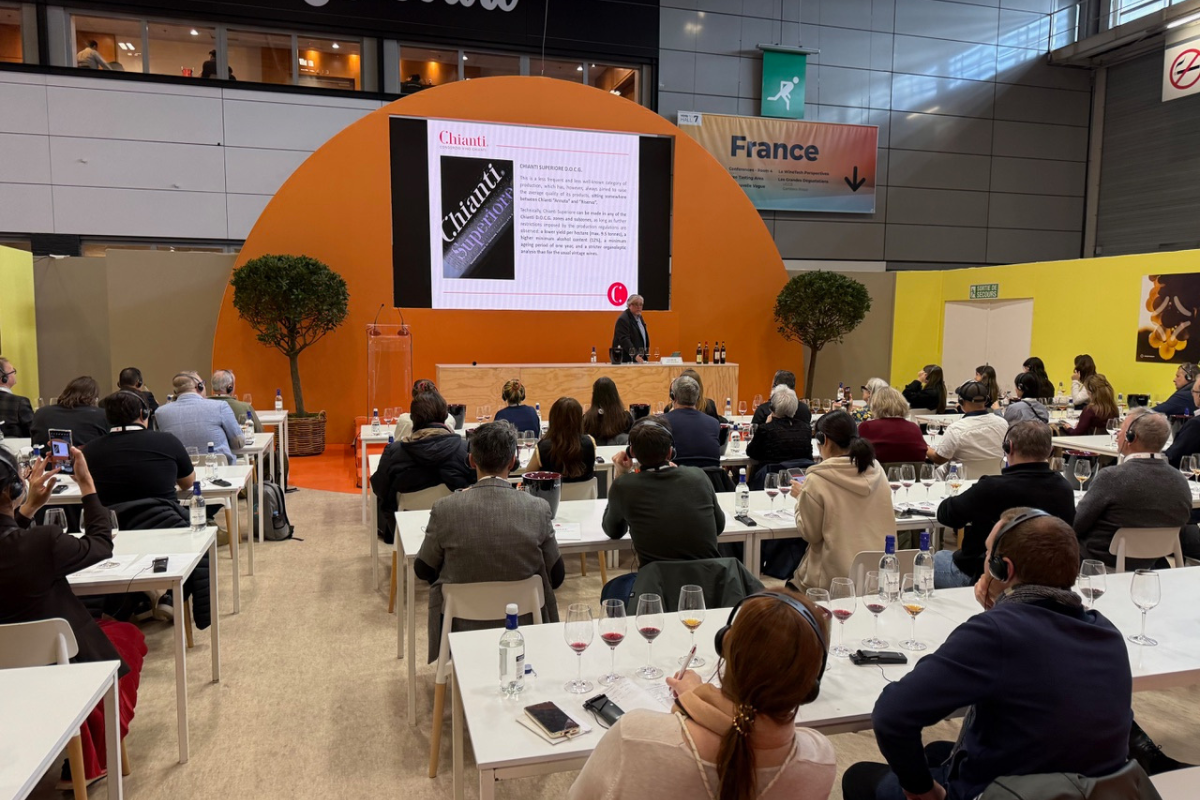
At Wine Paris 2026, a chance conversation on the Paris metro captured the core challenge facing wine producers today: trade fair presence alone is no longer enough. To stay relevant, brands need strategy, clear messaging, and genuine content. Without these, even the most historic names risk being forgotten, and the fairs themselves risk losing their value.
The second day of Wine Paris gave me something to think about even before I arrived at the fairgrounds, during the metro ride to Porte de Versailles. A packed carriage, almost at full capacity, the classic scene of a major international event. And it was right there, behind me, that I overheard a conversation that stayed with me.
An Italian voice was explaining to a companion, a friend or colleague, I couldn’t tell, that despite his brand being particularly well-known and having 53 harvests behind it, in recent years he had come to understand something very simple and very hard: you have to be present at trade fairs as much as possible. “They forget you very easily, your story, your wines, even if they’re excellent,” he said. And he concluded by explaining how he had started attending fairs and events consistently again, because today, more than ever, if you’re not seen, people start replacing you, start forgetting you.
Once off that cramped metro, I caught the eye of the producer. One of the most well-known names in the Italian wine world, a historic brand. I won’t name him: I overheard that statement by chance and I respect the spontaneity of the moment. But the content remains extremely useful for understanding the value, and I would say the necessity, of trade fair presence today.
Trade fairs are no longer just commercial venues. They are communication platforms. Spaces where value lies not only in B2B meetings, but in the ability to tell your story, to stay in people’s memory, to nurture relationships.
But this requires a change of approach. Passive presence is no longer enough. Arriving at a fair with a full appointment schedule is a prerequisite, not an achievement. The real difference comes from what you bring in terms of content, vision, and narrative.
You need to have something to say. And ideally say it by stepping away from the usual stereotypes, the clichés, the standardised descriptions. If you’re not willing to take risks today with more direct, more authentic, more personal communication, one has to wonder when you ever will.
I had touched on this in my commentary from the first day, but this second day of Wine Paris confirmed an obvious dynamic: the presence of companies that came to Paris more out of inertia than real strategy. “Everyone goes, so we have to go too.” A phrase that, in 2026, risks being dangerously hollow.
It’s no coincidence that more than a few people said the fateful words: “Nobody came by.”
Arriving at a B2B event of this level today without preparation, without a carefully built agenda, without a clear message, risks turning the investment into a sterile presence. And it becomes almost disheartening to have to point this out again.
On one hand, the rapid growth of Wine Paris still represents a positive signal about the health of the sector — or at least its capacity for resilience and its desire to find new paths. On the other hand, it will become increasingly important to move towards a more careful and more coherent selection of exhibitors.
I may sound naive, but the presence of unprepared companies, not structured to seriously pursue markets, not ready to be credible interlocutors for buyers, risks contaminating the entire trade fair offering, even its most professional and authoritative parts.
A telling example is the matching model proposed by Wine Paris, which gave companies the opportunity to schedule meetings with buyers present at the fair. Some of those buyers told us they were receiving up to 150 emails a day, with the result that, after a short time, many of those messages ended up directly in spam.
This data highlights something as obvious as it is often deliberately ignored: the blanket is short. If a real coherence between exhibitors and visitors cannot be built, the risk is delegitimising even the most important and valuable B2B events in the sector.
Trade fair organisations will inevitably need to reflect on this. Because if the trade fair business is limited to simply selling floor space, the risk is a progressive decline in the overall quality of the experience and the value generated.
And if historic events like Prowein have shown signs of difficulty after nearly thirty years of leadership, the risk is that Paris could reach a critical tipping point sooner, and that would be a real shame for the entire industry.
Key points
- Trade fair presence is essential today: the market forgets you quickly, even with a strong history.
- Fairs are now communication platforms, not just commercial venues, storytelling and relationships matter most.
- Passive attendance without strategy, agenda, or message turns the investment into a wasted opportunity.
- Unprepared exhibitors risk lowering the overall quality and credibility of B2B trade fair events.
- Fair organisers must move beyond selling floor space and ensure better exhibitor-buyer alignment.