Many wineries lose sales at the final stage of a visit, when guests head toward the exit. Checkout gadgets, ready-made gift packs and a calibrated sensory atmosphere can raise the average receipt by at least 15%. The article shows practical display and merchandising moves that turn a great tasting into a completed purchase.
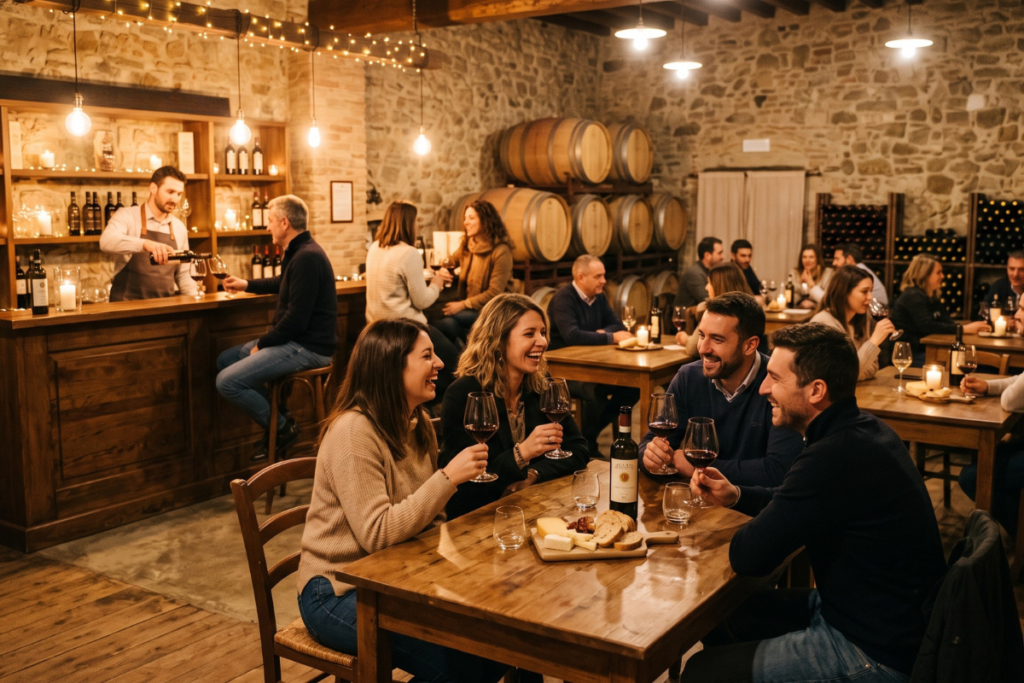
Turning a splendid tasting into a sale takes much more technique than people think. How many times, while visiting your wineries, have I noticed this precise dynamic. When the guest gets up from the table and heads toward the exit, they enter a phase of commercial vulnerability, and it is precisely in this invisible corridor that the conversion rate of your hospitality is decided.
Applying clear up-selling and cross-selling strategies through visual merchandising can raise the average value of your receipt by at least 15%. We are talking about well-thought-out, immediate actions that start from the management of physical spaces, leaving aside old abstract theories.
I often find myself discussing this aspect with producers: the checkout counter is mistakenly experienced as a mere administrative service point. It represents, on the contrary, the exact moment to stimulate the last impulse purchase.
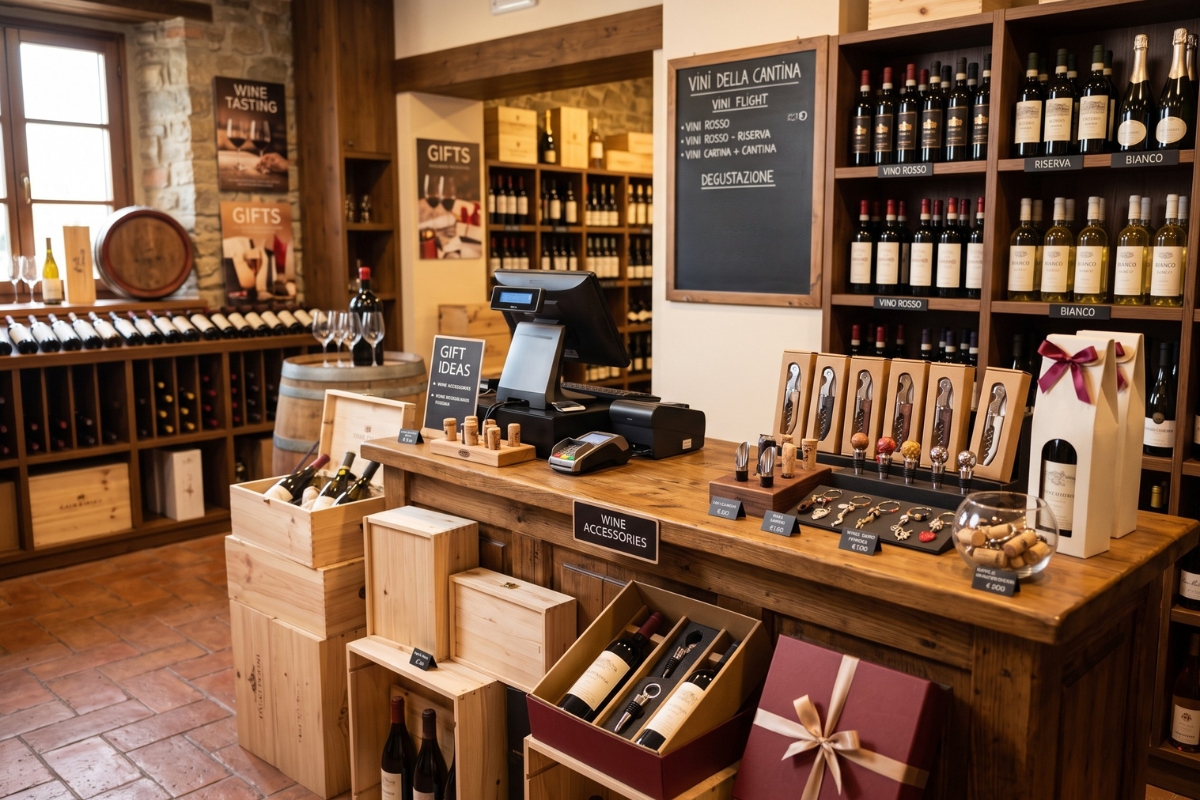
Do you remember the dynamic of supermarkets, with chewing gum placed right next to the conveyor belt? Strategically displaying small gadgets on the counter, such as corkscrews with the logo, turns the wait for the invoice into a concrete opportunity to add value to the receipt.
Do a quick calculation: if you place a 5-euro corkscrew at the checkout and manage to sell one for every ten daily receipts, over a year you generate a certain amount of extra revenue. A result obtained with minimal effort, simply by offering the customer a visual suggestion at the most opportune moment.
There is another untapped potential that rests in your paper price lists: gift packs and bundles. Offering a discount for the purchase of a case of three bottles is an excellent initiative, but keeping it hidden on a sheet of paper totally undermines its appeal.
Gift packs must be physically displayed, already ready to use, with a tag that indicates in crystal-clear terms the price and the advantage of the offer. The customer buys with their eyes. Seeing a kit already prepared, perhaps two bottles of wine alongside your olive oil, tickles the desire to give a gift or to take home a selection, breaking down the mental barrier of having to ask. Display triggers the need before the consumer even has to formulate it.
Finally, let us explore the subtlest pitfall of the retail experience: the sensory atmosphere. We have seen wineries with immaculate production areas present wine shops where dust accumulates on the lowest shelves, sending a message of neglect.
Likewise, the choice of music is often handled superficially. Choosing famous, singable Italian songs distracts the buyer’s brain, pulling it away from the focus on choosing products. Neuromarketing teaches that what is needed is a lounge background, discreet and linear, able to make the guest feel welcomed without competing with the sale. Order, cleanliness and a calibrated sensory stimulation make up a silent vocabulary that tells the customer: you are in a place of excellence, trust us.
A great glass is often not enough to close the sale, and the real quality leap happens when you start designing the purchase scientifically, guiding the guest through that last, decisive corridor toward the exit.
Neglecting the physical display of bundles or the acoustics of the environment means scattering precious revenue. Taking care of the tactility of the packaging, governing sound perceptions and structuring the checkout as a trigger for impulse purchases draws the dividing line between purely emotional hospitality and a retail division capable of maximizing profits. Hospitality creates the connection, commercial technique signs the receipt.
Key points
- Guests leaving the tasting are commercially receptive, and the exit corridor decides your conversion rate.
- Checkout gadgets such as logo corkscrews turn the wait for the invoice into an impulse purchase.
- Display gift packs physically, ready to use, with a clear tag showing price and offer advantage.
- Keep shelves clean and play discreet lounge music to keep buyers focused on the products.
- Design the purchase scientifically to lift the average receipt by at least 15%.