Rolly Gassman winery in Alsace exemplifies how wine tourism can drive direct sales without compromising brand identity. With a seamless experience, including a structured tasting setup, a dedicated children’s area, and an efficient sales mechanism, the winery ensures a natural buying process. This model highlights key elements that wineries can adopt to optimize their direct sales strategies.
Visiting the Rolly Gassman winery in Alsace is an experience that goes far beyond a simple tasting. Here, the concept of wine tourism is taken to the highest level, becoming a powerful tool not only for branding and communication but, above all, for driving direct sales effectively.
During our visit, we had the opportunity to observe up close how the winery has managed to create a unique and memorable experience for visitors, facilitating the purchasing process in a completely natural way.
A welcoming and organized business structure
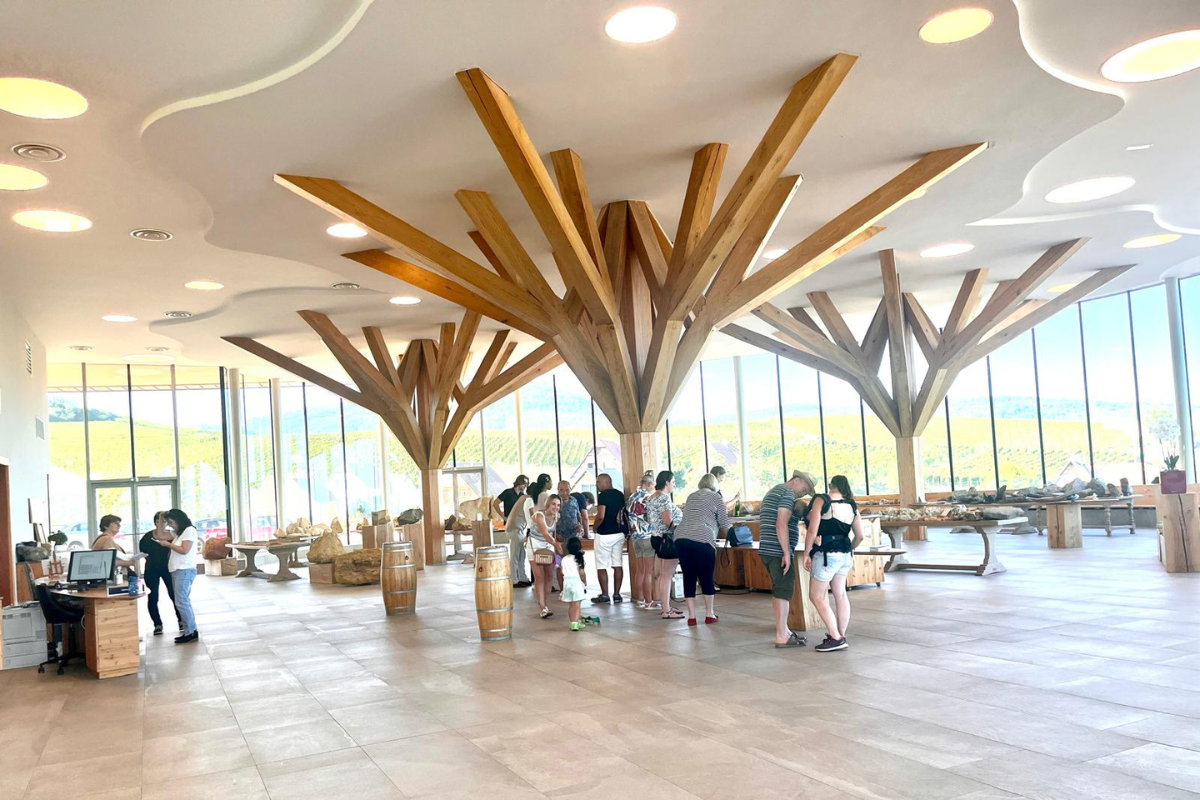
From the moment you arrive, the attention to detail is evident: a large parking area and an open-space structure, bright and airy, with a breathtaking view of the surrounding vineyards. You immediately feel at ease, and one of the most interesting aspects is that you can enter even without a reservation. The visit begins independently, with informational panels explaining the winery’s history, the terroir, and the positioning of its wines. The display of different soils found in Alsace’s viticultural terroirs is among the best we have seen worldwide. A simple yet highly effective format that allows visitors to immerse themselves in the Rolly Gassman world in a free and spontaneous way.
Kids’ space: the detail that makes the difference
Another distinctive element is the presence of a dedicated space for children. Many couples travel with their kids, and Rolly Gassman has thought of them too. Half of the open space is reserved for a play area, complete with puzzles, building blocks, dinosaurs, paper, and small chairs. Children can play freely while parents enjoy their tasting, all while keeping an eye on them. This thoughtful touch not only enhances the wine tourism experience for families but also fosters an atmosphere of serenity and inclusivity.
Tasting: a simple and accessible formula
The heart of the experience is undoubtedly the large tasting desk. A long central table welcomes visitors, who can position themselves freely to start their sampling. The table is already set with sheets listing the available wine types, their respective prices, and a space for taking notes. This setup allows for a structured pathway, helping customers remember what they have tasted and, most importantly, what they might want to buy.
Efficient management with just one staff member
Another surprising aspect is the service management: just one person behind the counter, with four large refrigerators behind them, manages to serve all visitors efficiently. There are no full glasses, only free samples, offered according to the customer’s preferences, or they can let the staff guide the tasting. What’s impressive is that between one tasting and another, this resource moves nimbly among customers, simultaneously handling up to 30 people without ever creating excessive waiting times or discomfort.
A sales mechanism based on reciprocity
During the tasting, customers feel free to explore, but an inevitable desire to purchase emerges, triggered by a very simple principle: the law of reciprocity. After receiving such attentive and personalized service, it feels natural to reciprocate by making a purchase. Once the wines are selected and the order sheet is filled out, payment is completed swiftly. Within seconds, an invoice is issued, and while the customer is paying, their order is already sent to the warehouse for preparation.
Fast and perfectly organized delivery
In less than a minute, the wines are ready for pickup. A cart rolls out from the warehouse with the packaged bottles, ready to be loaded into the car. An incredibly smooth process that concludes the purchasing experience seamlessly. And perhaps, at that very moment, parents remember to retrieve their children from the play area!
A model to draw inspiration from
Rolly Gassman has found a winning formula that combines simplicity, efficiency, and attention to detail. This experience proves that wine tourism can be not only a powerful branding tool but also a true driver of direct sales. Of course, not all businesses can replicate this exact model, but there are many interesting insights to consider. The ability of a single staff member to handle large numbers, the family-friendly approach, and an intuitive sales process are just a few elements that make this winery an exemplary case in the wine tourism landscape.
An experience that, we are certain, will set a benchmark.
Read also: The ingredients of wine tourism: the value of food and wine in wine tourism experiences
Key points
- Welcoming structure: visitors enjoy a free, well-organized experience, starting with informative displays and a scenic setting.
- Family-friendly approach: a dedicated kids’ area ensures a relaxed atmosphere for parents during tastings.
- Streamlined tasting process: visitors follow a structured path with clear wine descriptions and easy note-taking.
- Efficient service: a single staff member manages tastings for up to 30 visitors with minimal wait times.
- Fast checkout and pickup: orders are processed instantly, with wines ready for pickup in under a minute.