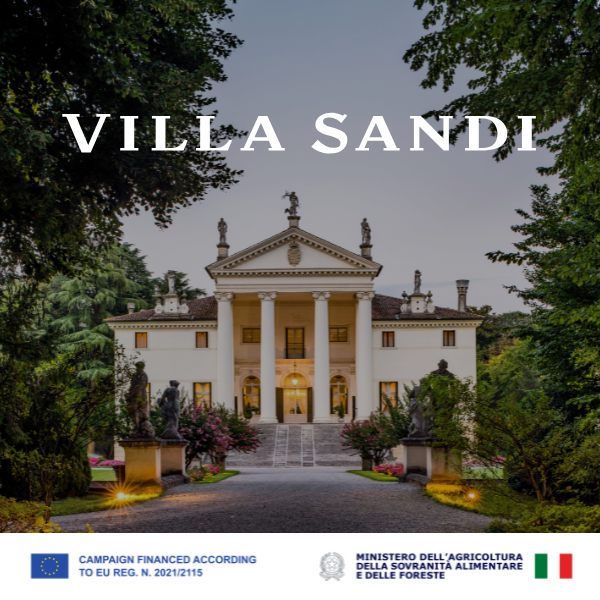
A winery visit may go perfectly, yet months later visitors struggle to retell anything precise about it. The brain retains what is most translatable: a vivid detail, an unexpected choice, a story with a clear shape. Wineries that decide in advance what they want remembered turn satisfied guests into ambassadors who keep spreading their brand.
There is a question I often ask the wineries I work with, and it almost always produces a moment of silence: how many of the people you have hosted over the past year are still telling something about you? Not how many bought, not how many left a review on TripAdvisor. How many, months later, open one of your bottles with friends and start talking about you, about your business and your brand?
The answer, almost always, is: “we don’t know”. And this gap, not in the quality of the hospitality but in the awareness of what remains, says something important about where the chain that should turn a visitor into an ambassador breaks down.
Let’s try to imagine a concrete scene, one that many producers have experienced at least once. A visit that went very well: the group listened, asked questions, and even bought a few bottles. That climate of attention and curiosity that every hospitality manager recognizes as a positive sign took shape. Three months later, that same visitor is at dinner, uncorks one of your bottles, someone asks where it comes from and he cannot answer precisely. He may not even remember the name of the winery any longer.
It is at that moment that a loss occurs which is hard to recover. Not in the immediate commercial sense, since that bottle has already been sold, but in the more strategic sense: that opportunity for word of mouth, that window in which a satisfied customer could have become the most credible and least expensive communication channel there is, closed without leaving a trace. A true ambassador.
Italian wineries invest enormously in the visit: in the storytelling, in the hospitality, in the selection of wines to taste, in the setup of the spaces. They invest much less, or almost nothing, in the moment that follows. Yet it is there that it is decided whether that visit becomes a lasting memory or dissolves into the background noise of everything we hear and forget every week.
The cognitive mechanism governing this process is fairly precise: faced with an information overload, and a well executed winery visit produces plenty, from the family history to the territory, from production methods to vintages, from company philosophy to awards, the brain does not select the most important content. It selects the most translatable one. The one that manages to become a sentence, an image, an anecdote to repeat. If this element is missing, the visitor leaves satisfied but empty-handed: full of impressions, devoid of stories.
This explains why many visits that are perfect in every respect produce so little word of mouth: not for lack of content but, paradoxically, because of an excess of information and, on the contrary, the absence of one distinctive element in particular. I have met extraordinary wineries, with authentic stories and deep roots, that had never stopped to reflect on this point.
They know very well what matters most to them, and it is a legitimate and necessary question, but they have rarely asked themselves what, of everything they tell, has the right shape to survive. To withstand word of mouth. To re-emerge at dinner, six months later, when someone tries to explain to a friend why that bottle deserves attention.
What survives, almost always, is not the deepest value of the company. It is a detail, a choice that goes against the grain, a story with a recognizable shape: a beginning, a tension, a consequence. Something that creates an image in the mind of the listener, instead of adding one more piece of data to an already long list.
The detail of the vineyard cultivated differently from all the others in the territory. The choice not to filter when everyone filters. The story of a vintage that went wrong and produced the most awarded wine. These are the elements people take home, not the technical sheets.
The question worth starting from, for those who design winery experiences, is therefore very specific: of everything I tell, what do I want to remain? What is precise enough, unexpected enough, simple enough to withstand three months of everyday life and re-emerge at the right moment?
The winery visit remains one of the most powerful tools that exist for building an authentic relationship with those who buy wine. Direct contact, the physicality of the place, the presence of the producer or of someone who knows its story: all these elements cannot be replicated by any digital channel with the same intensity. But that authenticity, on its own, does not automatically generate memory. And without memory there is no story. And without story there is no ambassador.
The point is that word of mouth cannot be delegated to the visitor in the hope that it will happen. It must be built beforehand, within the visit, with the same care devoted to selecting the wines or setting up the tasting room.
It means choosing with intention which story you want that person to take away. It means giving that story a shape that holds up over time and distance, and understanding that the most important work of the visit is not what happens while the visitor is still in the winery, but what happens afterwards, when you are no longer there to guide them.
In a market where the wine tourism offer multiplies every year and experiences increasingly resemble one another, the difference between a winery that generates word of mouth and one that generates only immediate satisfaction often lies in this: not in how much is told, but in how much one manages to make remembered.
Key points
- Plan what remains: choose deliberately which story visitors take home after the winery visit.
- Offer translatable stories: the brain retains details, images and anecdotes rather than long lists of information.
- Choose distinctive details: a different vineyard practice or an unexpected choice gives visitors something to repeat.
- Give stories a shape: a beginning, a tension and a consequence help a story last for months.
- Measure what survives: ask how many guests still talk about your winery months later.