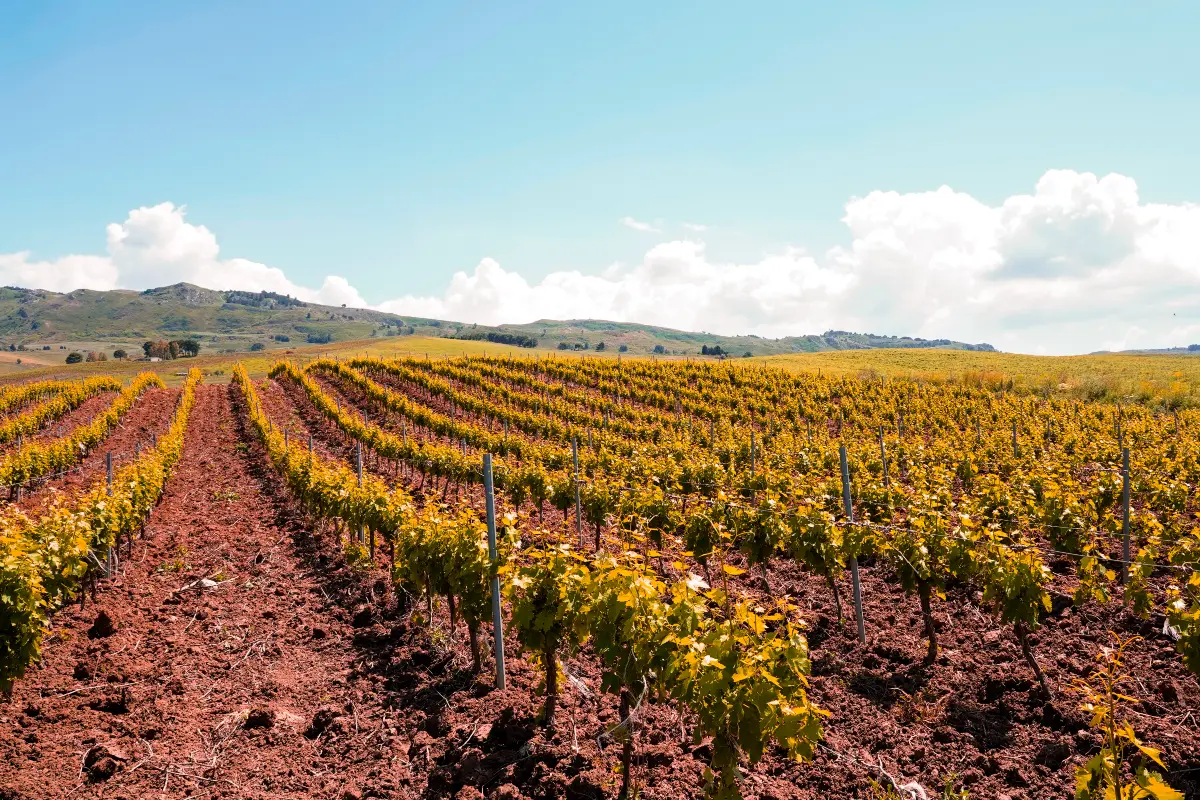
Grillo, Catarratto and Zibibbo are three native Sicilian white grape varieties often grouped together, yet each has a distinct character. This article explores their origins, aromatic profiles and growing regions, from Grillo’s international appeal to Catarratto’s underrated structure and Zibibbo’s ancient Phoenician roots, showing why every variety deserves individual attention.
There is a tendency to talk about Sicily’s native grape varieties as if they were a homogeneous block, a compact heritage to defend. In reality, the individual varieties have such distinct characters that treating them together is like confusing Lecce baroque with Venetian gothic, same peninsula, worlds apart. It is worth pausing on three of the most representative whites from the western part of the island, Grillo, Catarratto and Zibibbo, to understand what sets them apart and why all three deserve attention.
Grillo is perhaps the most versatile. A mid-ripening variety, it tolerates heat well and develops aromatic profiles ranging from white flowers to tropical fruit, with a savory thread running underneath that makes it particularly suited to international markets. It is no coincidence that, since Grillo became part of the DOC Sicilia, exports have grown significantly. “The denominations have changed the perception of Grillo outside Italy,” confirms Salvatore Marino, commercial director of Cantine Birgi. “Before, it was almost invisible, today foreign buyers actively seek it out.”
Catarratto is a different story. A widely planted variety, one of the most cultivated in Italy, it has suffered for years from a reputation tied to mass production. But in the hands of those who treat it with care, Catarratto is capable of producing wines of character, with a notable acid structure and surprising longevity. In the Birgi countryside, where mineral soils bring out its savory side, it can express a complexity that many still do not expect.
Zibibbo, the Moscato di Alessandria of Sicilian tradition, is the oldest of the three, with a history that probably dates back to Phoenician trade routes. An aromatic variety par excellence, it gives its best in dessert interpretations, such as passito, but also lends itself to dry versions of great personality. In the Stagnone area, the proximity to the sea and the saline concentration of the soil add a mineral tension that balances the variety’s natural sweetness.
Three grape varieties, three different ways of telling the story of the same land. Anyone who wants to truly understand Sicilian wine cannot stop at the first bottle.

Key points
- Grillo thrives under DOC Sicilia, boosting international sales through versatile, fruity aromatic profiles.
- Catarratto overcomes its mass production reputation with strong acidity and surprising aging potential.
- Zibibbo traces back to Phoenician trade routes, excelling in both passito and dry wines.
- Mineral, saline soils near Birgi and Stagnone shape each variety’s distinctive character.
- Understanding Sicilian wine requires exploring each grape’s unique story beyond a single bottle.