Sicily’s vineyards face earlier harvests and prolonged drought, yet some areas adapt better than others. The Stagnone lagoon, mixed training systems, and centuries old grape varieties like Nero d’Avola show how the island’s wine regions are turning climate pressure into a source of resilience.
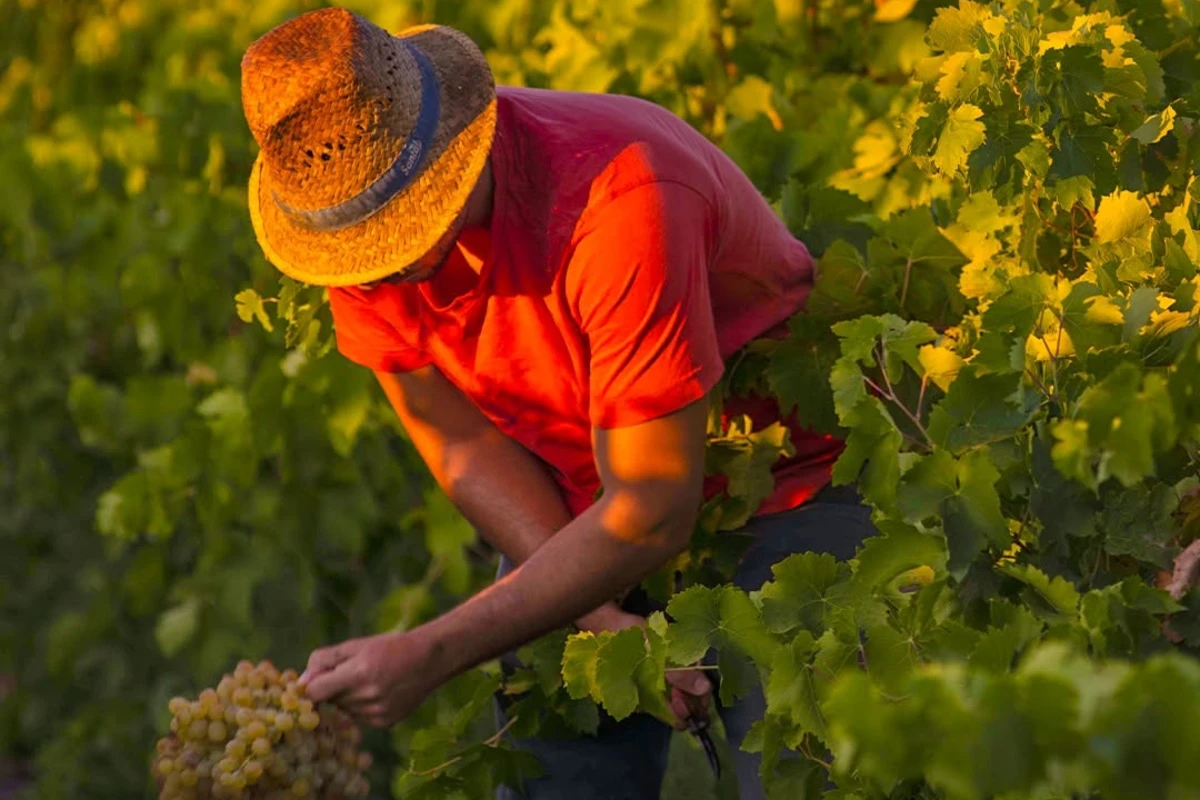
Climate change is not an abstraction for those who work in the vineyard. It is a harvest moved up by three weeks compared to thirty years ago. It is a rainless summer that stretches into October. It is the sugar ripening curve accelerating while the aromatic curve struggles to keep pace. In Sicily these phenomena are felt with particular intensity, but, and this is a point often overlooked, not uniformly across the entire territory.
The area of the Stagnone Nature Reserve offers, from this point of view, certain characteristics that make it more resilient than other parts of the island. The proximity to the lagoon generates natural thermal regulation: the body of water cools the summer nights, reducing excessive temperature swings and protecting the acidity and aromatic component of the grapes. The constant wind quickly dries any humidity without excessively stressing the plants. The deep, mineral rich soils retain moisture at depth even during the driest phases.
Added to this is an agronomic choice: Cantine Birgi has adopted mixed training systems, alternating the traditional Alberello form, with low shoots that create a self shading microclimate around the bunch, with more modern forms such as Guyot, adapted to the different microzones. It is not a single solution, but a response calibrated to the diversity of the territory. “There is no system that is best in absolute terms,” explains oenologist Giuseppe Figlioli. “There is the one most suited to that soil, that grape variety, that exposure.”
Viticultural zoning, which distinguishes the coastal strip from the inland area, is another fundamental tool. It makes it possible to read every microarea with different eyes, to choose varieties according to soil characteristics, and to adjust harvest dates based on the actual conditions of each plot. In an era when averages are increasingly unreliable, the ability to read these differences becomes a real competitive advantage.
Sicilian varietal resilience is already a proven fact, demonstrated over several difficult seasons: Nero d’Avola, Grillo, and Catarratto, grape varieties selected over centuries to survive heat and drought, continue to deliver high quality results even in the most complicated vintages. It is no coincidence that the wine regions struggling most with climate change are often those that have historically relied on northern European varieties, less accustomed to prolonged heat.
The paradox is that the South, long perceived as an enological periphery, could become one of the most interesting frontiers of Italian viticulture in the coming decades. The reason is not that climate change creates no problems, it creates serious ones, but that these territories have developed adaptation tools over time that are now proving useful.

Key points
- The Stagnone lagoon naturally cools summer nights, protecting grape acidity and aromatic quality.
- Cantine Birgi alternates Alberello and Guyot training systems based on each microzone’s needs.
- Viticultural zoning allows precise harvest timing as climate averages become less reliable.
- Nero d’Avola, Grillo, and Catarratto show strong resilience even in difficult vintages.
- Sicily’s adaptation tools could make the South a leading frontier of Italian viticulture.