Anyone who reads me knows that I am not among those convinced that wine is finished. On the contrary, I often feel rather alone in my optimism. But precisely for this reason, I believe that the most important thing today is to read carefully what is happening, without being overwhelmed by headlines and fears.
I confess that when I read that Gundlach Bundschu had filed for bankruptcy, I felt a jolt. We are talking about a Californian winery with almost 170 years of history, which survived phylloxera, Prohibition and fires. And it had done everything we have been recommending at conferences for years, myself first of all. Accessible prices, a less stiffly formal image, concerts in the winery, sustainability, even a new brand designed for young people. And yet it was not enough.
Let me tell you right away where I am heading. What is happening in California is not a distant story, it helps us read our own crisis better too. And reading it well is already half the solution, because if we get the diagnosis wrong, we also get the cure wrong. In just a few days, three articles came out on the same subject, with three very different ways of looking at the same scene.
The first, in the San Francisco Chronicle, is the one that frightens most. It tells of Gundlach Bundschu and Signorello, in Napa, sent to auction. Both had made big investments on debt in 2018 and 2020, when it seemed that the market would grow forever. Then came the pandemic, the fires, the drop in demand. And interest rates, because Signorello saw its financing go from 4.75% to 12.6% in six years. Try to imagine your mortgage almost tripling.
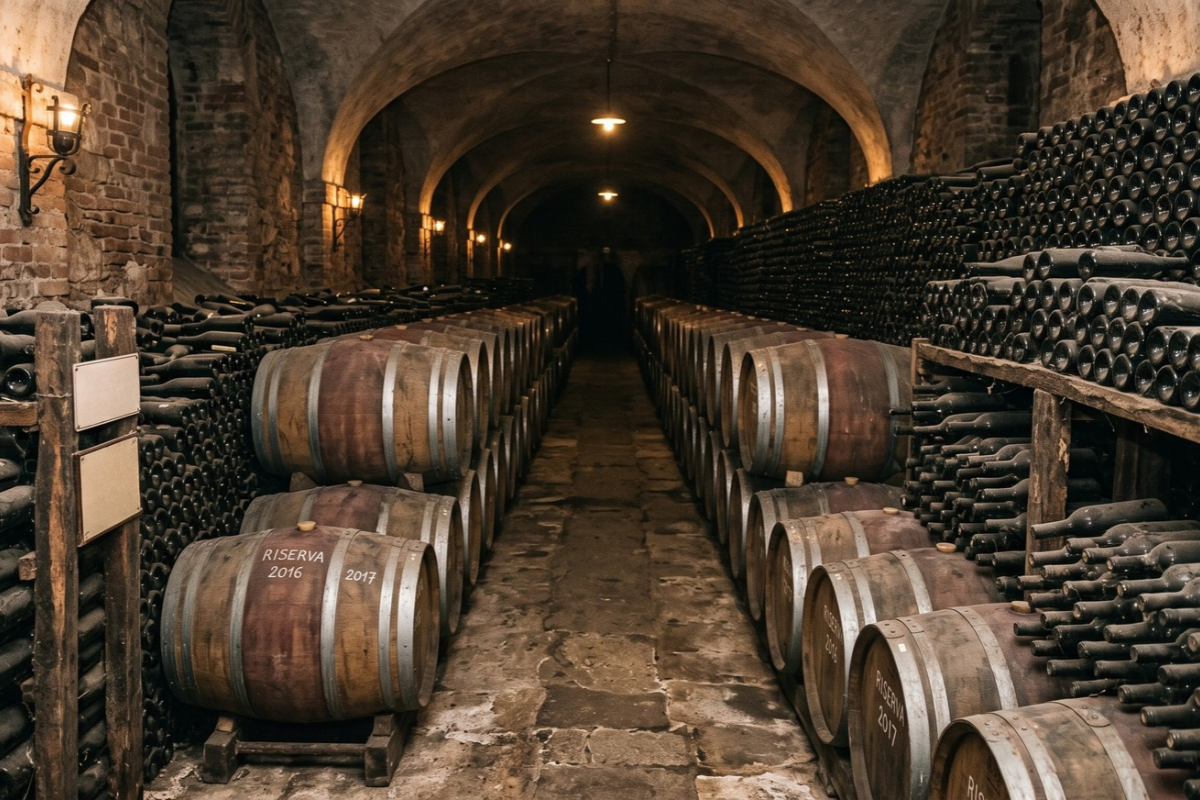
When they tried to sell, offers did arrive, but the banks rejected them because they were lower than the debt. In practice, the company today is worth less than it cost to build it. And banks no longer look at land and cellars, they look at cash. Wine in aging, once considered an asset, becomes a burden when there are more bottles than customers. I bet that some of you, reading this sentence, thought of your own inventories.
The second article, in Wine-Searcher, starts from the same cases and arrives somewhere completely different. The author recalls that in the same period Artesa did not fail but was sold to Jean-Charles Boisset, who declared he wants to double his commitment to wine. And who sold? Carlyle, a private equity fund that entered wine in 2018 with terrible timing and without knowing the trade.
Rob McMillan, the well-known analyst at Silicon Valley Bank, then adds a fact that catastrophist headlines always forget. The best quarter of Californian wineries grows by about 11% and is profitable. So there is no crisis equal for everyone. There are those who fall and those who buy.
Who is right? Both, I would say. But careful, because both readings hide a risk. The first can become an alibi, because if everyone sinks, then no one made a mistake. The second can become a consolation, because talking about natural selection is easy when you are not the one being selected.
And it is here that the third article, the strangest one, was extremely useful to me. It is signed by Jim Silver, an American consultant, and uses the Fibonacci sequence (a numerical sequence in which each number is the sum of the two preceding ones (0, 1, 1, 2, 3, 5, 8, 13…)) to talk about the wine business. I know, said like that it sounds like something from a math professor. Instead, it is the most concrete of the three, because it gives us, in my opinion, the right glasses to read the crisis.
The first concept is simple. A winery never restarts from zero. Every year we make the budget as if it were a new beginning, but today’s debt is yesterday’s choice, a replanted vineyard comes into full production after five years, the wine we produce today will reach the market in two or three years, when the market will be another. Gundlach Bundschu and Signorello are not paying for 2026. They are paying for 2018 and 2020.
The second concept is that growing is not enough, balance is what matters. You can have more visitors who, however, spend less. You can increase wine club members by 10% and at the same time cancellations by 10%. The number looks good, the company does not. And Silver gives an example we should hang in every administrative office. A company with 10 million in revenue and 9 in costs earns one million, but a 10% drop in revenue is enough for that million to vanish entirely.
Then there is what he calls, almost jokingly, the “negative Fibonacci.” You have a cash problem and so you sell quickly. To sell quickly, you offer discounts. Discounts ruin the positioning. To recover, you open new channels. Meanwhile the harvest arrives and the warehouse fills up again. How many times have we seen this happen in our companies? I have, many times. The first error in the chain can be corrected, the fifth cannot.
This is why I believe that the real lesson coming from California concerns, first of all, the way we read our own difficulties. I hear every day that wine is no longer consumed. Consumption is falling, nobody denies it. But how many of our companies’ problems truly originate there? And how many instead come from investments made with yesterday’s market in mind, from oversized warehouses, from discounts that became habit, from channels opened out of desperation?
We too, in the years of zero interest rates and subsidies, built designer wineries, tasting rooms, guesthouses, we bought vineyards. Many of these choices were right. Some were right only in the market of that time. And those who have toured wineries for a lifetime, like me, know well that a tasting room is not the heart of a company, it is a multiplier. It multiplies what is there. If at the center there is a wine people want to seek out, it multiplies customers. If at the center there is nothing, it multiplies costs.
Silver says it clearly. The center of a wine business is not the tasting room, it is not the wine club, it is not social media and not even the distributor. The center is the reason why someone should choose your wine. If we cannot answer this question, blaming the market is just a way of not looking inside ourselves.
The crisis exists, it would be foolish to deny it. But before saying it is the fault of consumers, of young people who do not drink or of health-conscious people, let us try to reread our accounts and the choices of the last ten years. We might discover that many of the answers are there. And this, as strange as it may seem, is good news. Because on the market we can do little, on our own choices we can do a great deal.
Key points
- Read the crisis correctly: wrong diagnosis leads to wrong cure, so check your own accounts and past choices first.
- Review past investments: today’s debt comes from yesterday’s decisions, made for a market that has changed.
- Balance growth with margins: more visitors or club members mean little if spending falls or cancellations rise.
- Avoid the negative Fibonacci chain: cash problems lead to fast sales, discounts, damaged positioning and fuller warehouses.
- Put your wine at the center: tasting rooms multiply what exists, so give people a reason to choose your wine.