In a phase in which it would be easy to find explanations for the current wine crisis outside our own world, I believe that a considerable part of the problems of many Italian quality assurance label does not depend on the market, on declining consumption or on competition. It depends on a poor awareness of their own values. And until this knot is addressed, no communication strategy can truly work.
I have thought about it a lot in recent days, after a seminar I gave to the producers of an Italian quality assurance label. Before I had even started my talk, I was given a long preamble. I was told that the majority of producers believe little in this quality assurance label.
That, given the difficulties of the moment, it is very hard to give it a better image. That the producers are divided even on the quality of the wines, because in the end there are not that many who work at an adequate level. That it is complicated to make the market understand what distinguishes their wine from other similar types. In practice, I was told everything that is wrong. With an absolute priority given to the limits.
The point is that, from my point of view, those limits were largely debatable. I was facing an quality assurance label with a highly recognizable productive identity, with high qualitative peaks and a truly interesting average. And above all with a type of wine that is absolutely contemporary, in line with what the market asks for today. Yet all of this passed almost in silence, while the problems occupied the entire stage.
Leaving that meeting I asked myself how many quality assurance labels live with the same attitude. And if I look at how many of them communicate, the answer, sadly, is that there are many. Too many. It shows in promotional materials that seem written so as not to disturb anyone. It shows in presentations that start from apologies instead of strengths. It shows in producers who, in front of a buyer or a journalist, speak first about their own winery and only afterwards, and almost reluctantly, about the quality assurance label they belong to.
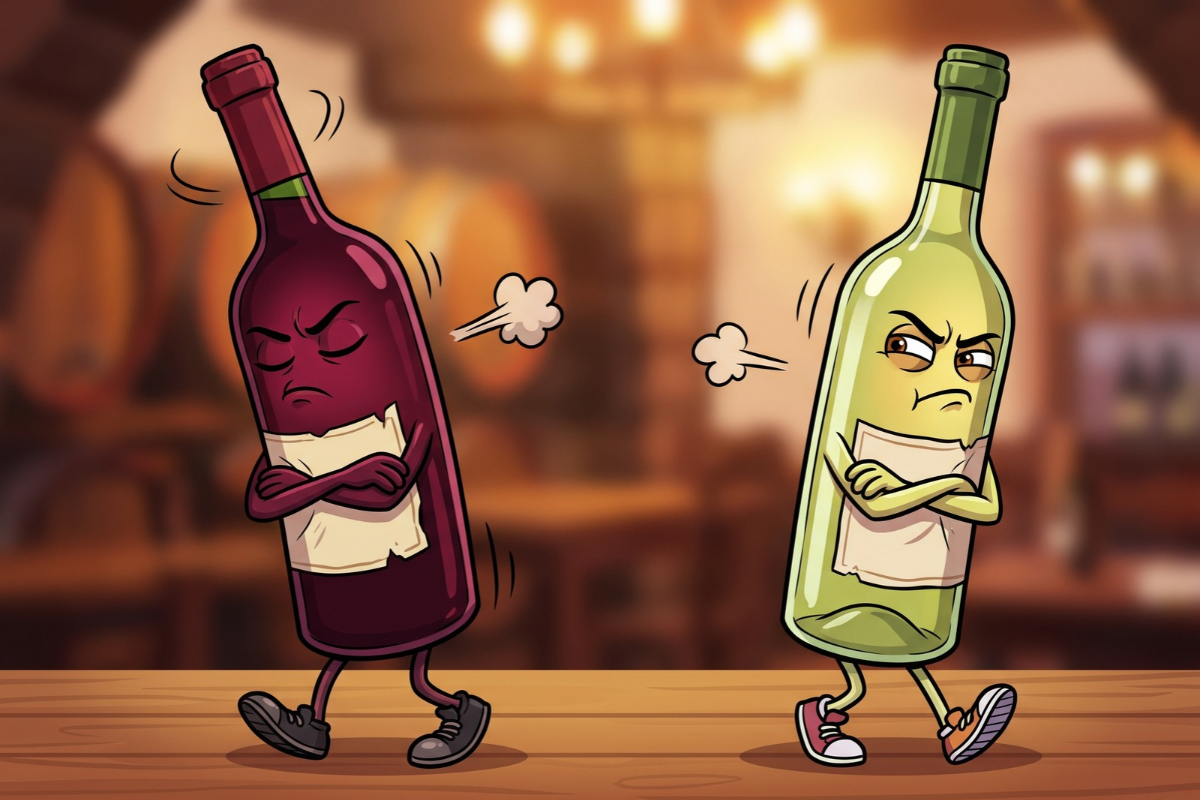
There is a basic confusion worth clarifying. Self-criticism is healthy and necessary, no one doubts it. But self-criticism that sees nothing else is not lucidity. It is a complex. And a complex, sooner or later, is transmitted also to those who look at us from outside. If the producers do not believe in it, why should an importer, a restaurateur, a consumer?
Here we arrive at the heart of the matter. It is often thought that communicating well means telling something more beautiful than what one is. It is not so. Effective communication does not tell lies and does not exalt what one does not have. It is the communication of those who know their own values thoroughly, recognize them without shyness and do not hide when telling them.
It is an enormous difference. A conscious quality assurance label has no need to inflate anything. It is enough for it to say clearly who it is, what it does well and why its wine makes sense today. An quality assurance label that lacks this awareness, instead, ends up oscillating between two errors. Either it sells itself off, or it tries to imitate the language of other, more successful territories. In both cases it loses credibility.
For this reason I believe that the first work to be done, even before promotional plans, fairs and campaigns, is an exercise that is very simple and very difficult at the same time. Putting in order, honestly, one’s real values. Not the desired ones, not the copied ones, but those that are already there. Often they are more than one imagines, and an outside view helps to see them better, precisely because it is not weighed down by years of internal divisions and frustrations.
In such a complex market phase, the temptation to withdraw into complaint is understandable. But it is also the luxury that quality assurance labels can afford least today. The market rewards those who know who they are. And no one will know it in our place.
Key points
- Self-awareness first: Italian quality assurance labels need to recognize their real values before planning promotions, fairs or campaigns.
- Constructive self-criticism: it helps when it also sees strengths, since a complex spreads to importers, restaurateurs and consumers.
- Lead with strengths: presentations and promotional materials should start from what the quality assurance label does well.
- Honest communication: state clearly who you are, what you do well and why your wine makes sense today.
- Seek an outside view: an external perspective reveals real values more easily, free from years of internal divisions.