Wineries and artificial intelligence now go hand in hand: tourists ask AI assistants for winery recommendations instead of searching. Rafael Patron of AIPIA explains how AI chooses, why consistent information across website, maps and portals matters, how reviews weigh, and which three low-budget moves help a winery appear in the answers.
Once, tourists searched, today they ask. If they used to type “wineries to visit near Verona” on Google and scroll through the results, now they put the question directly to an artificial intelligence assistant, which answers with a list of names. Whoever is not there simply does not exist in the eyes of the user.
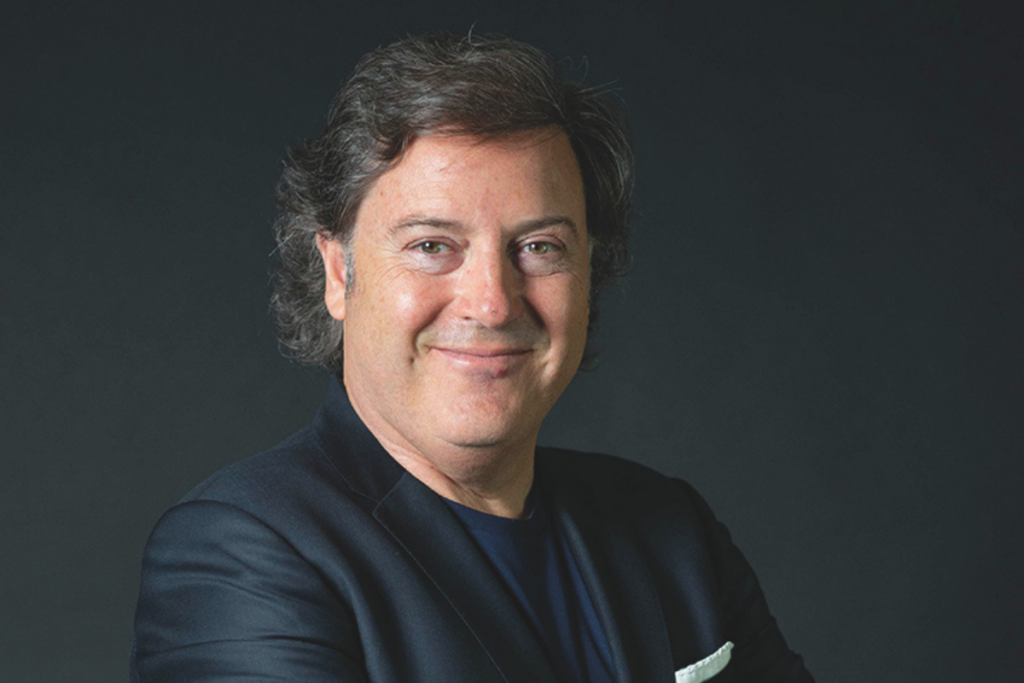
We discussed this in the article “Is the advice of a person worth more than that of artificial intelligence?“, which caught the attention of AIPIA, the Italian Association of Artificial Intelligence Professionals. From there a conversation began with Rafael Patron, president of the Technical-Scientific Committee, to understand one thing only: what can a winery do, in concrete terms, to avoid being left out of AI answers?
Patron makes clear right away that he is a pure computer scientist and a complete teetotaler, so he does not talk about grapes and aftertastes. He does talk about how artificial intelligence systems reason, and his answers are more practical and direct than one would expect from a self-confessed nerd.
How does AI choose which winery to recommend?
First surprise: AI has no ranking of wineries. When asked which one to visit, it combines what it has learned with what it finds online at that moment, and it chooses the wineries it can identify with certainty and describe with consistent information. What counts is a clear name and location, the experience described explicitly (visits, tastings, languages, opening hours, booking methods) and confirmation from external sources.
Often a winery fails to appear not because it is worth less, but because its information lives only in an image, in a PDF or on Instagram, or changes from one site to another. And consistency is crucial: sometimes a misplaced comma in the address is enough to make the AI lose certainty about where the winery is located.
There is also a second level: those who use AI tools while sharing fairly personal information will receive equally personal answers. So a user who declares themselves, perhaps in other conversations with the AI too, a sparkling wine enthusiast will hardly receive, when asking for advice, a list of wineries that produce only red wines.
What do you mean when you say “identify with certainty”?
The winery starts with a certain weight, like a 100-kilo statue, and every inconsistency removes a piece, until it becomes irrelevant compared to its competitors. In a sparsely crowded area the effect is felt less; where competition is high, every error costs positions.
Consistency is measured on Bing Maps, Google Maps and Apple Maps too. Above all it is measured on the address string, which must be identical everywhere: on the website, in WhatsApp replies, in the catalog PDF, in the wedding proposal. Written in exactly the same way, commas included.
Equally important is semantics, which today has taken the place of the old SEO based on exact keywords. If a winery organizes weddings but on its website speaks generically of “events”, the AI struggles to suggest it to someone looking for a winery to get married in the vineyard. Whoever writes must name what they do.
Where does AI get its information, and what can the winery control?
The assistant draws on search engine results, the Google listing and maps, the portals of consortia and wine routes, reviews, booking sites, guides and press articles. One part the winery governs directly: its own website and its own Google listing. Another it can influence: it can ask for updates to the portals of consortia and wine routes and to the pages on booking sites.
On reviews, the winery can have an effect by responding and by inviting visitors to leave them. The rest it cannot control: the judgments of the guides, what others write and what the models have already learned remain outside its control.
If a winery had a small budget, where could it start?
Three moves, in this order:
- A complete and updated Google listing, with opening hours, photos, booking link and replies to reviews.
- A page on the website dedicated to visits and tastings, written in text and not in an image, in Italian and in English, that answers a tourist’s real questions: what you do, how long it lasts, how much it costs, in which language, how to book, how to get there.
- Consistency everywhere: same name, address and phone number on the website, Google listing and portals, and a check that the consortium and the wine route have the right data.
Suppose a winery has an excellent product and excellent hospitality, but the AI does not name it. Why?
The algorithms are top secret, the engine is complex and no public guide exists. The same question, put to ten experts, produces ten different answers. What can be said is where the AI looks: reviews (in particular on Google, where it goes to look for the themes and keywords of the question), the website, what the winery says about itself and what others say about it.
There is also a paid shortcut: advertising inside ChatGPT, which allows a winery to appear in the group of relevant searches and is paid per click. It is a valid solution because it solves the lack of organic presence immediately. But it remains, precisely, a shortcut.
Instagram, PDFs and flyers: does AI see them?
Yes, and everything. AI tools today read any type of content: text, images, PDFs, even videos. And sometimes they also fish out what the winery never classified. Online presence must be built today with the idea that in a few years it will no longer be us browsing websites, but assistants doing so on our behalf: they will compare, ask for quotes, book.
For that AI, the color of the button or the light in the photos will matter little. Third-party sources and certifications count: organic, SQNPI and the like, perhaps even in a PDF hidden on a secondary page. A detail that for years someone has considered by now “taken for granted” can make a difference again.
How much do reviews weigh?
A great deal, much more than the winery’s website. But they count not for quantity: they count for text. A review that speaks of what is key to the search (the type of wine, the tasting, the cheese pairing, the view over the vineyards) weighs much more than one limited to the stars.
And beware of the rating: having three hundred five-star reviews is more penalizing than a score between 4.2 and 4.6, which sounds more credible and gives the idea of people who really passed through there. A few negative reviews are no drama, especially if the winery responds well: a one-star rating given because “it is too expensive” does not say that the winery is bad, and the AI understands this. The best remain reviews with photos, and even more those with video.
Key points
- Consistent information across website, maps and portals lets AI identify a winery with certainty.
- Identical address string everywhere, commas included, keeps the AI sure about the winery’s location.
- Name precisely what you do, such as weddings instead of generic events.
- Review text with themes like wine type and tasting outweighs star counts; ratings of 4.2 to 4.6 seem credible.
- Complete Google listing, a bilingual text page on visits and tastings, and consistent data are the first three moves.