Cielo e Terra has built sustainability into its operational core for over twenty years, long before it became a mainstream concept. Through Lean Organization, B Corp certification, and rigorous risk management, the Italian winery has demonstrated that environmental and social responsibility translate directly into stronger financial performance, greater resilience, and a measurable competitive edge across 80 international markets.
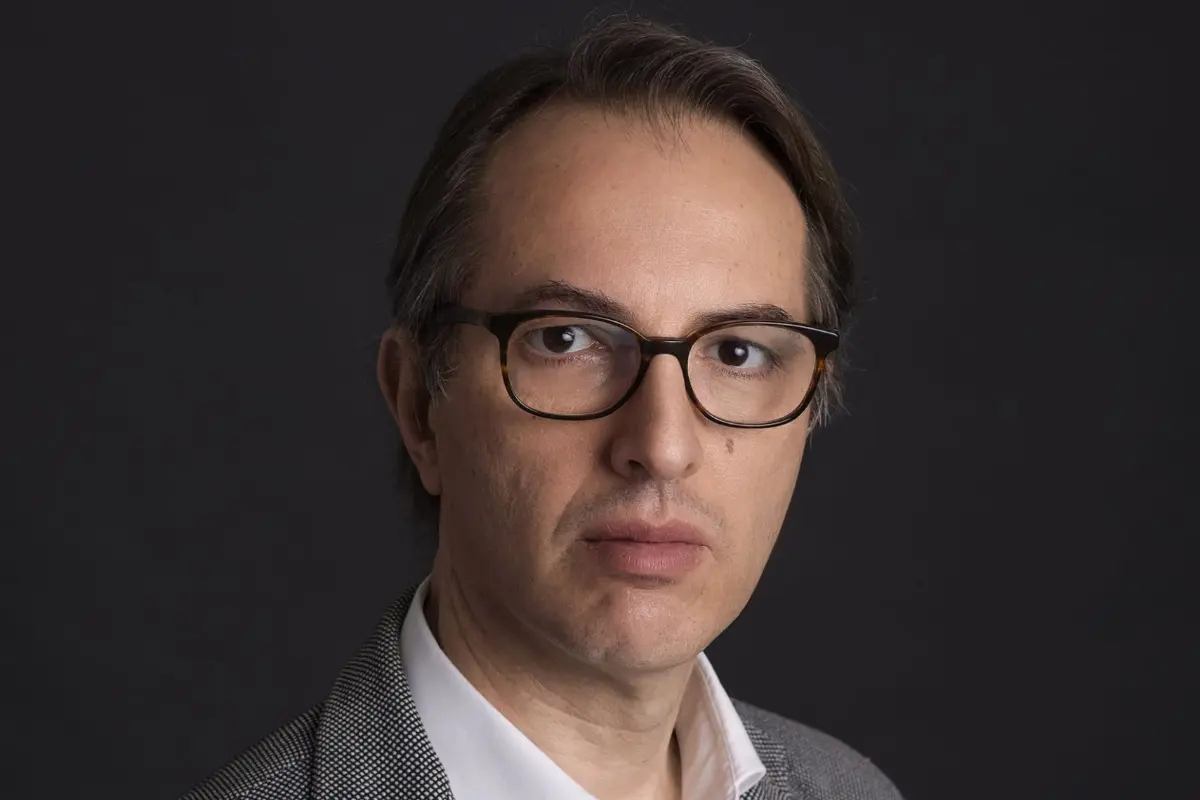
There are companies that chase sustainability for communication purposes, and companies that have embedded it in their DNA long before it became a widespread term. Cielo e Terra belongs to the second category. Through the words of Giampietro Povolo, Head of Finance & Operations, a portrait emerges of a company that has successfully merged the rigor of Lean Organization with a forward-looking vision, demonstrating that efficiency is the most faithful ally of quality.
In this conversation, Povolo guides us along a twenty-year journey of proactive risk management and a deep conviction: technology can be purchased, but the mindset of continuous improvement must be cultivated daily in people. An interview that strips sustainability of its purely aesthetic garments to restore its original nature: that of a solid economic and social driver, capable of making a company not only more “green,” but more resilient and competitive in global markets.
Cielo e Terra was the first winemaking company in Italy to have introduced the Lean Organization model back in 2006 to optimize production and eliminate waste and inefficiencies. What did this choice mean, and what are its repercussions 20 years on?
Having been with the company for nearly 25 years, I experienced all the key steps firsthand. We were pioneers in the wine sector, applying a management philosophy aimed at optimizing production by eliminating waste and enhancing what the customer perceives as real value. The Lean approach focuses on operational efficiency — reducing waiting times, inventory, and unnecessary movements — without necessarily requiring enormous structural investments.
For us, this meant uniting two core principles: waste reduction and respect for people. This is where our concept of sustainability was born. Reducing waste feeds environmental sustainability (fewer resources consumed and less effort); respect for people guarantees social sustainability. Being a SpA, we must generate profits, and efficiency ensures economic sustainability.
This year we celebrate 20 years of Kaizen workshops: a milestone I would define as a “turnaround.” Twenty years ago, achieving today’s results was unthinkable; we looked at competitors’ balance sheets as unattainable dreams, and today we have surpassed them. It was not an immediate journey, but a long effort that required foresight and conviction from the shareholders. This internal solidity allows us today to manage the complexity of 80 foreign markets: we are not mere traders, we are producers who know how to govern complex processes thanks to a virtuous circle between operational excellence and commercial vision.
Sustainability is often perceived as a cost, an intangible asset. How have you conveyed its concrete value to the world of finance and credit?
At first, it was hard work to dismantle the idea that sustainability was just a cost, perhaps linked to certifications such as ISO 14001. There is an emerging cost, certainly, but also a “submerged cost” in terms of organization. However, if we read sustainability through the lens of risk management, everything becomes clearer and more digestible, even for the financial world.
There is a direct correlation: more sustainable companies often have better financial KPIs in the long term. Why? Because analyzing environmental or safety risk means securing the company. Poor management of safety or the environment risks production stoppages and enormous damage. We have integrated this approach into the Organizational Model 231 (a system of rules and procedures aimed at preventing crimes committed by senior figures or employees, excluding the company’s administrative liability) and into cybersecurity.
The result? We have achieved a solidity that banks recognize. Today, if I apply for financing, banks evaluate us positively. Demonstrating that risks are mapped and managed reduces the overall risk profile, allowing us to access better financial conditions. In short: sustainability is an investment that protects and strengthens company capital.
It is very interesting — the aspect related to risk management that few highlight. Beyond the “Lean model,” Cielo e Terra was among the first major Italian wine companies to become a B Corp (Benefit Corporation). This certification requires rigorous measurement of impacts. Which indicators have brought you the greatest benefits?
I firmly believe in indicators certified by third parties. For us, parameters such as Carbon Footprint and Water Footprint (certified by the Ministry’s VIVA program) are fundamental. They are summary indicators, comparable to ROI or EBITDA for the financial side: they tell you whether you are producing respectfully and consuming few resources.
Today we are extremely virtuous: we have an excellent water footprint and a Scope 1 (direct emissions) and Scope 2 (indirect emissions) carbon footprint that is almost zero (less than 600 tonnes of CO₂). Other key data include “Zero Waste” — we send nothing to landfill, everything is recycled — and the use of 100% energy from renewable sources for over ten years. Recently, we have also added an analysis of the company climate, because the well-being of those who work with us is an essential health indicator just as much as environmental data.
The wine sector is energy-intensive. What are the next technological frontiers you are investing in to reduce the impacts of logistics and production?
Over the last six years we have invested over 10 million euros in technology and efficiency. But there is a fundamental point: technology is a limited differentiating factor, because anyone with capital can purchase it. The real advantage lies in how technology is used, and this is where training comes in.
Every year, all new hires take part in three days of Kaizen and 5S training. This creates a mindset oriented toward continuous improvement, where even a small idea from an operator can make a difference. This development of mindset makes the company fertile ground for innovation.
On the energy front, we are completing the 100% electrification project. We have introduced CO₂ refrigeration units that work like large heat pumps: we recover waste heat to produce the hot water needed for processes, already reducing gas consumption by 40%. The goal is to completely eliminate boilers, by accumulating and reusing the calories produced internally. It is the ability to experiment (following the PDCA cycle: Plan-Do-Check-Act) that allows us to evolve constantly.
Finally, I wanted to draw attention to the phenomenon of greenwashing. Some companies promote and highlight their commitment, which in some cases turns out to be purely superficial. How do you avoid this risk, which can seriously undermine trust from both stakeholders and consumers?
Our rule is simple: we communicate only what is supported by certain and certified data. We do not chase “borderline” concepts just because they appeal to marketing. If we say our corks are 100% FSC, it is because they truly are, even at the cost of facing logistical difficulties as happened during the pandemic.
Our sustainability report is a technical and rigorous document, almost like a statutory financial statement — not a marketing document. This structured approach makes us unassailable. B Corp certification has helped us greatly in this, because it transforms the substance of sustainability into communicable content, always grounded in facts.
In a market where consumers are increasingly attentive, we want to move beyond the mere logic of price. We offer a product of impeccable quality and optimal service, but we add a value content: the certainty of what lies “behind the bottle.” Sustainability for us is a demonstrable identity, not a facade.
Key points
- Cielo e Terra pioneered Lean Organization in Italian winemaking in 2006, eliminating waste and boosting operational efficiency.
- Sustainability is framed as risk management: mapping environmental and safety risks improves long-term financial KPIs.
- B Corp certification and third-party indicators like Carbon Footprint and Water Footprint ensure credibility and measurability.
- Over €10 million invested in technology, but the real differentiator is a continuous improvement mindset built through Kaizen training.
- Greenwashing is avoided by communicating only certified data, making the sustainability report as rigorous as a statutory financial statement.