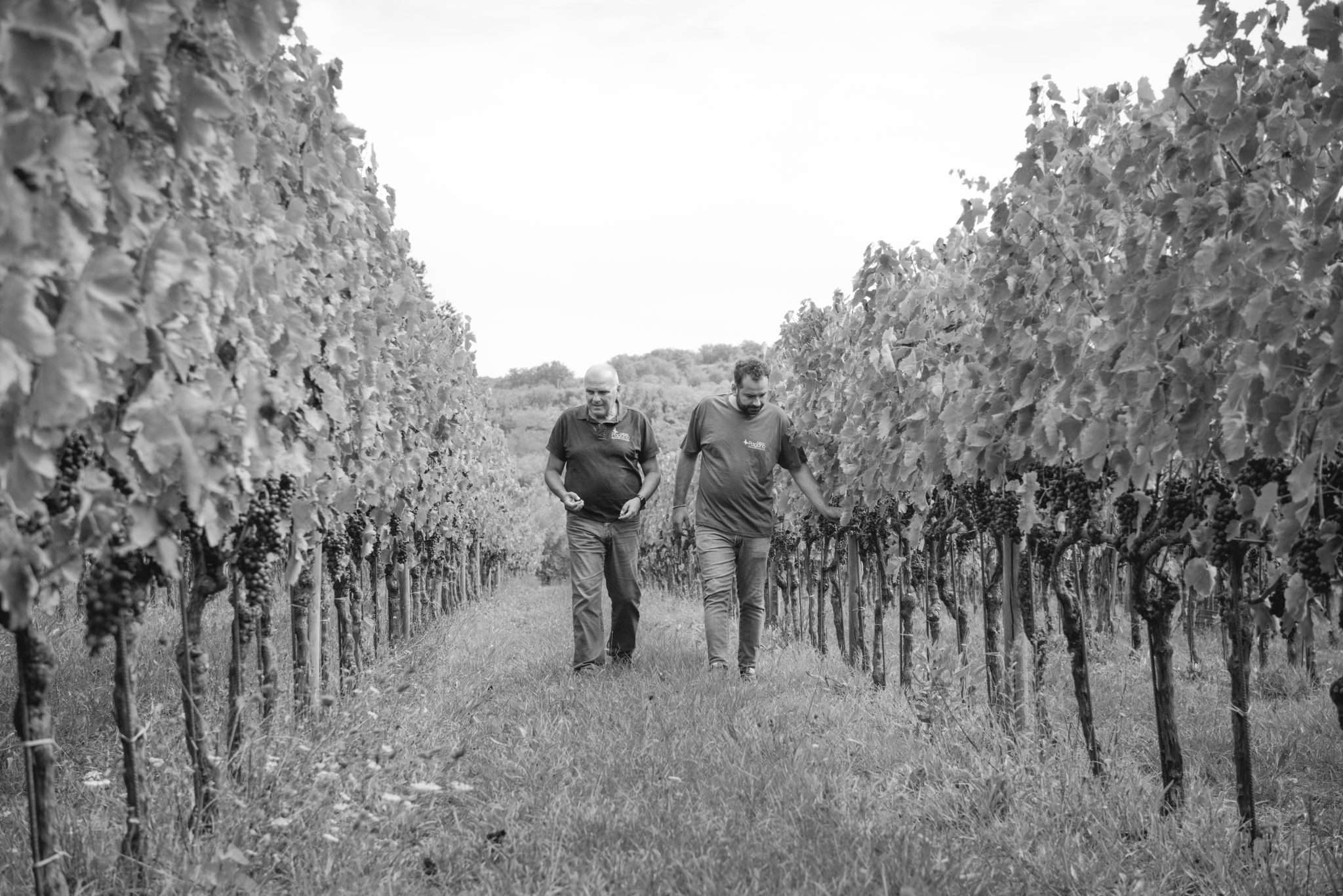
The vineyards of Fattoria Pagano are nestled in a corner of the Campanian countryside, naturally blessed with a fortunate combination of pedoclimatic conditions. These include the cool sea breezes from the nearby Gulf of Gaeta, the thermal excursion generated by the significant elevations such as Mount Massico, and a soil rich in minerals, a legacy of the ancient Roccamonfina volcano.
The largest of the estate’s vineyards, located in Carinola, is a terraced garden of 13 hectares of lush Aglianico, Piedirosso, Falanghina, and Primitivo vines, which coexist with an olive grove of 500 trees, 50 cherry trees, and several generous fig trees.
Read also: Fattoria Pagano: fine wines from the “Felix” Campania
We are in the birthplace of Falerno wine, which, according to the tale passed down by the Roman poet Silius Italicus, originated as a gift from the god Bacchus to the old farmer Falernus, who cultivated the slopes of Mount Massico. His humble yet tasty meals, consisting of apples, vegetables, milk, honey, and other products from the land, lacked an adequate drink. It was then that, through divine intervention, an unknown red liquid began to overflow from the farmer’s simple wooden cups, and in an instant, the mountain’s slopes were covered with thriving vineyards loaded with ripe grapes.
Emperor Diocletian, grappling with the issues of Roman currency devaluation, issued the “Edict on Maximum Prices” in 301 AD, which set maximum market prices, beyond which certain goods could not be sold. Falerno wine was listed among the most valuable of resources.
In the Tavern of Edonè in the ancient city of Pompeii, an inscription indicated the price to drink wine: “Here you drink for one ‘as’ (a Roman coin), but if you give me two, you will drink better wines; if you give me four, I will let you drink Falerno.”
Today, Falerno is produced in the municipalities of Carinola, Falciano del Massico, Mondragone, Sessa Aurunca, and Cellole.
Fattoria Pagano’s “Line of Poets” dedicates space on its labels to quotes from famous poets and philosophers of antiquity relating to Falerno wine. For example, the Gaurasi label features the “review” by Strabo from 35 BC, which read: “Here the Romans drink excellent wine.”
Gaurasi is an excellent and fortunate blend of Aglianico (80%) and Piedirosso (20%), produced from vines planted in 2003, facing south at an altitude of 300 meters above sea level. The soil is volcanic in nature, made up of ash and fallen pumice, well-drained and deep. The production technique used allows this wine to express its territorial character to the fullest.
After at least 12 months of aging in stainless steel vats, the wine releases complex aromas of berries, black cherries, and plums. Its structure is soft and enveloping, with delicate tannins, a result of prolonged maturation on the vine. Its long persistence retains a mineral freshness with balsamic and spicy notes.
Gaurasi, produced in 30,000 bottles annually, is an immediate yet highly evocative Falerno: a red that makes an impact and has the versatility to please both daily consumers and connoisseurs. It has a significant alcohol content of 14%, which is well-balanced by its freshness.
It is the perfect wine for restaurants, and its great versatility makes it an ideal companion for meals from any country: perfect for appetizers of cheeses and cured meats, an excellent match for rich pasta dishes, pairs perfectly with meat, and can add a unique twist to ethnic and fusion cuisine.
Fattoria Pagano exports 35% of its production to major international wine markets, including Japan, Russia, Korea, Northern Europe, the United States, and Mediterranean countries.
Gaurasi is the flagship label, also internationally. The restaurant industry in the United States, in particular, appreciates its great versatility, making it suitable for a wide range of culinary styles encountered in the melting pots of America’s major cities.
The appreciation this label is gaining, despite being in an era where red wines face challenges, is the result of a forward-looking production choice that highlights its expression of the territory and dynamic freshness.