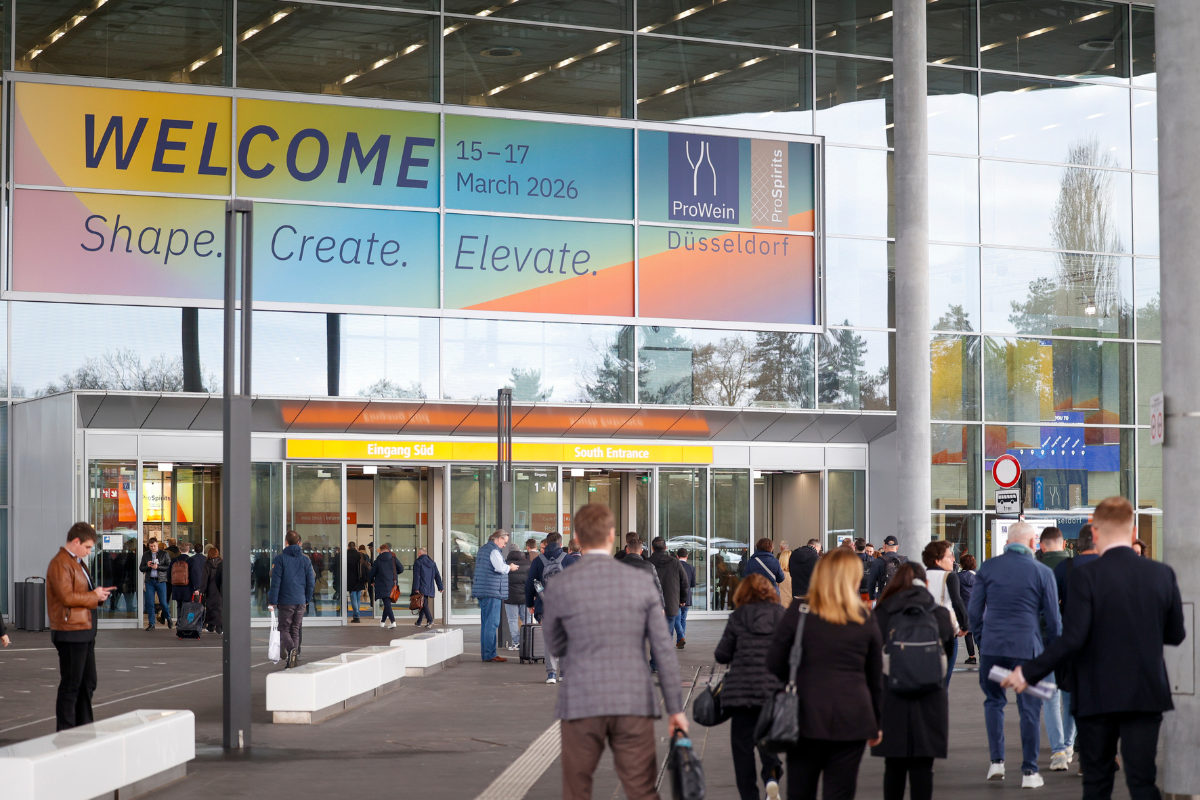
At ProWein 2026, wine tourism dominated conversations across stands and nationalities. Wineries of all sizes now recognise hospitality as a strategic priority – but many struggle to translate awareness into action. Visitor profiles are changing, complexity is growing, and the real challenge is no longer whether to invest in wine tourism, but how to do it with method and clarity.
ProWein remains, first and foremost, an international platform where markets, exports, positioning, and commercial strategies are discussed. But, walking through the stands and talking with companies at this 2026 edition, one topic emerged with increasing frequency in conversations: wine tourism.
More and more producers are saying it openly: winery hospitality is no longer just an opportunity — it has become a necessity. A fundamental piece for building relationships with consumers, strengthening the brand, and generating direct value. And this awareness, it must be said, is now cross-cutting: whether dealing with large groups, family wineries, or cooperatives, we encountered virtually no business that did not recognise the strategic value of hospitality. A cultural shift that is by no means obvious, when we consider how, until just a few years ago, many companies regarded hospitality as an almost secondary function.
Yet, speaking with many companies during the fair days, alongside this awareness another very clear feeling also emerged: a widespread difficulty in understanding where to truly begin, or how to do better.
The questions collected were many and often very different from one another. Some ask how to bring more traffic to the winery, how to increase the number of visitors at all costs. Others, by contrast, start from an already positive situation — good footfall, good wine shop sales — and wonder how to make what already works more profitable. Others still ask how to transform the tasting into a more engaging experience, closer to the world of entertainment, capable of speaking to audiences beyond the more technical enthusiasts. Then there are questions related to spaces, visitor loyalty, point-of-sale management, and the construction of visit itineraries. All legitimate questions, but often placed on the table without any real order.
From awareness to strategy: the real challenge
And it is precisely here that the main problem emerges. Wine tourism is still too often perceived as one single large block: a monolithic activity to be activated all at once. In reality it is exactly the opposite: it is a complex system made up of different activities, each with specific objectives, tools, and logic. There is the issue of traffic and attracting visitors, there is the offer and the experiences, there is the commercial management of the wine shop, there are the people and skills dedicated to hospitality, and finally there is the fundamental issue of relationship-building and long-term loyalty.
Confusing these levels means risking two opposite errors. The first is underestimating the scope of wine tourism, treating it as something that can be managed “in between other things”, ending up improvising without being able to unlock the potential that already exists. The second is the opposite: feeling overwhelmed by the complexity, thinking it is something too large or too demanding to tackle.
Making everything more complicated is a fairly widespread misunderstanding: many companies still tend to regard wine tourism as a predominantly infrastructural matter — tasting spaces, dedicated rooms, catering, accommodation, or wine resorts. But experience shows that the structure is only part of the equation. Before anything else, a clear strategy is needed, along with a definition of the target audience and an offer consistent with the company’s positioning. Without these elements, even structural investment risks failing to generate the expected results.
A changing audience
There is also another element that many operators have emphasised strongly: the visitor profile is changing. The figure of the enthusiast travelling from winery to winery in search of technical tastings is becoming increasingly less central. The contemporary visitor is far more often a general tourist, a couple or group of friends, an international traveller, a family in search of authentic experiences. Wine tourism, in other words, is progressively becoming tourism in the fullest sense. Wine remains the heart of the experience, but it is placed within a broader context made up of landscape, culture, gastronomy, and lifestyle.
This is an important transformation, because it requires companies to change their approach and develop skills that many do not yet have internally: from reservations management and CRM to the construction of tourism packages, from relationships with tour operators to the training of hospitality staff. It is no longer enough to tell the story of the wine: you have to build experiences rooted in the territory
Method first
The reality, as is often the case, lies in the middle. Precisely because it is a complex activity, wine tourism needs method above all else. Not doing everything at once, not chasing every possible idea or experience, but building a clear hierarchy of priorities. Every company has different ingredients: spaces, territory, brand, visitor flows, internal skills. The starting point cannot be the same for everyone.
And perhaps this is one of the most interesting insights we take away from ProWein 2026. The awareness is there. The interest is strong. The willingness of companies to invest in hospitality is evident. The next step, however, is to bring order to this complexity. Because in wine tourism, just as in wine itself, those with clarity of vision are the ones who succeed in building lasting value over time.
Key points
- Wine tourism has become a strategic necessity for wineries of all sizes, not just an optional extra.
- The main challenge is moving from awareness to strategy: most companies don’t know where to start.
- Wine tourism is a complex system , visitor attraction, experiences, wine shop, loyalty, not a single activity.
- The visitor profile is evolving: less technical enthusiast, more general tourist seeking authentic territory experiences.
- Method and prioritisation are essential: every winery must build its own tailored roadmap based on real assets.