Why is wine consumption declining away from home? Journalist Felicity Carter’s April 2026 analysis points to price as the primary driver, before lifestyle trends or GLP-1 drugs. Excessive HoReCa markups are pushing consumers away, harming producers and territories alike. An open dialogue between restaurateurs and producers is now essential to reverse the trend.
The topic of price increases in the HoReCa channel is something I have already addressed in a recent article published during Vinitaly – Vinitaly 2026, the uninvited guest: wine away from home costs too much. Today, however, I return to the subject from a perspective coming from the United States, one that deserves attention.
There is an important merit in the article that Felicity Carter published on April 6, 2026, in Drinks Insider – The Reason Americans Have Stopped Drinking Out –, the newsletter she writes and directs: bringing the debate on the decline in wine consumption out of oversimplifications and into a decisive question, one that can no longer be postponed. Why is less wine being consumed away from home? And above all: are we truly ordering the causes of this phenomenon correctly?
The issue is far from secondary. Carter, a journalist and analyst among the most attentive to the international dynamics of the wine business, already editor-in-chief of Meininger’s Wine Business International, raises a question as simple as it is uncomfortable: before attributing the decline in consumption to factors such as GLP-1 drugs, new health-conscious lifestyles, moderation, or younger generations’ different relationship with alcohol, one should ask whether the truly dominant factor is, more plainly and more harshly, price.
It is an uncomfortable question, but precisely for that reason a necessary one. If we fail to establish a serious hierarchy of factors, we risk focusing attention on elements that may play a role, but are far from being the truly decisive ones. And if the key issue were indeed price, then the chapter of excessive markups in the restaurant industry would reopen with force, a topic the sector knows well but often prefers to merely skim.
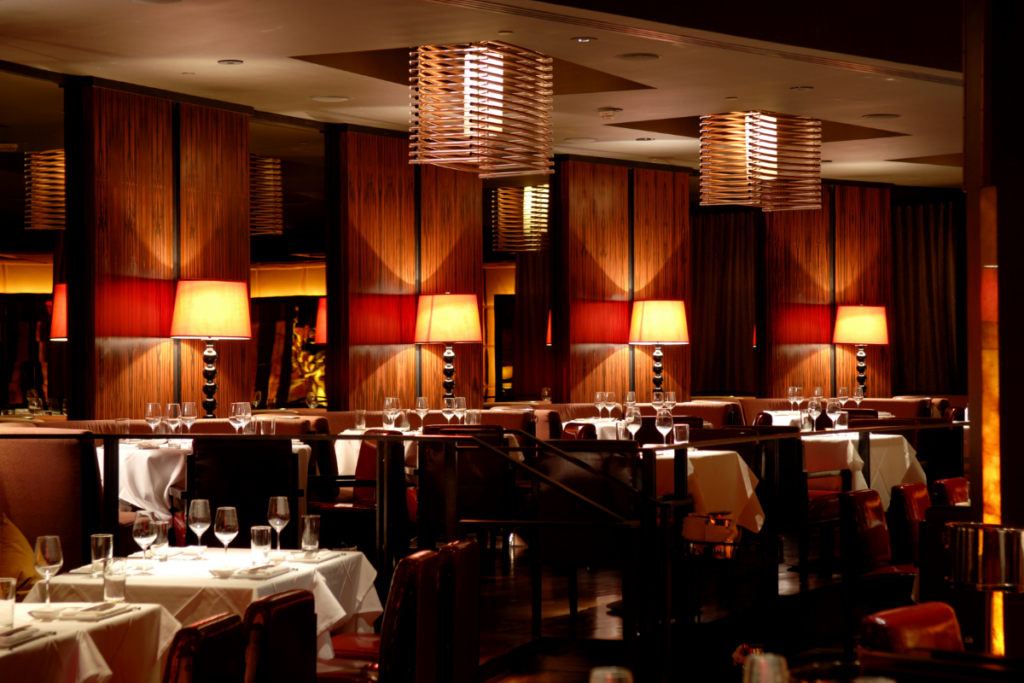
Great balance is required here. Nobody likes to scrutinize restaurateurs’ accounts, least of all in such a complex economic phase, in which the HoReCa world must contend with rising costs, hard-to-find staff, rents, energy, and raw materials. It would be unfair to ignore this. But it would be equally wrong to pretend not to see that, in many cases, wine away from home has now reached price levels that consumers perceive as difficult to justify.
On this last point, it is also worth noting that today virtually anyone is capable of comparing the price offered by the restaurateur with the price at source, or at least with the price at the winery or wine shop.
The more recent experience of many observers, operators, and consumers points in the same direction: increasingly, one encounters markups that appear disproportionate relative to the bottle’s real value and to the average customer’s spending capacity. The issue, then, is understanding whether, at a certain point, that margin does not end up becoming counterproductive, because it drives customers away, reduces consumption frequency, impoverishes the dining experience, and ultimately harms the entire supply chain.
When wine is perceived as the most unjustifiably expensive item on the bill, consumers change their behaviour. They order less, choose something else, give it up, or decide that the restaurant experience is no longer worth the price asked. And this harms not only the venue: it harms producers, distributors, agents, territories, and the culture of wine itself. In other words, the risk is losing an entire sea of consumers, and winning them back will be far more difficult.
For years, wine has been, in the restaurant industry, one of the main tools for keeping a venue’s margins in balance. But in an economic climate as fragile as the current one, continuing to use it in this way can become a shortsighted choice. If wine becomes the item the customer cuts first because it is perceived as too expensive, then the system is no longer defending its own value: it is eroding its own consumer base.
This is why Carter’s provocation deserves to be taken very seriously in Europe and Italy as well. It would be a mistake to regard it as an exclusively American issue. Certainly, the United States has peculiar characteristics, starting with the weight of tips and a particularly aggressive pricing model. But the issue of the accessibility of wine away from home is increasingly relevant to European markets too, especially where the restaurant experience risks becoming economically less sustainable for a growing portion of the public.
In this direction, a more open dialogue between HoReCa managers and producers would be more essential than ever today. Not to fuel sterile confrontations, but to find a different path, one that allows margins to be safeguarded without expelling consumers, that enables more balanced wine lists to be built, and that restores wine to its role as a natural component of the gastronomic experience rather than an accessory luxury to be sacrificed the moment the bill exceeds the threshold of tolerability.
The real question, then, is whether the system has the courage to acknowledge that, perhaps, wine away from home has become too expensive to remain part of everyday normality. And if this were truly the crux of the matter, that is where one would need to start again, with clarity, without reticence, and with the awareness that overlooking the problem today almost always means worsening it tomorrow.
Key points
- Price, not lifestyle trends or GLP-1 drugs, may be the primary driver of declining wine consumption out of home.
- Excessive HoReCa markups make wine the first item consumers cut from the restaurant bill.
- Losing wine consumers damages the entire supply chain: producers, distributors, territories, and wine culture.
- The problem extends beyond the US: European markets, including Italy, face the same accessibility challenge.
- An open dialogue between restaurateurs and producers is essential to build fairer wine lists and recover consumers.