This is the story of a company that had the courage to be different. To move away from the comfort zone of classical production.
The history of Castelluccimiano has its roots in recent times, but on a fertile land with a great historicity, on the slopes of the Madonie, in Sicily. The history of this company begins with the recovery of some old “alberello” vines, the highest expression of Sicilian mountain viticulture, making them unique examples of biodiversity in the Valledolmo area.
We interviewed Piero Buffa, the company’s sales manager, who told us his version of Sicily inside the glass, a new and totally organic version.
How was Castelluccimiano born?
Castelluccimiano is a relatively young project, born in 2005 on the ashes of an old social winery dating back to 1964. The company was taken over by a small group of contractors, who decided to delegate to me, as commercial manager, and Tonino Guzzo, as oenologist, the new production project. The name derives instead from the union of two districts Castellucci and Miano.
What is the beating heart of the Castelluccimiano project?
Absolutely the enhancement of the historical vineyards of the area, which are the Catarratto and the Perricone. We were the first to focus on the enhancement of these two vines that in the past were not considered suitable for making quality wines, the idea was to put these vines at the center of our production philosophy. This choice has rewarded us, also because of the international market requests, which look for territorial authenticity.
How did you get to this?
After a careful study, old sapling vineyards have been recovered, inherited from the great extent of a time, they have been made unique examples of biodiversity of the Valledolmo territory. The wines produced from these grapes fully represent the company’s production philosophy, and consist of a rare example of territorial identity.
Where are you exactly?
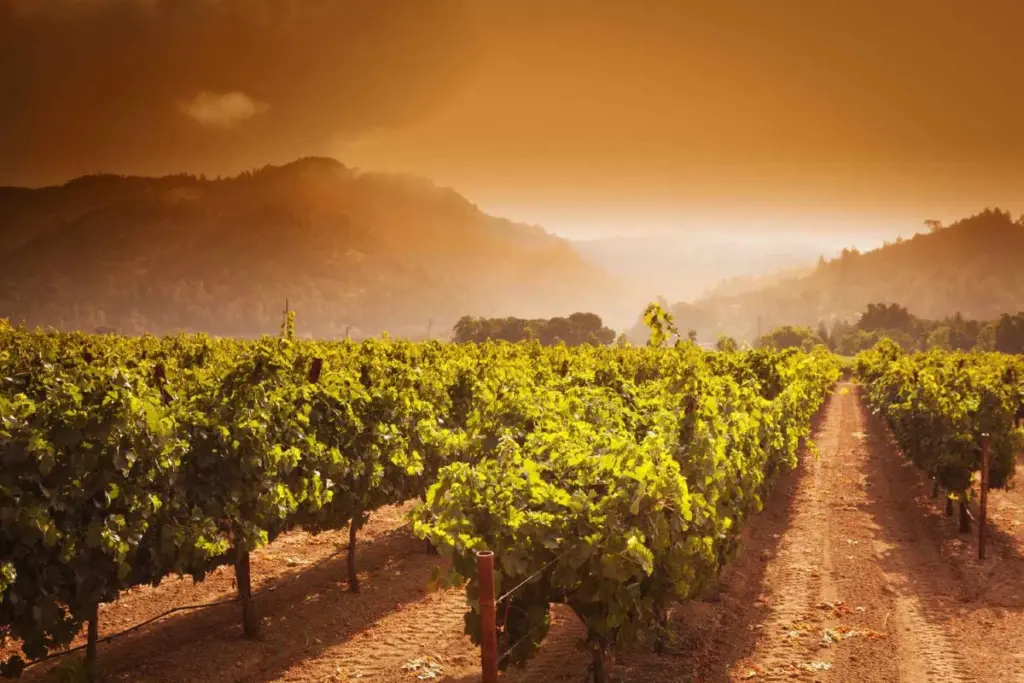
In Valledolmo, 800 m above sea level in the province of Palermo, on the internal side of the Madonie. The vineyards are allocated between 800 and 1100 m. We have recovered an old indigenous viticultural heritage, which until the early 1900s had almost 570 hectares of sapling vineyards, we have recovered what remains of it, 75 hectares, partly owned, partly donated to us.They are small plots usually below one hectare, located in the countryside of Valledolmo. I call them agricultural gardens, because inside there is everything: the vine, but also the fruit trees, like the pear tree, the cherry tree, the almond tree, the olive tree, and so on.
Do these small agricultural gardens produce organic wine?
Environmental sustainability and natural organic agriculture stay into our philosophy.
Our wines are naturally organic, beyond the certification, because those who care and cultivate them only make natural fertilization with manure and the only chemical product used is sulfur.
With which adjective would you define your project?
“Indigenous with pride”. When we started making wine, everyone laughed almost behind us, because we had chosen to make wine with Catarratto, the most cultivated white grape in Sicily, and Perricone, which had disappeared for the most part. Now for us it is a source of great pride to see that others have started to cultivate these varieties.
What do you perceive of Sicily from your wines?
Considering the generally perceived image of Sicilian wine, practically nothing.
According to that common perception, ours are not “Sicilian wines”. We are in the mountains, or high hills depending on the definitions, so we have wines with a marked acidity, an excellent minerality, and above all a good flavor, which generally in Sicilian wines is not very recognizable. In short, we are different in every sense.