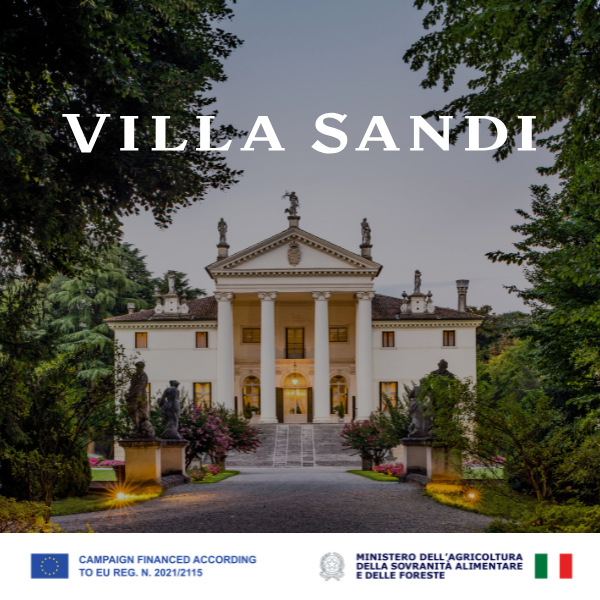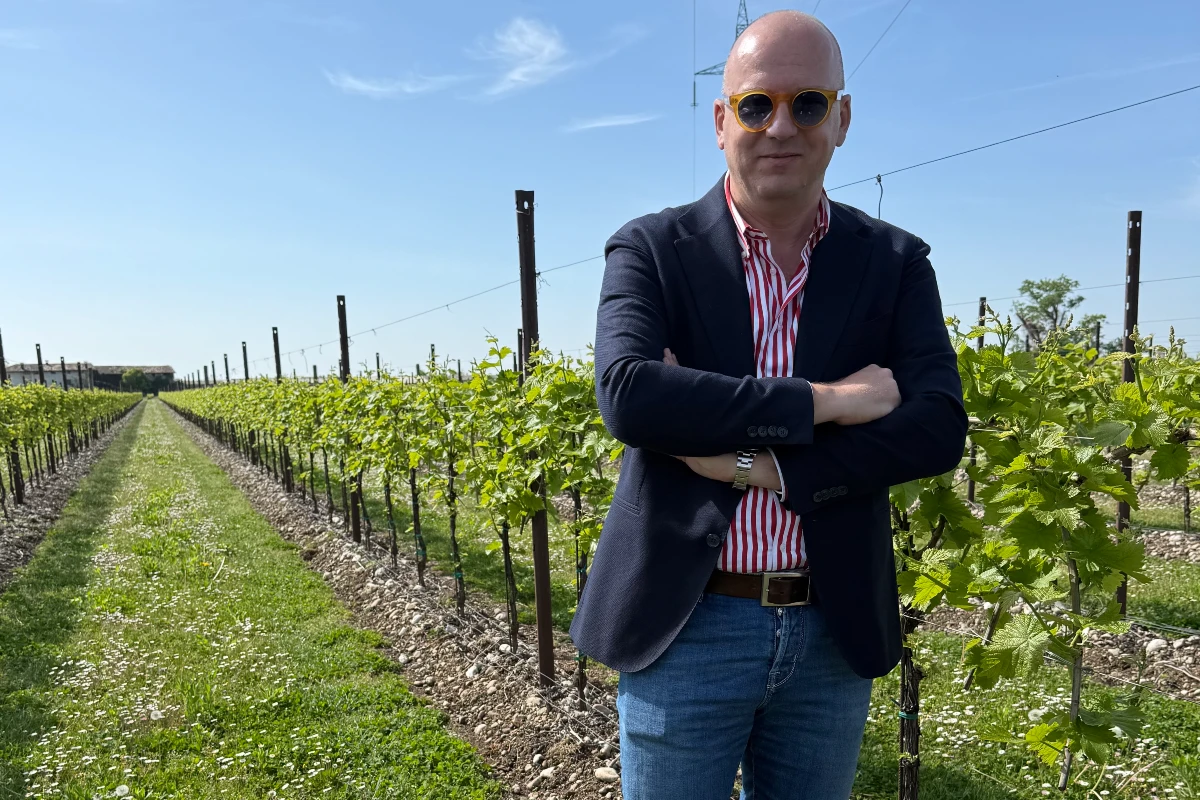
Flavio Geretto, newly appointed General Manager of Cantina Rauscedo, brings international experience from Villa Sandi to one of Friuli’s most storied cooperatives. In this exclusive interview, he outlines his strategy: elevating the bottled wine brand, strengthening the cooperative’s human-centered culture, expanding into emerging markets, and championing DOC Friuli as a unified, globally competitive wine territory.
At the beating heart of a Friuli that is the cradle of nursery excellence, Cantina Rauscedo is writing a new page in its own history. With the arrival of Flavio Geretto as General Manager, the historic cooperative is not changing its skin, but strengthening its soul. This conversation paints the picture of a company that is not content with managing numbers and volumes, but aims to build an ecosystem where cooperative tradition meets the speed of global markets. Without rhetoric, Geretto takes us behind the scenes of a reality that has decided to transform its territorial roots – made up of 300 different stories and an indisputable technical expertise – into its most precious competitive advantage. It is the story of a wager: to demonstrate that the future of Friulian wine lies in the ability to work as a team, elevating the bottled product with the same authority that has made Rauscedo celebrated worldwide.
You arrive at Cantina Rauscedo after significant international experience at a prestigious company like Villa Sandi. What was the “spark” or element of this Friulian challenge that made you say: “Yes, it’s time to write a new chapter”?
Joining Cantina Rauscedo represents far more than a new professional experience for me: it is the choice of a project in which I recognize deep and authentic values. After an international journey of great growth at Villa Sandi, I felt the need to put my skills and experience at the service of a reality deeply rooted in the territory and in cooperative culture.
The spark was precisely this: the immediate perception of a solid, competent, and future-oriented community.Rauscedo has an important history, but above all a great growth potential. I found people with a strong sense of belonging, a spirit of sacrifice, and a shared vision. In a context like this, the challenge becomes stimulating and natural.
What ultimately convinced me was the possibility of managing a company that has objectives beyond the commercial, with a strong social and economic responsibility toward the territory and the families that are part of it. A cooperative like Rauscedo has the task of creating value, ensuring continuity, and building future prospects for its members and the community. This aspect, for me, represents a source of great motivation.
Managing a cooperative winery like Rauscedo means coordinating over 300 members, each with their own story and sensibility. How does a sum of “I”s transform into a synergistic and cooperative “we” that is competitive on global markets?
Managing a cooperative means enhancing individual identities and transforming them into a collective strength. Over 300 members represent different experiences, sensibilities, and visions: the task of management is to create cohesion around common goals.
The “we” is born from listening, transparency, and mutual trust. When every member understands that their own success is closely tied to that of the cooperative, a shared culture develops that makes the system more competitive even on international markets.
Modern cooperation is about the ability to work as a team while maintaining the value of individuals, a concept I consider central even in a historical phase where the market demands scale, efficiency, and decisiveness without losing authenticity and territorial identity.
In many of your statements you have placed the “human factor” at the center. In an era dominated by algorithms and data, how can personal relationships and listening to members become a real competitive advantage for Rauscedo?
I firmly believe that the human factor represents a fundamental distinguishing element today. We live in an era dominated by data, technology, and algorithms, indispensable tools for making fast and efficient decisions. Yet wine remains a product deeply tied to people and relationships.
The member does not only contribute grapes: they bring experience, knowledge of the territory, work culture, and sensibility. Listening to these competencies means building an intangible heritage of enormous value.
Technology must support decision-making, but the real competitive difference comes from the ability to create solid relationships, trust, and a sense of belonging within the cooperative. I believe this human and participatory approach can become one of Cantina Rauscedo’s distinguishing elements in its relationship with clients, partners, and international markets.
You have expressed the desire to shift from a “product-oriented” to a “value-oriented” logic. What is the intangible value that Rauscedo’s wine must communicate today to stand out on an increasingly crowded shelf?
Today the market demands a change of perspective: being exclusively product-oriented is no longer enough, value must be built. The contemporary consumer seeks authenticity, identity, and content.
Rauscedo’s wine must communicate the value of the territory, of cooperation, and of Friulian work culture. It must tell the story of a community that, through competence and dedication, transforms daily work into quality.
In an increasingly competitive landscape, the difference is made by the meaning conveyed through the product itself. Today consumers want to know the story, the people, and the philosophy behind a bottle. This is what we must continue to work on, building an ever more coherent and recognizable communication.
The name Rauscedo is world-famous for the excellence of its rootstocks. How do you intend to work on the Cantina’s brand so that the quality of bottled wine achieves the same, unquestionable, fame as its nursery district?
The name Rauscedo is already internationally recognized for the excellence of its nursery district and its rootstocks, but what struck me from the very first days is that this concept of quality is already deeply rooted in the bulk wine sector and in the service the winery offers as a bulk wine supplier to some of the most important private companies in the industry.
Rauscedo has built a reputation over the years grounded in reliability, expertise, consistent quality, and production capacity. The market already associates the cooperative’s name with high standards, and this represents a strategic asset that must continue to be leveraged. The bulk wine sector and collaborations with other players in the industry will remain a core business for our winery.
It should also be noted that Cantina Rauscedo already produces several million bottles today, figures far from marginal, especially within the DOC Friuli landscape. This means a solid foundation already exists upon which to build a further brand enhancement journey. At the same time, I see a great opportunity in strengthening the Cantina Rauscedo brand toward the trade and the end consumer, by further developing the value of the bottled wine. I also believe that growth in the bottle’s notoriety and positioning can generate positive effects on the bulk sector as well, further consolidating the winery’s overall credibility in the markets.
With your solid international background, which foreign markets do you consider “unexplored prairies” for Friulian wine, and where do you feel the need to more forcefully reposition Cantina Rauscedo’s identity?
I see great prospects especially for DOC Friuli wines, a reality in which I recently joined the Board of Directors of the Consortium. I believe the international market is increasingly moving toward elegant, balanced wines with great drinkability.
DOC Friuli wines naturally possess these characteristics: excellent freshness, territorial identity, recognized quality, and generally moderate alcohol levels. This combination, especially at this historical moment, can represent a very strong distinguishing element compared to other wine-producing territories.
Key reference markets remain the historical and main ones – Italy, the United States, the United Kingdom, Germany, and neighboring countries – where Friulian wines are already well established. At the same time, I believe it is important to begin looking carefully at emerging opportunities such as South America, Africa, and certain Asian markets. In all these contexts, it will be essential to understand different cultures and adapt the way we communicate the wine, the territory, and the values of DOC Friuli to the sensibilities of different consumers.
It is often said that Friuli produces extraordinary wines but struggles to work as a system. In what way can a large cooperative like yours become a spokesperson for the territory, turning into a “global ambassador” for the entire regional system?
Friuli-Venezia Giulia produces wines of the highest quality, but often struggles to present itself on international markets with a unified voice. Working as a system is therefore a strategic priority.
This is precisely why Cantina Rauscedo is part of the “Gruppo Cantine Friulane,” a business network strongly supported by the Friuli-Venezia Giulia Region, born with the goal of uniting some of the most important wine-producing realities in the territory – cooperatives and private companies – to jointly strengthen the presence and promotion of Friulian wine in global markets.
I was recently appointed President of this network and I certainly feel the responsibility and trust that have been placed in me. I strongly believe in this project because I think Friuli today needs, above all, to focus on shared goals and results, overcoming the differences that have historically slowed down the ability to work as a system.
Beyond certifications and slogans, what does sustainability mean to you within a cooperative? How do you communicate to more than 300 members that sustainable investments protect and strengthen social capital rather than represent just a bureaucratic cost?
Sustainability cannot be interpreted solely as a set of certifications or vineyard practices. Today the concept of sustainability is much broader and encompasses environmental, social, and economic-financial aspects.
For a cooperative, it means above all ensuring economic continuity, protecting the territory, supporting members, and building future prospects for the families within the community. We are working on many activities that a modern cooperative can develop to support its members and the territory in which it operates.
Sustainability also means creating shared value, services, training, stability, and support in difficult times. It is essential to convey to members the idea that sustainability and growth are closely connected to the future solidity of the cooperative enterprise and the community it represents.
Cooperatives often face the dilemma of the average age of members and generational renewal. What approaches can involve and stimulate new generations of winegrowers to stay at Rauscedo and believe in this business model?
Rauscedo represents, in this respect, a rather particular and positive situation compared to other cooperative realities. The average age of our membership is indeed lower than that of many other wine-producing areas.
This is because a strong sense of community and belonging to the territory still exists. Many young people and families continue to believe in the cooperative and often choose to return after university studies or formative experiences, bringing new skills, new ideas, and new professionalism to the territory.
I believe this human heritage must be valued even more. New generations represent a fundamental element for the cooperative’s evolution, especially on topics related to sustainability, innovation, digitalization, and international communication. The cooperative model can be extremely modern if it succeeds in becoming a platform capable of creating concrete opportunities and growth prospects for young people.
As a final summary, what would you like to be the defining mark of your commitment and leadership at Cantina Rauscedo?
I would like my time at Cantina Rauscedo to be remembered for having contributed to strengthening the cooperative’s identity through balanced, sustainable, and shared growth.
All of this must naturally translate into concrete growth in numbers – not only in terms of hectoliters produced, but above all through an increase in customers, reference markets, and the perceived value of the cooperative. It will take some time, but I am confident we will get there.
The goal is to ensure that Cantina Rauscedo can take on an increasingly important role as a leading player within the region, contributing to the enhancement of DOC Friuli wines – a denomination I consider one with very interesting prospects for the future. I would like to leave behind a corporate culture founded on collaboration, on the enhancement of people, and on the ability to combine tradition with strategic vision. I believe that leadership today means above all creating the conditions for a community to recognize its own value and transform it into a future.
Key points
- Geretto aims to shift Rauscedo from a product-oriented to a value-oriented brand strategy.
- The “human factor” – member relationships and trust – is seen as a core competitive advantage.
- DOC Friuli wines are positioned for growth thanks to elegance, freshness, and moderate alcohol levels.
- Rauscedo leads the “Gruppo Cantine Friulane” network to promote Friulian wine with a unified voice globally.
- Generational renewal is a strength: Rauscedo’s membership skews younger than most regional cooperatives.