Telemaco Calandrino, Wine Director of La Gioia Collection, analyzes modern restaurant wine trends. Today’s customers are increasingly prepared and curious, progressively shifting towards fresher, less structured wines. Meanwhile, half bottles are making a strong comeback. However, building a great wine list remains challenging due to complex distribution fragmentation and constant market changes.
In wine there is much talk about changes in style, but how much of this narrative really reaches the table of a restaurant?
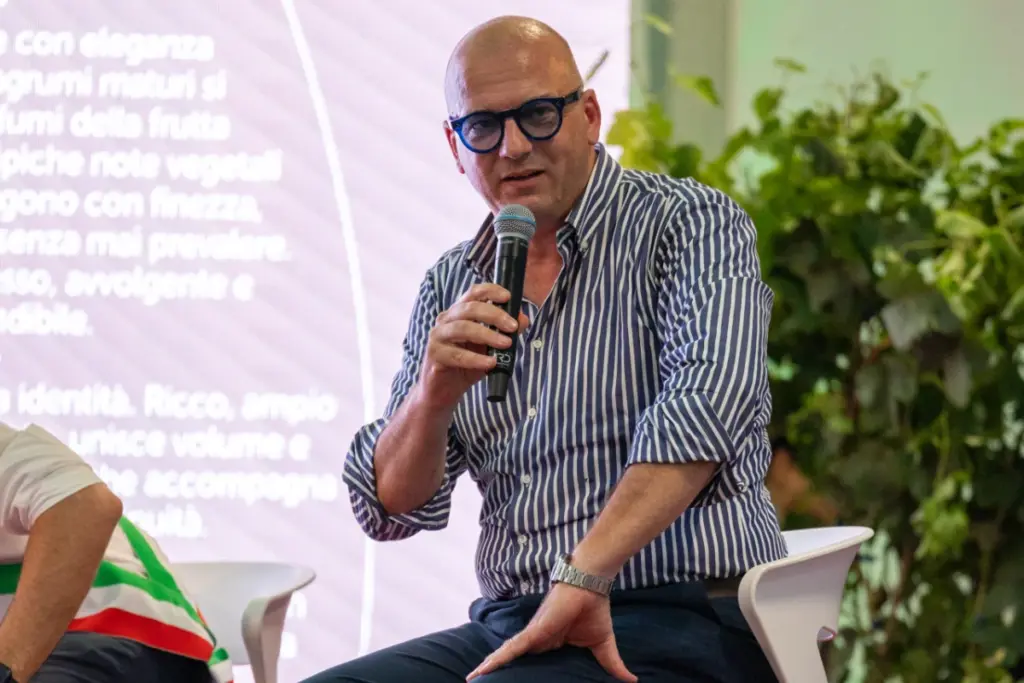
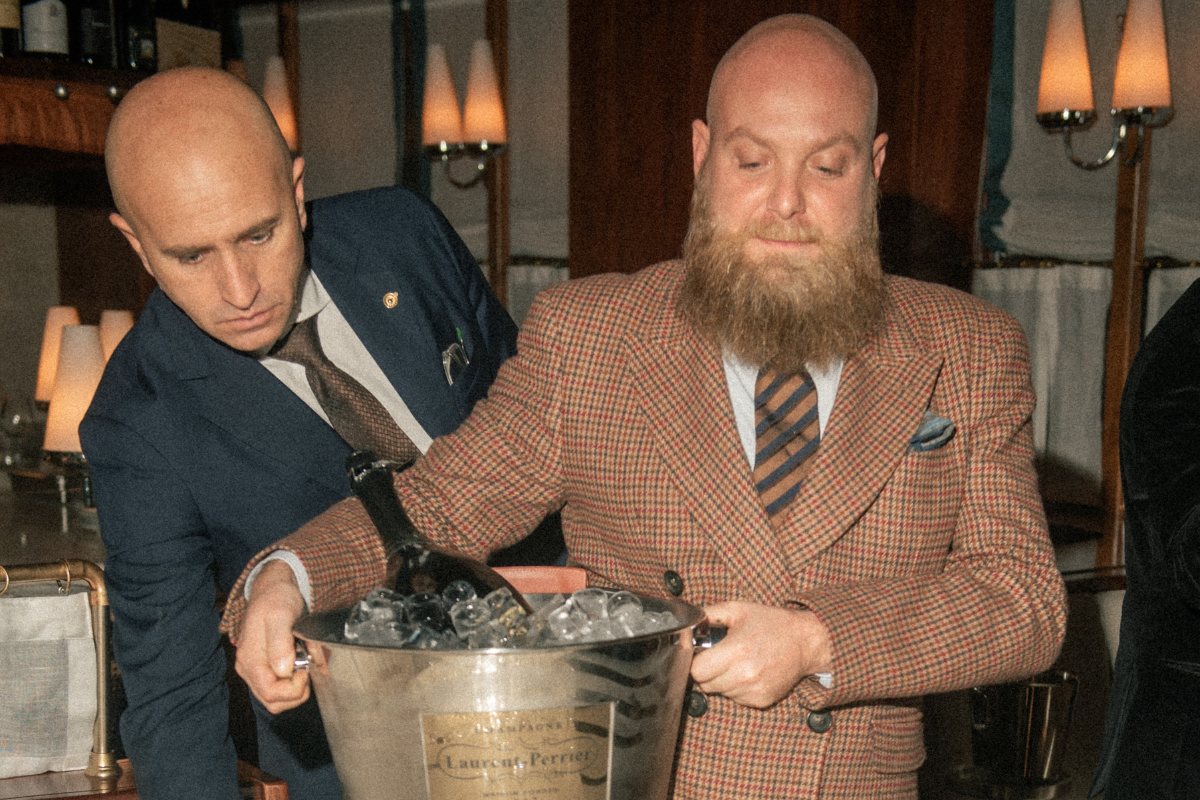
To understand this we chose to listen to those who sell, describe, and observe wine every day in the dining room. Telemaco Calandrino is Wine Director of La Gioia Collection, a Milanese restaurant group that brings together brands with different identities, from La Gioia San Marco to Al Baretto San Marco, up to Al Baretto Sant’Ambrogio, Osteria Serafina and Osteria Afrodite. His reading starts from a fact: the customer has changed, but not suddenly.
The search for fresher and less structured wines is the result of a path that started years ago, perhaps reaching its highest point. As often happens in wine, what today seems to be a definitive direction could soon turn into a new fluctuation of taste.
In recent years there is much talk of fresher, less alcoholic, more vertical wines. Is it a real trend even at the restaurant?
In my opinion it is a real trend, but it was not born overnight. It was a gradual change, which started a few years ago. The customer has progressively shifted from structured wine to less structured, less fat, sharper and fresher wines. This can also be seen in the way bubbles are perceived. There is less and less search for sugary components, both when they derive from the liqueur d’expédition and when they are linked to grape ripening.
Today the customer tends to look for wines that are drier in sensation, more vertical, less weighed down. I believe, however, that this curve has reached its peak. I would not define it just a fad, because inside there is also greater attention to one’s body and a health dimension of drinking. People are more attentive to sugars, fatness, and the robustness of the wine.
At the same time, I think that in the coming months or years we could see a new settling, perhaps a gradual return to medium structure wines and then, who knows, back to more structured wines. Wine also follows these cycles where you go up, reach a point, then go back down, and after that everything can start again.
Has this search for freshness also affected the most classic denominations?
Yes, it is clearly noticeable. I think, for example, of some Italian denominations very tied to structure. Amarone, today, is losing a bit of ground compared to the past. When the customer goes to Valpolicella, they no longer necessarily look for Amarone or Ripasso. Often they are more interested in a Valpolicella Classico, therefore in a fresher, more immediate, less demanding wine.
This does not mean that certain wines no longer have value. It means that right now a part of the public recognizes itself more in less powerful, more agile wines, more coherent with the way they want to drink today.
When a customer chooses a wine at the restaurant, what really weighs: price, territory, grape variety, pairing or desire for discovery?
It depends a lot on the type of customer. I see at least three profiles: the novice, the semi-professional and the professional. The novice often follows word of mouth. They arrive because someone told them to taste that wine, that type, that producer. Perhaps they were intrigued by a friend or a more experienced person. The more prepared customer, instead, looks for curiosity.
Sometimes they even look for the defect, or anyway the interpretive imperfection. Not because they want to drink a bad wine, but because they want to understand what happened in that vintage, in that vinification, in that production choice. They follow the producer, the vintages, the techniques, the use of reserves in the blend, the solera method, the changes in style.
But then there is a point that remains central for me: wine is a moment. Ultimately the customer also chooses based on the situation they are experiencing. The wine connects to the experience, the period, the table, the company, the type of evening. There can be the price, there can be the territory, there can be the grape variety, but very often the choice stems from what the customer wants to experience in that precise moment.
Does the customer arrive more prepared than in the past or do they still rely on the sommelier?
Both things happened. After Covid we lost many trained operators, figures who were important for the restaurant business. This was a real problem for the sector. On the other hand, however, Covid has pushed many people to inform themselves more. At home they read, studied, tasted, followed producers, territories, styles.
Today the customer often arrives with more information than in the past, but precisely for this reason they also seek more discussion with the sommelier. They do not necessarily arrive to delegate everything. They arrive to test their own idea, to compare it, to understand if what they have read or tasted is confirmed. This makes our job more interesting, but also more delicate.
In this scenario, what must a sommelier know how to do today?
The sommelier is first and foremost a communicator. Technical preparation, knowledge of the wine list, tasting ability should be the basis. What really makes the difference is reading the customer. You have to understand what a person is really asking for, even when they do not use the right words. Many customers still have gaps in the language of wine, and it is normal.
A classic example is when they ask for a dry wine. From a technical point of view, almost all wines on the list, excluding sweet ones, are dry. But you cannot answer by giving a lesson. You have to understand what they mean: maybe they are looking for a non-aromatic wine, maybe not soft, maybe not sweet in perception.
Our task is to help the customer express themselves better without putting them in difficulty. We must be professional, but also empathetic. The customer must feel at ease. The mistake many still make is transforming the service into a small exam. It must not be like this, as wine must also be fun.
Which types are selling better in your venues?
It depends a lot on the venue and, in Milan, also on the neighborhood. This is something I noticed even more clearly in the latest openings. For example, at Al Baretto San Marco, in Brera, structured reds do very well, even if we are talking about a restaurant with a strong seafood identity. There, Super Tuscans and Barolo have an important weight.
In other contexts, instead, we sell many more bubbles, classic method sparkling wines, Champagne, Franciacorta and Trento. The interesting thing is that not only the type of clientele changes in a general sense. The consumption behavior changes precisely based on the area. The neighborhood has an impact, sometimes more than one might expect. In Milan there is no single wine audience: Brera, San Marco, Sant’Ambrogio or other areas have different sensitivities.
Is Champagne still perceived as a category that is too expensive?
Yes, especially by the novice. There is still the idea that Champagne is an extremely expensive wine and for the few. In part it is true: Champagne costs money, but we also need to contextualize. If you choose a great Barolo, a great Brunello or another important red, you hardly start from low prices.
Even there you can easily reach figures similar to those of a bottle of Champagne. The problem is that many customers expect a great red wine to cost a lot, while a white, fine and subtle bubble should cost less. It is a question of perception. The visible structure of the red wine mentally justifies a higher price. The finesse of Champagne, instead, is sometimes read as lightness, and therefore as something that should cost less, but it does not work like this.
How are consumption formats changing: bottle, glass, pairing, half bottles?
The most interesting thing, for me, is the return of half bottles. I would not automatically link it to the theme of drinking less or to health consciousness, because I do not want to force an interpretation that I cannot prove. However, I see that they are working a lot. The half bottle has an intelligent aspect: it allows the customer to drink two or three glasses from a closed bottle, with the certainty of knowing exactly what they are drinking.
In some cases it can also be a sign of less trust towards the proposal by the glass. If we think about it, the customer could choose three different glasses, living a wider experience. If instead they choose a half bottle, perhaps they want their own, closed, precise bottle. The problem is that many producers are not ready yet.
The available half bottles are often few, or are at the extremes: either low-end wines, which in certain contexts you cannot propose, or very important wines, with high prices even in the small format. However, when the proposal is coherent, they work. In Brera, since we added them to the list more decisively, they have gone very well.
On the rest, glasses and bottles both continue to work. At the Chef’s Table we also propose the wine pairing, and there those who are curious trust without problems. Others, instead, prefer to choose their own bottle, even when the pairing could be more coherent with the menu. There are those who drink Barolo even with fish, as not everyone seeks the same experience.
How difficult is it today to build a wine list as one would truly want it?
It is difficult, because a wine list is not built simply by having a budget and buying everything you like. It does not work like this. It is a journey, made of relationships, allocations, trust, continuity with producers and distributors. On the one hand it is also right.
If a restaurant has worked for years with a rare producer and has built that relationship over time, it would make no sense for someone to arrive overnight and take all the available bottles. Allocations have a logic, but the problem is the fragmentation of distribution. There are many distributors, many mandates, continuous changes.
In Milan the cellar space is small, so having a simpler system would help a lot. It would allow products to turn faster, have less stationary stock, reduce the risk of tired or obsolete wines. The transition between 2025 and 2026, from this point of view, was complicated.
There were mandates changed after years, even after twenty-five years, and overnight you no longer knew who to order a wine from that you had on the list. You asked for six bottles and they replied that they no longer had it. And when you asked who had it, often no one gave you a clear answer.
It is a stressful part of the job, but also a part that forces you to stay on the ball. Building a wine list today also means managing these dynamics. Taste is not enough, as market knowledge, patience and the ability to move within a system that, sometimes, is more complicated than necessary, are needed.
Key points
- Customers prefer fresher and less structured wines, moving away from traditionally heavy and alcoholic profiles.
- The half bottle format is returning strongly, offering a customized and controlled drinking experience.
- Guests are more informed and curious, actively seeking constructive dialogue with the restaurant sommelier.
- Distribution fragmentation complicates creating wine lists, requiring great patience and deep market knowledge.