Markups, rising price lists and falling consumption are straining the bond between wineries and Italian restaurants. Drawing on an interview with distributor Luca Cuzziol, this piece argues that neither side can fix the crisis alone: only a shared, transparent pact between producers, distributors and restaurateurs can rebuild real value in the Horeca channel.
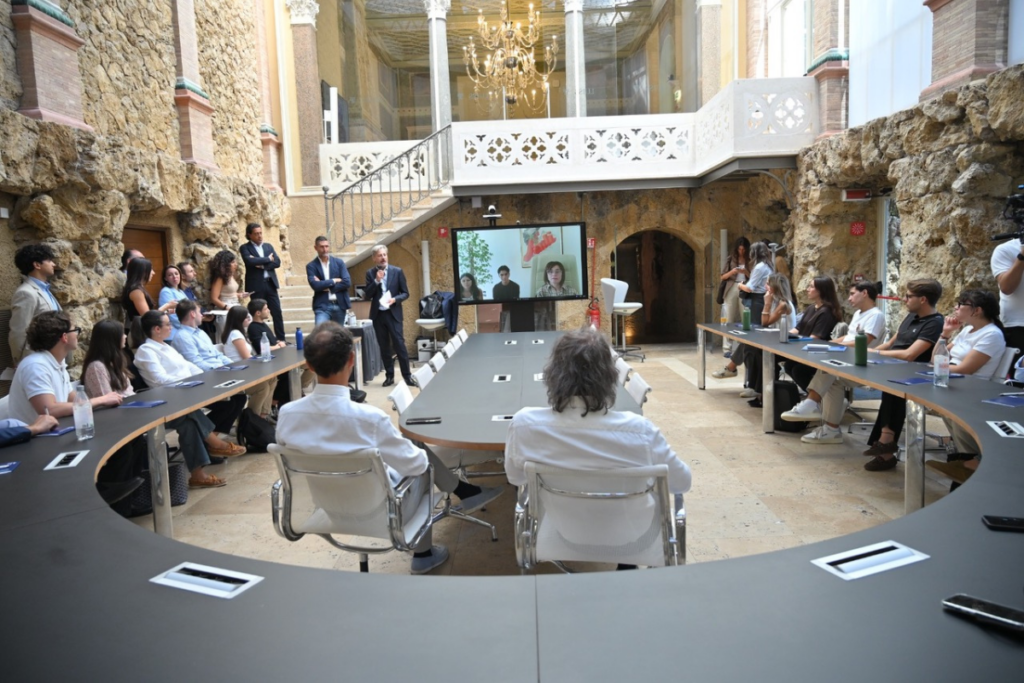
In the past few days I gave a talk in Sicily on one of the thorniest, yet also most urgent, topics in our industry: the relationship between wine and restaurants. Almost in the same days I also had the good fortune to interview Luca Cuzziol, founder of GrandiVini (Cuzziol: “Horeca remains strategic, underestimating it is a serious mistake”), today certainly one of the most authoritative distributors in the Horeca channel in our country. What emerged was a very lucid exchange, tough in some passages, but useful precisely for that reason.
Putting those reflections together, I became even more convinced of one thing: I don’t think it’s an exaggeration to say that we are living through one of the most complex eras for Italian wine. This complexity is clearly visible precisely in the relationship, never truly resolved, with the world of restaurants.
For years we told the story of wine and restaurants as two naturally allied worlds. Perhaps they were less allied than we liked to think. Perhaps, more than an alliance, there was a long habit: the producer made the wine, the restaurateur put it on the list, the customer chose it, the system seemed to work. But today that automatic mechanism no longer holds.
So the question is no longer whether wine and restaurants should communicate better. The question is whether there is still time to build a new pact, because today one thing is clear: no segment of the supply chain can think of saving itself alone.
In reality, very often, there hasn’t been true dialogue. There has instead been a kind of delegation, an almost “blank check” delegation from the world of wine to restaurants: you tell the story, you add the value, you sell it, you explain it to the final consumer.
For a certain period this delegation held up, because the market was growing, wine enjoyed a strong image, out of home consumption still had undisputed centrality, and the customer more easily accepted certain prices and mechanisms. But today that model is showing all its cracks.
And it’s no longer enough to say that “restaurants mark up too much.” That would be convenient, but it would also be a partial reading. Markups on wine lists are certainly an unresolved issue, perhaps the most cumbersome elephant in the room of the relationship between wine and restaurants. When a bottle arrives on the list at a price that feels psychologically off putting, it’s not only the restaurateur who loses, seeing the customer give up the bottle or retreat to the glass; the producer loses too, because turnover stalls, the brand is perceived as expensive, and the bottle just sits there as decoration rather than being sold.
It would be just as wrong to pretend that wineries are innocent bystanders. In recent years many price lists have risen with a carelessness that is now presenting the bill. Cuzziol says it very clearly: quite a few producers have raised prices significantly, sometimes without solid reasons, pushing wines that left the winery at 15 euros toward 25 or 28 euros, with the inevitable effect of then finding them on the list at 60 euros and more. At that point we are no longer in the territory of value creation, but in that of unsellability.
This is the point we should have the courage to look in the eye: the issue goes well beyond the markup alone, it is the sum of many inconsistencies. Prices built poorly at the winery, margins defended poorly at the restaurant, wine lists often designed more to represent an idea of prestige than to encourage consumption, producers asking for visibility without building sales tools, restaurateurs asking for terms without always fully taking on the cultural and commercial role that wine requires.
In the middle, the consumer, who doesn’t attend supply chain roundtables, doesn’t read press releases, doesn’t take part in our debates. He simply looks at the list, looks at the price, does the math and decides. More and more often he decides to drink less wine, or not to drink it at all. This should worry us far more than any self referential discussion about whose fault it is.
Because in the meantime Horeca remains fundamental. Underestimating it, as Cuzziol argues, would be a serious mistake. Even though it accounts for less than 30% of total sales of Italian wine, it continues to be decisive in terms of value, image, and brand awareness. For the premium and super premium segments, although representing a numerically limited share, it carries enormous strategic weight on overall positioning.
The restaurant is not just a sales channel. It is a place of legitimation, where a wine can become desirable, understandable, memorable. It is where a denomination can leave theory behind and become experience, where a well trained waiter can communicate more than many glossy campaigns. It is where the territory stops being a word from a brochure and becomes a pairing, a story, an emotion, a repeated choice.
For this reason we cannot afford to dismiss Horeca as a complicated, old fashioned, expensive, inefficient channel. Of course it’s complicated. But that is exactly why it is strategic: in wine, everything that creates real value is complicated.
There is another signal we should stop considering marginal: the progressive absence of restaurateurs from wine industry events. Today we organize a great many initiatives, tastings, presentations, regional meetings, but on too many occasions restaurateurs are few, when not entirely absent. Once, to give an example, Mondays at Vinitaly were also the restaurateurs’ day, the moment when an important part of the out of home sector truly connected with the world of wine. Today this presence has thinned out even at the most important events.
Perhaps because restaurateurs no longer have time, certainly. But perhaps also because too many initiatives are not designed for them, do not address their problems, do not help them sell better, train staff, build more effective wine lists, or add value to their offering. If we want to rebuild a relationship, we must stop simply inviting restaurateurs “to things that are already done.” Useful initiatives need to be co-built with them, starting from their real needs, otherwise we will keep talking about Horeca without having Horeca in the room.
The question then is not whether wine and restaurants should keep talking to each other. The question is whether they are finally willing to talk to each other like adults, without paternalism, without self pity, without that tiresome tendency to always look for the guilty party on the other side of the table.
We need to change the language. Even before operational solutions, we need to admit that the problem is shared. If wine doesn’t move in restaurants, it’s not only the restaurateur who loses. If the restaurant stops being a credible place for wine, it’s not only the producer who loses. If the customer perceives wine as an avoidable luxury, the whole supply chain loses.
A new pact cannot be born from a formal dinner or from yet another event where one side invites the other just to be seen. It must be born from shared goals, from real roundtables between producers, distributors, restaurateurs, consortia, associations, from events built together rather than endured by one of the two sides, from territorial co-marketing actions, shared communication plans, serious training of waitstaff, and projects of territorial wealth in which a strong denomination also helps restaurants and a strong restaurant scene also helps the denomination.
In this scenario the distributor once again takes on a decisive role, not as a mere logistics intermediary but as a market sensor. Cuzziol underlines this well: the producer distributor relationship is valuable because it helps wineries measure themselves against what the market truly demands, not against what they hope or imagine. This is where one of the deepest fragilities of our system emerges: too many wine businesses continue to measure themselves only against themselves.
This is perhaps the real management issue. Making good wines is not enough. Having a nice story is not enough. Belonging to an important denomination is not enough. Today what’s needed are recognizable products, coherent brands, credible prices, the ability to read markets, and openness to dialogue. The companies that hold up, even in this difficult phase, are not simply the lucky ones; they are the ones that built value before the market became more selective.
The selection has already begun. We can keep denying it, or we can take it as a painful but necessary opportunity to restore order, not to go back to the past, because that past will not return. But to build a new relationship, more transparent, more concrete, less rhetorical.
Italian wine still has extraordinary strength. Italian restaurants still have enormous potential. But neither of the two worlds can any longer afford to think it can make it alone.
The season of the blank check delegation is over. Now a shared pact is needed, not because it sounds nice to say, but because we don’t have many alternatives.
Wine and restaurants win together or lose separately. And this time it isn’t a slogan: it is probably the most realistic snapshot of the moment we are living through.
Key points
- Markups on restaurant wine lists and unjustified price hikes at the winery are both driving bottles out of reach for consumers.
- Horeca stays strategic for brand image and premium positioning, even though it represents under 30% of total sales.
- Restaurateurs are increasingly absent from wine events, showing a growing disconnect that both sides must actively repair.
- A shared pact, built on real dialogue and co-marketing, is now more urgent than isolated fixes from either side.
- Distributors can play a central role by helping wineries read market demand instead of just their own expectations.