Italy’s wine sector faces a prolonged downturn that may last years, not months. Rather than waiting passively, producers must rebuild as real businesses, rethink consumers, diversify markets, and treat wine tourism as a strategic unit for the future.
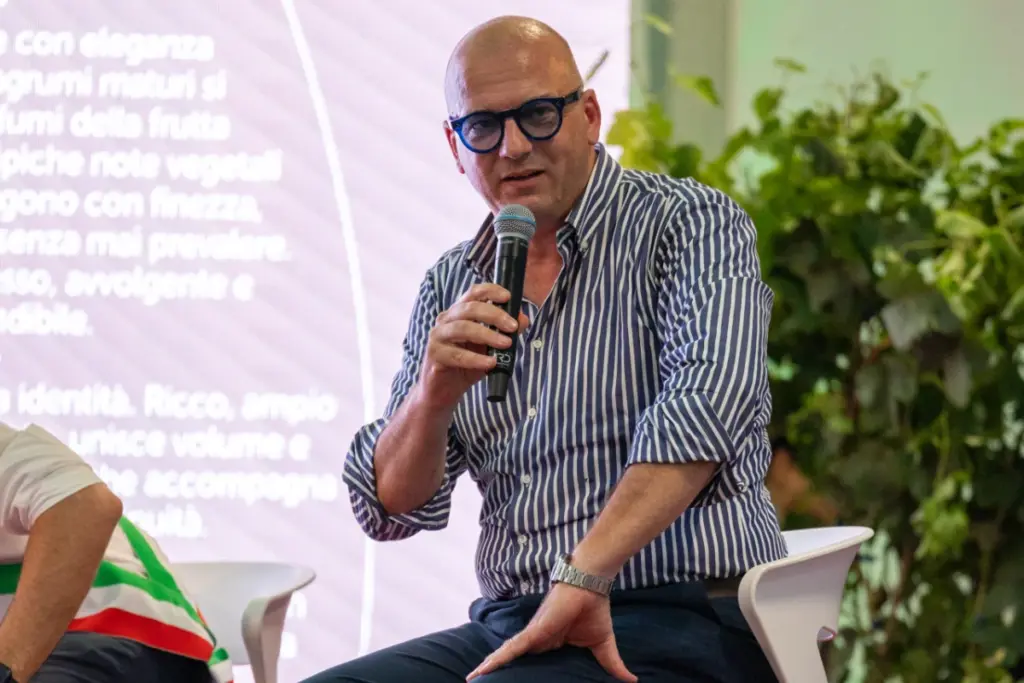
As moderator of the latest edition of Envisioning 2035, I come away with one clear feeling: the question is no longer whether wine has entered a difficult phase. That much we already understand. The real question is whether we are willing to read this crisis for what it truly is.
Not a parenthesis. Not a market cold. Not a negative cycle we can simply wait out, hoping it passes.
Until a few months ago, a more reassuring forecast was circulating: a somewhat healthier second half of 2026, with 2027 as a year of readjustment. Today far fewer people share that optimism. Increasingly, a different assessment is emerging: we may still face a difficult three year stretch ahead. Looking at France, some even speak of a crisis lasting three to five years.
The real issue, in my view, is not simply how long it will last. If we stop there, we risk asking the wrong question again, because the true question is not when this crisis will end. The true question is what we will have become by the time it does.
Denis Pantini, in the report presented at Envisioning 2035, laid out numbers that leave little room for escape: global wine exports have fallen again, major markets have reduced consumption, and Italy has dropped below eight billion euros in exports. Yet within that data lies something important too: Italy is suffering, but it is not the country suffering the most. Other competitors are faring worse. France is retreating. Spain is retreating. The United States is collapsing. Australia continues to pay a heavy price.
This should not comfort us. But it should stop us from treating lament as our only strategy.
The Wine-Searcher article on the French crisis offers another useful angle. Gérard Bertrand essentially says the French crisis is only beginning and will last years. Yet in the same reasoning, he points to Italy as an example of greater commercial responsiveness. The Canadian case is telling: when an opening appeared, Italy moved, brought producers to the market, built coordinated initiatives, and claimed the space. France, according to Bertrand, remained slower, more divided, more trapped by its own egos.
This is a useful lesson for us too, because Italian resilience is not guaranteed by nature. It is not enough to say we are more flexible, more commercial, more present. We must prove it every day, and above all we must stop treating resilience as a personality trait. Resilience, today, is organization.
This is where Envisioning 2035 tried to take a different step. Not simply taking a snapshot. Not holding yet another collective moment of alarm. But trying to say that Italian wine is not in crisis in itself; it is an old model of thinking about it, selling it, and telling its story that is in crisis.
For years we lived comfortably inside one paradigm. Italian wine was growing, exports were running strong, quality seemed enough, terroir was the magic word, and appellations were often treated as entitlements. That world did not end overnight, but it has ended.
Today quality remains the starting point. Not the finish line.
The market crisis tells us that many companies are still too weak managerially, too dependent on a handful of markets, too slow to read consumers, and too in love with their own internal narrative. Often too little accustomed to measuring what they actually do.
The winery, today, must go back to being first and foremost a business. It sounds obvious. It is not. It means managing cash, inventory, people, channels, margins, investments, and customers. It means knowing where money is made and where it is lost. It means recognizing that the vineyard is an asset, but it does not cover deadlines on its own. It means acknowledging that promotion without strategy is often just an expense.
Then there is the consumer, perhaps the most uncomfortable issue. Because the consumer is not simply “less passionate.” They are different. They drink less often, look for lighter occasions, and switch between wine, cocktails, beer, spirits, ready to drink options, and non-alcoholic drinks. They no longer automatically enter the ritual of wine, and if they don’t, we cannot simply tell them they are wrong.
The decline in still red wines, the rise of sparkling wines, growing interest in fresher whites, the no-low trend, the centrality of the aperitivo, and the strength of experiences: these are all signals of the same phenomenon. Wine no longer competes only with other wine. It competes for a moment in people’s lives.
This changes everything.
It changes the product. It changes the language. It changes distribution. It changes the way wine tourism is done. It even changes the concept of identity, because identity cannot be an entitlement; it must become a lever. Terroir should not be abandoned, but it must be made understandable. It must not be used as a shield to defend styles the market no longer understands. It must be translated into wines, experiences, and stories capable of speaking to the present.
From this point of view, the final slide of Pantini’s report is perhaps one of the most important. It reminds us that mature markets in difficulty are not the whole picture, because a constellation of countries that could become interesting outlets is growing: Poland, Mexico, Kazakhstan, South Korea, Thailand, Romania, Brazil, and others, even as the weight of the first major markets on Italian exports has shrunk.
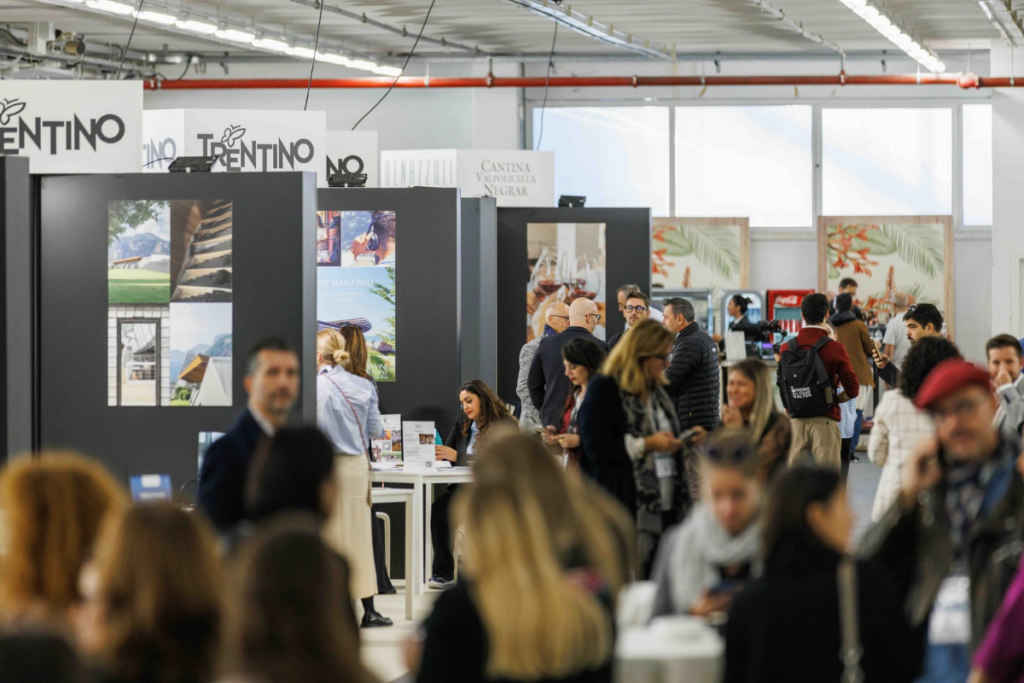
These are not markets to treat as a plan B. They are markets to study, occupy, and build, with investment, continuity, alliances, and adapted offerings. Sending a few samples or attending a trade fair is not enough. It is necessary to understand who drinks, where they buy, which channels matter, which price brackets are sustainable, which image of Italy works, and which products can open the door.
Diversification is no longer a cautious choice. It is a necessity.
The same applies to wine tourism. Here too we must avoid illusions. Opening the winery’s doors and calling it hospitality is not enough. Wine tourism must become a business unit, not an accessory. It needs objectives, trained staff, data, conversion, a wine shop, CRM, and follow up after the visit. Visitors do not come to the winery to sit through a one hour technical lecture. They come to live an experience that means something to them. If that experience creates a relationship with the brand, then value has been created.
So where does that leave us?
We are at a point where we can no longer afford excuses.
The crisis will likely last longer than we hoped. But its duration cannot become our obsession, because the risk is waiting out the storm with a leaking roof. And when the sun returns, we may find we still aren’t ready.
Italian wine still holds many cards. It has a variety few can match. It has strong territories. It has dynamic companies. It has a global reputation. It has commercial capability that, in some cases, has proven superior to that of more celebrated competitors. But none of this is enough unless it becomes a system, a method, a strategy.
The crisis should not be denied. It should be used.
It should be used to stop producing without asking enough who will actually buy. It should be used to review product portfolios that have stood still for too long. It should be used to invest in people, not only in hectares and cellars. It should be used to build real networks, not superficial alliances. It should be used to speak less to ourselves and more to consumers. It should be used to claim new markets before others do. It should be used to bring wine back into contemporary drinking occasions.
This will not be easy. And it will not be short.
But perhaps this is the most honest thing to say: we do not need another comforting story. We need a new discipline.
Italian wine must not simply survive the crisis. It must decide what model it wants to be in 2035.
Key points
- Duration is no longer the main question; what matters is what the industry becomes after the crisis ends.
- Italy performs better than rivals like France, Spain, the US, and Australia, but must not grow complacent.
- Wineries need real management: cash flow, margins, inventory, and customer data, not just vineyards and tradition.
- Consumers are shifting toward lighter, varied drinking occasions, so wine now competes for moments, not just market share.
- New markets such as Poland, Mexico, Korea, and Brazil require sustained investment, not occasional trade fair visits.