A new exchange with Martin Foradori Hofstätter turns to a key issue: wine tourism only generates real business when a territory’s attractions work together. In South Tyrol, an overabundance of experiences often pushes wine aside, while hotels tend to keep guests inside their walls. True growth, the piece argues, comes from integration, not isolation.
A fine dialogue has begun with Martin Foradori Hofstätter. After his first comment on the “Burgundy Lesson,” the one in which he reminded us that the true wealth of wine lies in the vineyard rather than the cellar, a second reflection has arrived. And it touches a raw nerve.
“You have no idea how disappointed I feel when I look around and see how many opportunities my land offers, and how often they are underestimated,” he writes to me. This time, however, it is not the wineries striving to expand their offer through wine tourism that end up in the dock, but rather a part of the hospitality world. The reflection concerns the limited inclination to work as a system, and the resulting difficulty in building a genuine network among those who, in the same area, welcome visitors.
While the presence of local wines on wine lists is now a well established reality, it is far rarer to find accommodations that suggest their guests visit a winery, take part in a tasting, get to know a vineyard, or discover the winemaking history of the place. Yet this is exactly where value is created. Building a network means recognizing that the success of a destination depends not only on the quality of the single hotel, restaurant, or producer, but on the ability to offer a complete experience.
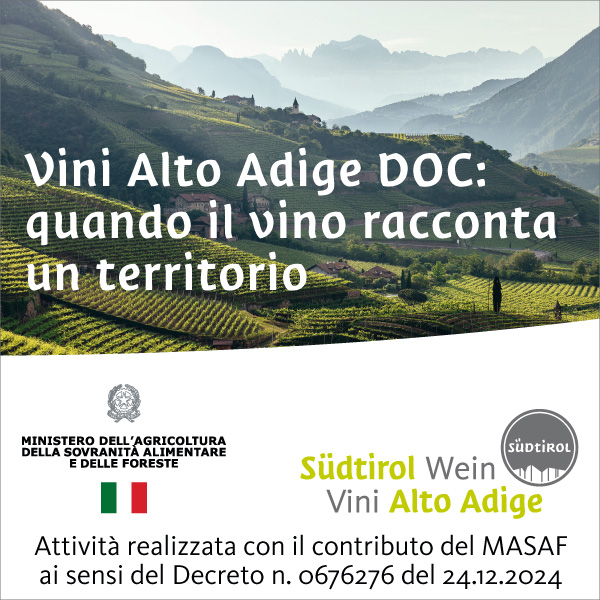
Then Martin brings into focus a paradox I know well. South Tyrol, he says, has “a luxury problem: we have too much to offer.” Road cycling, mountain biking, hiking, climbing, skiing, lakes, museums. A range of experiences so wide that wine, and above all everything that surrounds it, simply gets lost. Yet wine could be exactly the right card to play to enliven the low seasons, when the mountains slow down. It is not taken into consideration.
I replied that this is exactly the case. I have been visiting South Tyrol for years, out of a personal passion only tangentially related to wine: wellness. I have been doing saunas since I was a boy, and over all this time I have spoken with a great many hoteliers. Rarely has anyone taken the wine side seriously. More than one explained it to me bluntly: for them, what matters is keeping guests inside the hotel, where they can find and experience everything.
Here is the point. This is the short sightedness. Keeping the guest within the hotel’s walls may seem, in the short term, the most profitable strategy. In reality it is a mistake that regions pay dearly for, and for decades.
We have seen this happen in many other regions of our country too. I am thinking, though the examples could be countless, of the Euganean Hills and the hotel industry of Abano and Montegrotto: a thermal spa offering that could have become the heart of an integrated tourism system, able to link water, hills, wine, and culture. Instead it remained stuck in the 1970s, deluding itself that it could keep guests confined within hotels that were luxurious then and are often dated today. We know the result: an extraordinary area that has long operated well below its potential.
Wine tourism gives its best precisely where it is not the only attraction. Where there is the mountain, the lake, sport, wellness, art, wine is not a competitor: it is the glue. It is what holds experiences together and turns them into a single story. And the more a territory’s attractions integrate with one another, the more the related business grows. For everyone: for the hotelier, the restaurateur, the winery, the local shop.
The problem is that this integration rarely happens here. Everyone defends their own patch. The hotel wants to keep the guest, the winery sometimes looks only at itself, the restaurant lists the convenient wine instead of the local one.And so the related business that could multiply remains, instead, fragmented.
Building a network takes effort and requires trust. Sending your guests out, toward a winery, a trail, another restaurant, can feel like giving them away to someone else. That is not the case. A territory that knows how to integrate its experiences keeps guests longer, brings them back, and extends the season. A hotel that recommends a visit to a winery does not lose a night: it gains the memory, the word of mouth, often the return visit.
Martin is right to be angry. But that anger, if we turn it into a shared project, can become the best of energies. Because wine, in our territories, is never just wine. It is the key that opens everything else, provided we have the courage to leave the hotel door open.
Key points
- South Tyrol’s abundance of activities often causes wine tourism to be overlooked entirely.
- Hotels frequently keep guests confined on site instead of directing them toward wineries.
- Integration across accommodations, restaurants, and wineries multiplies the related economic benefit for everyone.
- Isolated strategies, as seen historically in the Euganean Hills, keep territories below their real potential.
- Wine works best as a connector between mountains, lakes, wellness, and cultural experiences.