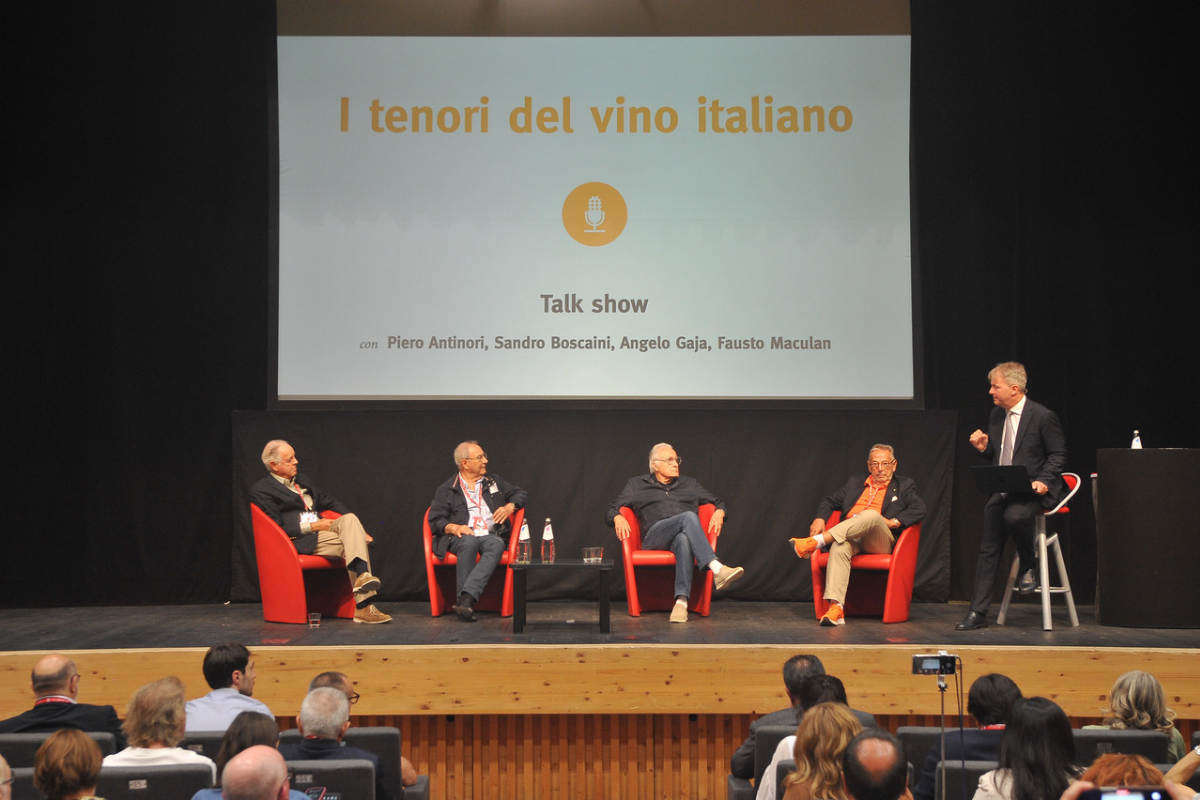
A necessary premise: I was not at VinoVip Cortina. However, I followed very closely the debate that came out of it, in particular the talk moderated by the excellent Alessandro Torcoli, editor of Civiltà del bere, with the four “tenors” of Italian wine. Those reflections are precious testimonies.
And I gathered the reflections that followed on LinkedIn, first among them that of Filippo Bartolotta, one of the best Italian wine communicators, who was present in Cortina. They are precious testimonies. And it is precisely because they are that they deserve to be taken seriously all the way, that is, even where they hurt.
Because at VinoVip Cortina something rare happened. Four of the protagonists of the Italian wine Renaissance, Antinori, Gaja, Boscaini, Maculan, practiced self-criticism in public. Fausto Maculan said it bluntly: we praised ourselves, we climbed onto the lectern, we told the story of wine to those who already loved wine and ignored everyone else. We talk about wine the way it was talked about thirty years ago.
It is true. It is precious that they are the ones saying it, from the stage, in front of an audience that usually applauds and carries on as before. But this is where I must be honest, even at the risk of spoiling the party: the self-criticism of Italian wine has itself become a ritual. A literary genre. We have been denouncing it for at least twenty years with increasing elegance and decreasing consequences.
I have already heard Antinori’s proposal. In lire.
Piero Antinori launched the strongest idea of the discussion: thirty billion bottles produced worldwide, one cent per bottle, three hundred million euros a year to tell the story of wine to the new generations. Not advertising: culture. Perhaps coordinated by the OIV.
It is a fair proposal. But it is a proposal that I first heard at the end of the Eighties, when I was starting out as a wine journalist. Back then we spoke of lire: five, ten lire for every label produced and we would have had billions for a finally orchestrated communication of Italian wine.
Nothing came of it. And we know perfectly well why. Because success came anyway. Because for thirty-five years Italian wine sold without having to explain itself, and so communication became the budget item that gets cut first: far better to invest in barriques, fermenters, tractors, new hectares. The end consumer? A matter for the trade. The responsibility of the distributor, the importer, the restaurateur. Certainly not ours.
Thirty-five years later we are at the exact same point, with the exact same arguments, and with per capita consumption down from 110 to less than 50 liters. Which should make us suspect that the problem is not the lack of a good idea. The good ideas have been there for decades. The problem is that we do not really want them.
The paradox: we preach change and punish those who change
And here we come to the point that interests me most, because it is the one that is never talked about at conferences. Everyone says that the language of wine must change. Everyone. Then someone arrives, a communicator, a format, a winery, an initiative, who truly tries to speak in a different way. And what happens?
The indictment starts immediately: it trivializes, it oversimplifies, it does not respect the complexity of wine, wine is not an ordinary drink, wine is culture, wine is territory, and only those who know how to do it can talk about wine.The pyre. Within forty-eight hours.
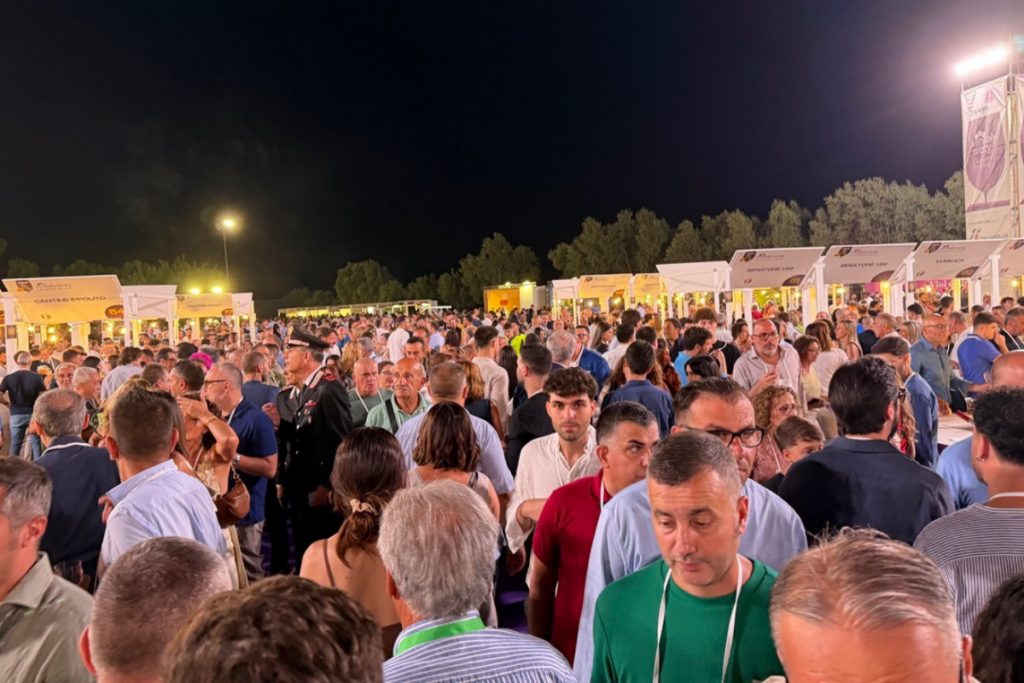
Meanwhile the rites remain intact. Masterclasses for a chosen few. Previews identical to themselves for twenty years, with the same stalls, the same glasses, the same people. Formats repeated for decades. An unchanging lexicon that we keep defending as if it were a UNESCO heritage and not simply a habit.
The result is a sector that asks for change in words and sanctions it in deeds. That wants new consumers but is not willing to give up a single gram of its own liturgy to go and get them. That is moved by the self-criticism of the greats and on Monday morning reopens the office exactly as on Friday. And so the question is legitimate: why do we keep saying that we must change, if there is no real will to do it?
Changing means accepting to make mistakes
There is no innovation without error. We repeat this sentence at every conference on the future of wine and we never apply it to wine. If we truly want to talk to those who do not listen to us today, we will have to accept some very uncomfortable things.
That some experiments will be ugly. That some formats will seem vulgar to us. That someone will oversimplify too much. That the language that works with twenty-five-year-olds will not please us, because it was not written to please us. That some initiatives will fail publicly, and it will be normal. The alternative we already know: continuing to do perfect things for an audience that shrinks every year. Impeccable elegance, in front of an increasingly empty room.
So yes to Antinori’s proposal. One cent per bottle, immediately, and let us put those three hundred million on the table. But with one condition, otherwise we will burn them on conferences among the already convinced and on institutional campaigns that no one will watch: that money must be evaluated on a single criterion, how many people who do not drink wine today we have reached. Not how many insiders approved. Not how rigorous we were. Not how much we liked ourselves.
Because Italian wine does not have a product problem, on this Bartolotta is absolutely right. It has a conversation problem. And a conversation, by definition, takes two. The greatest risk, today, is not getting something new wrong. It is continuing to do very well something that is no longer needed.
Key points
- Self-criticism has become a ritual in Italian wine, with decades of diagnosis and few concrete consequences.
- Antinori’s proposal of one cent per bottle would raise 300 million euros yearly for wine culture.
- Change is punished: those who try new wine languages are quickly accused of oversimplifying.
- Accepting mistakes is essential: some experiments will fail, and that is normal.
- Measure results by how many new consumers are reached, ignoring insider approval.